
The wheat-child
 The Sun came to the Earth and had a child with her. That child was a field of wheat, and it grew from its mother towards its father, becoming more and more golden.
The wheat-child learned from its mother and father how to mind its manners and show respect to its betters. So when that fierce knight, Sir North Wind, moved through the field in his shining steel armour, the wheat-child bowed to him as he passed. And when Lady South Wind came with her warm kisses, the wheat-child bowed to her. And when Boyar East Wind strode in from the Steppes, singing mournful songs, the wheat-child bowed to him. And when Widow West Wind let her tears fall on him, the wheat-child bowed to her.
But one night, while the Earth slept and the Sun was away on business on the other side of the world, the cruel landlord Squire Frost patrolled the fields, and because such as he walk silently, the wheat-child did not bow to him. Squire Frost was angry at the wheat-child for not showing respect, so he called on all his labourers, the Hailstones, to come with their scythes and sickles and reaping hooks to lay waste to the field and kill the wheat-child.
In the morning, when the Earth awoke and the Sun returned home, they saw the wheat-child lying on the ground, and their sadness was great. The Earth made to quake and to throw up mountains, and the Sun made to cover everything with fire, but suddenly they saw, in a corner of the field, one solitary stalk of wheat that Squire Frost’s cruelty had  missed. So the Sun and the Earth called upon their friends the Four Winds, and together they made seasons to nourish all that was left of the wheat-child. And eventually that single stalk of wheat became a great Tree.
The great Tree grew straight and tall, and lived longer than any child of Sun and Earth ever had, even longer than Empress Slow of the Galapagos, whom the Tree could remember as a tiny tortoise when he was already as tall as a hill. The longer the Tree lived the more the Sun and the Earth whispered a secret to him, and that secret is that trees need not bow to anyone.
What’s that, little one? Yes, I expect the great Tree is living still. Unless some one has cut him down. Now go to sleep – even the Sun and the Earth have to do that, so why shouldn’t you!
 It happened that War saw a beautiful woman, whose name was Peace. Desiring her, he took her away to live with him. But Peace was never happy, and when he asked her why, she answered that it was because she was cold, for though War is hot he can never pass his warmth on to anyone.
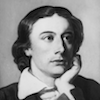 Keats and Chapman
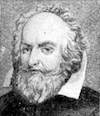 were having a friendly game of quoits one day. They were neck-and-neck on points, each being as good as the other at the sport. Chapman, desperate to pull ahead, flung his penultimate quoit to the furthest peg, and ringed it perfectly. He drew back to let fly his last missile, when Keats stopped him.


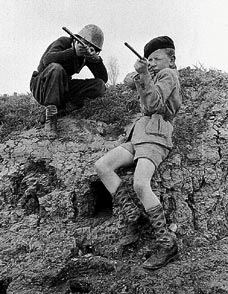 The boys put down their Commando comics, in which the heroes were square-jawed and wore their helmets at a jaunty angle, and the enemies’ eyes were always in shadow, and determined to play war in the woods. One or two were lucky enough to have their dads’ old berets, a helmet, or a toy gun, the others grabbed dry sticks of the right size, with which to extemporise a weapon. They picked sides and fanned out into the trees.

 Reader
  Marie Marshall