Marie Marshall

Author. Poet. Editor.

Category: news

The ‘female spirit’ of ‘Lupa’…

CBW

I enjoy it when people ask me for interviews – I like ’em long range, by which I mean they email me a list of questions and I sit down and write considered answers. I recently had the pleasure of fielding some questions from my fellow-writer C B Wentworth, about my novel Lupa. You can find the interview here.

My short stories

writing

I have reorganised things on this site ever so slightly, and now all the short stories I have posted here can be accessed from a single tag. You can find them here – the first ten are displayed, and you’ll find a link to others at the bottom of the page. Enjoy!

M

More news of the Phoenix

© Describe Adonis Press

© Describe Adonis Press

At the suggestion of the Editor-in-Chief, Richard Vallance, and with the agreement of the others on the editorial team, I will be credited as ‘Deputy Editor’ when the anthology is eventually published. I am honoured.

A reminder about the Aval-Ballan Poetry Competition

(c) Lesley Haycock

(c) Lesley Haycock

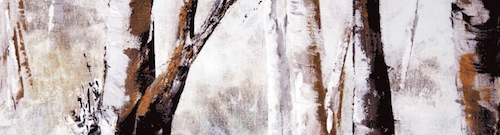
Just a reminder for all writers of poetry that this competition is still very much live, and that there is room for your entry. Click the painting above to go to the competition web site.

M

A Tale from the Hill Country

Curl Up and Burn
short story by Samuel Snoek-Brown
http://eunoiareview.wordpress.com/2013/02/03/curl-up-and-burn/ 
review by Marie Marshall

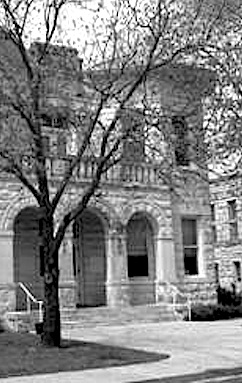
Kendall County Courthouse, Texas.

Kendall County Courthouse, Texas.

I would not normally review a short story, but this particular one by Sam Snoek-Brown is ten-thousand-or-so words long, and if the narrative were expanded it would start to knock on the door of novella. However, a short story it is, lean of excessive development and sharply focused. That leanness pulls us along and makes sure our attention is not diverted.

The subject matter is a ‘statutory rape’ case in Texas, its effects on the community and the persons involved, and its aftermath. The story’s style of presentation is one of reportage. It is written as if it is a magazine article. The narrator is as detached and non-judgmental as an investigative reporter, but his presence ‘interviewing’ and interacting with the personae of the story allows their character to be drawn out. The cut-and-paste nature of the narrative allows it to be episodic, which accentuates that drawing-out – for example, the meeting between the narrator and the convicted man’s father, the latter’s pickup blocking the road, a shotgun pointedly on display on the gun-rack, is loaded with tension and menace.

Another thing that this episodic treatment enables is a presentation of the ‘facts’ in a non-linear way. The fact that a man has been convicted of statutory rape and has served twelve years in a tough prison is made known very early in the story. The details of the case are revealed, but not necessarily in chronological sequence. Rather they are cut with historical detail, sections of modern supposed interviews with townsfolk, and with descriptions of the protagonist’s drives around his home town, where he and the crime of which he has been convicted are well-known, and of his obsession with building and maintaining a model of the town in which things he observes in everyday life modify the layout. Essentially there is no final resolution to the story, but we do realise that a story has been told. The protagonist’s final statement is terse, almost threatening in tone, but remains enigmatic.

Adding to the air of reportage is the research, including historical research, that the author has pasted into the story. The story is set in a real town in Texas – the author himself was brought up in Texas and can therefore be relied upon to give the setting an air of authenticity. Of course his storytelling style does take over from the journalistic style in places, notably in the descriptions of the protagonist’s run-in with his Nemesis, a local Deputy, and the title is a storyteller’s title, not a journalist’s.

I have a couple of niggles – no story is perfect, let’s face it. Firstly there is much made of a teenage girl’s ‘chatting on the internet’; I don’t know whether Texas was a long way ahead of us (I’m writing this from the point of view of a British reader), but in the early 1990s, when this was supposed to have taken place, chatrooms and emails were not as common as they now are, and most households, if they had a computer, were on a dial-up system for the internet, which took up phone time and therefore parents’ money. I could be out-of-touch, but this detail momentarily halted my ride through the story. Secondly, the girl in question is Chinese-American, and whilst her father has the English given name John, her full name appears to be wholly Cantonese. When a Chinese character appears in a work be a non-Chinese writer, I often wonder – maybe unfairly, I’ll grant you – whether her name has been plucked out of the air. I put the name of this character into an image search engine and came up with pictures of a male boxer. Like I said, these are only niggles, and could be my own reading quirks.

When it comes down to it, this is a compelling story, excellently written and insightful, moral but not moralistic. Sam Snoek-Brown is a tireless craftsman of the short story, and Curl Up and Burn shows that he has been working out.

‘On The Platform’ at Fearie Tales

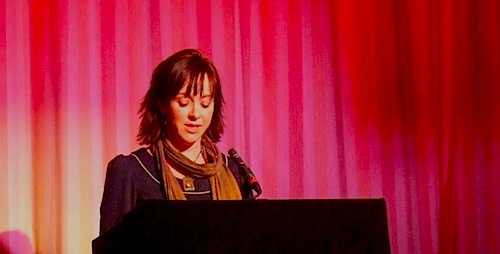
Helen Logan reading ‘On The Platform’, 1st Feb 2013. Image © Bookseeker Agency

Helen Logan reading ‘On The Platform’, 1st Feb 2013. Image © Bookseeker Agency

As previously reported, my short story On The Platform was one of the winners of this year’s ‘Fearie Tales’ competition at Pitlochry’s Winter Words Literary Festival. Winter Words kickstarts the literary year for Scotland, and features a list of writers and other people in the public eye. ‘Fearie Tales’ is its annual competition for stories of a ghostly, macabre, or supernatural nature, and this year actress Helen Logan gave my story a highly atmospheric reading…

… a young woman is waiting on a lonely station platform late at night… she meets a strange, dark man who starts to talk to her about supernatural matters… is one of them a ghost, and if so, which one?

The audience, which included broadcaster James Naughtie, was rapt throughout the reading and appreciative afterwards. Already I have ideas buzzing for my entry to the competition next year!

Tantalising glimpses…

… of some of the illustrations…

glimpse 1

… contained in the sonnet anthology…

glimpse 2

The Phoenix Rising from the Ashes

glimpse 3

… due to be published later this year.

I have a number of sonnets in the anthology, and have been working as part of the editorial team since this project was started by Describe Adonis Press, Canada. You may be curious as to how someone could with fairness both edit and contribute; the answer is that poems by members of the editorial team were subject to the same anonymous selection process as poems by other contributors. The result will be a fine anthology, I believe, containing poetry by some of the new century’s most interesting practitioners in the form. The web page for the anthology is here, and will be up-dated with publication news as and when it is available.

Readers who know my recent work will know that I seldom write formal poetry these days. However, I generally ignore the ‘Chinese walls’ between the various modes, school, whatevers of poetry. That’s just my way…

News from ‘Winter Words’

© Bookseeker Agency

© Bookseeker Agency

Deep winter in the Highlands of Scotland, with a foot of snow gradually starting to thaw as our changeable weather takes another swing. In the town of Pitlochry, at their famous Festival Theatre, the annual Winter Words literary festival is under way. I have just heard that my poem ‘Beatrice the rat tells Mr. Coelacanth about the Wisecrack city elves’ (from my soon-to-be-published collection I am not a fish) was premiered at their ‘Poetry Please’ event. Also I am once again amongst the winners of their ‘Fearie Tales’ competition for tales of the supernatural, and my ghost story ‘On the Platform’ will be read out during the final weekend of the festival. There are plenty of other interesting events at the festival too. Can you make it?

The Aval-Ballan Poetry Competition

(c) Lesley Haycock.

(c) Lesley Haycock.

A new venture for me (to add to author/poet/editor) is competition judge. Aval-Ballan is a Scottish-based arts and design studio, and they have agreed to sponsor a poetry competition, which you can read about here. I am one of the competition judges, along with artists Lesley Haycock and Victoria Devaney, and poet/editor Lisa Marianne Stewart. Entrants have a chance to win an original piece of artwork.

Review – ‘The Hobbit: An Unexpected Journey’

The Hobbit: An Unexpected Journey, 2012, dir. Peter Jackson, New Line / Wingnut / MGM.
Reviewed by Marie Marshall

Film poster presumed (c) MGM, reproduced under 'fair use'.

Film poster presumed (c) MGM, reproduced under ‘fair use’.

The Hobbit: An Unexpected Journey – or, as I have been calling it lately, Lord of the Rings: The Phantom Menace. Those of you familiar with prequels will appreciate what I’m driving at. There are problems with making prequels, and this film suffers from them all. Let me say straight away that it is nonetheless watchable. There are some good reasons for going to see it.

Good reason No.1 – you have a crush on Cate Blanchett or Hugo Weaver (and who could possibly blame you!).

Good reason No.2 – you are a Tolkie (Tolkeenie?) and a Middle-Earth completist, and I mean the kind of person who has even downloaded a hooky copy of the Air New Zealand in-flight safety video. In which case how could you miss this film!

Good reason No.3 – you are a fan of British and British-based actors in general, in which case this film is an absolute feast for you. You will sit there saying things like, “Hey – isn’t that Mitchell out of Being Human? Isn’t that the bloke who played Rebus?” Although if you can actually spot Benedict Cumberbatch and Barry Humphries you deserve a prize.

And that’s about it. On that last point, it does fare better than the Harry Potter canon in which the cream of British acting hammed their way to the bank, and who could blame them*. The acting quality is much better. Martin Freeman plays Bilbo Baggins almost exactly as he played Watson to Benedict Cumberbatch’s Sherlock Holmes, but he is believable as a young Ian Holm**. Sylvester McCoy is a thoroughly eccentric Radagast, and again fans will recall his equally eccentric tour of duty as the eponymous Dr Who, so it’s lovely to see him at his craft again.

However, The Hobbit: An Unexpected Journey does suffer all the ills of a prequel. There is no surprise, no delight in discovering the Shire, Rivendell, and the rest of Middle Earth. We are already familiar with it in the wonderful, broad sweep of the LOTR trilogy, with the musical tropes, and so they appear tired rather than fresh. There is no shock in seeing an orc or a troll for the first time, and in fact there is something tame about the trolls, which takes me on to the next problem.

The Hobbit, the novel on which this film is based, is very different in tone, in target readership, in almost every way from Lord of the Rings. It is very brief, shorter than any one of the three parts of Lord of the Rings, and written with young readers in mind. The three trolls that Bilbo encounters in the book are much less like the hulking, mindless monsters in the film trilogy, more bucolic, calling each other Tom, Bill, and Bert. The new film tries to bridge that gap, and damn near fails. The task is like binding two metal strips together, each of which expands with heat at a different rate, and holding them over a flame. This shows up very clearly in the scene with the trolls round their camp fire. They look sufficiently like the mindless trolls from the trilogy, but smaller, more like a trio of obese skinheads. This is a symptom of trying to marry very different books into a single experience – it doesn’t quite work.

The brevity of the book suggests to me that it could easily have been made into a single film, maybe even a stand-alone film. Stretching it out into two feature-length films is a mistake. As a result, and to provide extra action and spectacle, the film-makers have added elements which were not in the book. Unfortunately that complicates and obscures the plot. There is, for example, a back-story and sub-plot concerning Thorin and a one-handed, albino orc-warrior. It’s padding. Galadriel, Radagast, and Saruman do not appear in the book, but they do make appearances in the film. Sylvester McCoy’s cameo is, as I have said, eccentric, charmingly silly. Christopher Lee, on the other hand, plays Saruman entirely seated; he seems, as he is, much older than he did playing the same part supposedly many years into the future. The book glosses over the conflict between the shadowy ‘Necromancer’ (‘Sauron’ in Lord of the Rings) and implies that Gandalf’s order of wizards, including Radagast and Saruman we must assume, fought as one against this menace. However, the film-makers couldn’t resist giving us a disingenuously proleptic glimpse of ‘Saruman the Bad’. Again, padding, and I’m afraid the stuffing is falling out of it.

Another cameo appearance that simply doesn’t work: Elijah Wood, in real life, looks a good ten years older than he did when he first appeared as Frodo. Then he was cute, now no amount of soft focus can hide the fact that his face has matured. The result is that we are treated to seeing Frodo supposedly several years younger but obviously not. No, doesn’t work, bad padding again.

Maybe it is because I am more used to seeing Lord of the Rings in home DVD format, but I also felt that there was something lacking in the film quality, some lack of definition or clarity. It seems murkier than the trilogy. The film ends at a half-way point in the novel, leaving room for the next film to bridge the gap to Lord of the Rings. I do not know what elements of the story will be left out of No.2 (maybe the part played by Beorn the Skin-changer) nor what will be grafted in (presumably the conflict with the Necromancer and a resolution of Thorin’s feud with the pale orc), but I have my worries.

There are a few good moments of comedy in the film, however, mainly surrounding Thorin’s band of dwarves, who draw as much from Terry Pratchett as they do from Tolkien. I won’t spoil it for you, but watch out for the line, “That could have been worse.” Also it is available in 3D at the cinema, which is still a sufficiently new technology to be enjoyable, so it is worth seeing before you become jaded with the effect.

Overall I think it’s worth paying for a cinema ticket nevertheless (go for a cheap matinee), and worth buying the DVD after it has been out for a few months and the price has come down a little. You could iron to it. If I were to give the Lord of the Rings trilogy five stars, I would award this three. Not bad, Mr Jackson, but you could do much better.

__________

*There were some golden moments in the Harry Potter films too, though if you haven’t seen any of them, take my advice and only see the ones in which Jason Isaacs appears – he is the only cast member who doesn’t ham it up, and as a result he is utterly, chillingly convincing – and the one in which Hermione decks Draco Malfoy with a right hook. Shout ‘Expelliarmus’ all you like, that was the most magical moment in all that series of films.

**Except maybe to those of us old enough to remember the young Ian Holm.