Marie Marshall

Author. Poet. Editor.

Category: poem

‘Panthera tigris altaica’

Tigris

‘Panthera tigris altaica’ is the title of a poem I wrote in 2008. It has recently been published in Rubies in the Darkness, the poetry magazine of the Red Lantern Retreat. Rubies in the Darkness describes itself as the ‘… prime specialist poetry journal of Spiritual Romanticism Worldwide’, and is one of these wonderful shoestring, small-press products that punches above its weight. It was a surprise arrival by post today.

At the same time I also received a signed copy of Peter Butler’s collection of haibun entitled A Piece of Shrapnel. Many thanks, Peter.

M.

‘I am not a fish’

My collection of never-seen-before poems, I am not a fish, has been accepted for publication. I’ll give you more news as it occurs, but I thought I would share the initial buzz. Yes, it’s still a buzz when this kind of thing happens…

Visiting Angélique

Relaxing, letting the novel take care of itself for a few days…

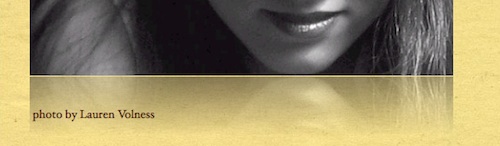
You might take some time to visit (as I did) the web site of writer Angélique Jamail, if for no other reason that to have your breath taken away by a smile and a frank stare as captured by the lens of Lauren Volness. I love black-and-white photography, I love its textures, I love its air of verité, and I love the way it makes me digress from the matter in hand.

I also love web sites that are clean but at the same time fill and delight the eye. There is something about dark red papyrus font on faded yellow, there is something about the empty, brown sidebars, there is something about the fussy, intrusive design of leaves that says ‘some is plenty’. The internal detail is personal and informal, yet to the point. It can sometimes be intriguing – “What’s the tab which says ‘RRFP’?” I asked myself. Apparently it has something to do with black and white, and a single accent of red, and if you want to know more, then visit. You will want to hear her poetry…

Gypsies, ‘… a loosely plot-driven collection of poems about jumping off from traditional toeholds and clinging to the air around you until you find a new niche.’

Barefoot on Marble, ‘orphan poetry, mermaid lit., and the poet’s impressions as more eras end.  These are lizards and prophets crawling up your house; these are lovers better left unmet; these are moments of great undoing; these are phoenixes, too.’

… and you will ache because none of it is there. But hurry, there is still time to buy a book!

There is a link to her blog, ‘Sappho’s Torque’, which is a different kettle of tuna altogether. It’s a blog, an honest-to-God blog, an it-does-exactly-what-it-says-on-the-tin blog, and that’s why I like it so much.

Have you ever come across poetry that you wish you had written, simply because it sits a camera on the sideboard of life, runs to the other side of the room, stands there, and grins? Have you ever come across poetry which, far from making you wish you had written it, makes you vividly almost painfully aware that you could not ever have had the precise experience of life to have written it? The following poem is one of the latter.

Recipe for My Daughter
Copyright © 2011 by Angélique Jamail

When the pita dough does not rise, throw it away,
remembering that yeast and flour are cheap,
and start over again on a day without rain.

When you become seven years old, you will be given
a new pair of tiny scissors, with which you will snip
the leaves from ten bunches of parsley, taking care

to keep the stems from the great silver bowl,
while your mother chops the tomatoes and onions.
When you manage this despite the nauseating

abundance of parsley, you will be allowed
to mix in the bourghoul. When you hollow out
the yellow squash, measure the tender rind so

your fingernail does not puncture the tiny gourd.
When you roll the grapeleaves, count twenty
per guest, and remember a pinky’s length of lamb
and rice is plenty. When you boil them

in the enormous pot, lay a dinner plate
on top so that the roiling does not unroll
your tightly wound creations.

When you learn to make bat’lawa, be careful
to paint the melted butter across every thin sheet
of filo separately. When you grind the pistachios,

try not to scrape your knuckles on the glass
each time you crank the lever around.

When the bread finally rises, you will sit upon
a wooden chair in front of the lower oven and announce
its brief inflation as if every puffed-up loaf were
the messiah. When it comes out of the upper oven,

flat again with a pocket, spread butter and grape jelly
on it and eat it so hot. When you are an adult,
you will remember this smell as joy.

When you have become good enough,
you will not have to measure anything ever again.

When you grind the lamb for kibbe, reserve some
to sautée with pine nuts for the hashwe, and run the rest
through the grinder twice more with onions and
bourghoul. When you have a craving for kibbe niya,

make it yourself and eat it the same day home from
the butcher, and bless the dish before you pour the olive oil,
because raw meat is not a thing to trust to just anyone.

When your son brings home an American girlfriend, admonish
his brothers for slopping it out in galoptious mounds
at her first dinner with the family.

When your daughter-in-law first opens her home to you,
bring her a great silver bowl, a new embroidered cloth,
a carton of sea salt, and a bulbous

witch doll to hang over her sink. When you take
the lemony, warm spinach pies to school for lunch,
you will not have to share them with the other children,

and one day you will appreciate having had them all to yourself.

Apples and Ink Angels

© Lesley Haycock

Into my hands today popped a copy of Ink Angels. Edited by Kevin Watt and Elizabeth Neilson, it is an anthology of two hundred or so poems,  out of more than four million on the web site allpoetry.com, picked ‘as examples of having a profound perspective’. “Reading them,” says Kevin, “will take you to a lovely place.” I mention this because my poem Apples, written back in 2007 is included in the anthology. It’s among a wonderful collection… from my point of view it’s worth buying because it contains Don’t ask by L A Smith, who is one of my favourite poets of all time, yet so rarely is she published that she remains barely known outside a circle of friends. Put Ink Angels next on your wish list, after Lupa

Ode to the Olympic Torch

It’s parody time. The Olympic torch is passing through Scotland at present, and I recalled that four years ago, during the previous Olympiad, I wrote a parody of an ode for a little competition. Basically it is twenty-four lines split into two stanzas, but the underlying structure is six quatrains in alternating lines of iambic tetrameter and pentameter. It limps and hirples like mad and it occurred to me, after starting the first four lines with the apostrophic ‘O’, to start every line with that letter – but remember, this isn’t serious art, it’s a total mickey-take. Enjoy.

O Torch, O thou eternal flame,
    O thou Olympic, ever-burning spark,
O ardent one of Attic fame,
    O thou who lightest up the noisome dark
Of ignorance with searing fire,
    Oh draw’st thou nigh me like some little sun?
Or art thou that bright, burnished lyre
    Osiris bears, who through the heav’ns doth run?
Occult and cryptic, arcane match –
    Obsidian thy sky – thou twinkling star;
Obtuse am I – may I thee catch?
    Oracular, as all such visions are,
Of stuff unknown to mortal mind…
    Ought I to kneel, ought I to bow my head
Obsequiously? And dost thou find
    Our dully-mortal clay both cold and dead?

O Torch, I’ll carry thee by hand –
    Oceanus’ waves must not put out thy glow –
O’er hills; through ev’ry foreign land
    Or continent my feet shall boldly go.
On, on, and onward still I press,
    O’ercome by naught but pride – I shall not tire!
O Torch, illuminate and bless…
    Oh bloody hell – my chiton’s gone on fire!

Thoughts on ‘Ozymandias’ by Percy Bysshe Shelley

I have been in conversation with a friend – I could say I met a traveller from an antique land – about Percy Bysshe Shelley’s famous poem ‘Ozymandias’. I shall let you share a small handful of my thoughts from that conversation. First of all let me transcribe the poem for you to read:

I met a traveller from an antique land
Who said: “Two vast and trunkless legs of stone
Stand in the desert. Near them on the sand,
Half sunk, a shattered visage lies, whose frown
And wrinkled lip and sneer of cold command
Tell that its sculptor well those passions read
Which yet survive, stamped on these lifeless things,
The hand that mocked them and the heart that fed.
And on the pedestal these words appear:
`My name is Ozymandias, King of Kings:
Look on my works, ye mighty, and despair!’
Nothing beside remains. Round the decay
Of that colossal wreck, boundless and bare,
The lone and level sands stretch far away”.

This is probably Shelley’s best known and best loved poem. It is often said to be Shelley in sobriety; the ecstatic artist has been quieted, the revolutionary parlayed into the observer of history, the poet distanced from his subject. I believe otherwise. I see Shelley deeply engaged in this poem.

Shelley is often seen as a poet with a multiple and fragmented identity which emerges in the various personae of the ‘speakers’ of his poems, as well as being imposed on him from outside – the Victorian image of the ethereal versifier, for example, as fostered by his widow, is one such imposition. There is Shelley the inflammatory radical, doling out measured insults to the head of state, ‘an old, mad, blind, despised, and dying king’. There is Shelley the outraged father, spitting barely concealed bile at the Lord Chancellor. There is Shelley the Romantic observer of the Sublime, the inaccessible ‘secret Strength of things’ at Mont Blanc. There is Shelley the grasper for ultimate inspiration in ‘Ode to the West Wind’, begging ‘Be thou, Spirit fierce, my spirit! be thou me, impetuous one!’

To me this is not a random kaleidoscope, not a tumult, not a product of an unstable psyche. To be sure Shelley’s poetry develops through his career, changes, but it remains true, artistically resolute throughout. He is simply not a one-trick pony. He is clever and accomplished technically – hell, who these days could successfully write a wild, ecstatic poem and do it in five cantos of terza rima sonnet form, and make it good?* Like any of us, his mood can change, he can sit and look at things from a different perspective, he can step outside his own thoughts and emotions and observe them as much as he can experience them in the moment.

In ‘Ozymandias’ there appear to be four distinct voices. People normally identify three. Firstly there is the author/speaker; this voice is most often attributed to Shelley himself, and the fact that he only allows the speaker one line is held up as evidence of detachment. Secondly there is the traveller from the antique land, whose taking-over of the narration of the poem is considered to be further indication of objectivity, of Shelley’s status as an observer of history rather than a participant. This voice is contained in quotation marks, deliberately, and again this is taken to indicated distancing. Thirdly there is the voice of Ozymandias – Pharaoh Rameses II – whose inscription raises him above kings, commanding all who consider themselves to be powerful to look on his works and despair. The fourth voice is the Greek historian Diodorus Siculus, the supposed inscription being Shelley’s rendering of a phrase in Diodorus’s historical book on ancient Egypt. Two things should be noted here, firstly that Diodorus used other sources for his own historical works, and secondly that imagination played a part in classical history, with the result that what famous figures ‘said’ is often what the historian felt they ought to have said.

‘Ozymandias’ is taken to be a work of political satire, in particular a retrospective gaze at the rise and fall of Napoleon Bonaparte. Ancient Rome took the best part of two millennia to go from the expulsion of the Tarquins to the fall of Constantinople; France realised its equivalent during the adulthood of a single man, Napoleon. The poem is considered a warning to those who would carve out temporal power for themselves, to the effect that such power will not outlive them. it will fall as surely as the statue of Rameses II fell, worn away by the sands of the desert and by time.

But as I said, I believe that to be a superficial reading, and that Shelley is deeply engaged emotionally and intellectually in this poem. It is a self-referential and introspective work. The second voice, the traveller, is no one external to Shelley. He has given his pen to an inner voice of his own, which will pass judgment on him. I see this because many of Shelley’s familiar themes are actually expressed in this poem. The Sublime is there. Some of it is found in artifice rather than nature, but the words ‘vast’ and ‘colossal’** are there and note a sense of awe that is unmistakable even in a ‘wreck’. The Sublime in nature is in the ‘boundless’ desert, as awesome in its silence and ‘secret strength’ as is Mont Blanc, as relentless and powerful as the West Wind. Imagination is there – imagination of Diodorus on the one hand, and that of Shelley on the other. The face of the statue of Rameses is impassive, yet Shelley imagines a ‘frown’ and a ‘sneer of cold command’. Striving for greatness is there, as Napoleon the revolutionary turned emperor strove, as Shelley the revolutionary turned poet strove when he yearned to be made one with the West Wind, to be, in his artistic power, the Spring to the West Wind’s Winter. Politics certainly is there, even if direct and inflammatory agitprop is not.

But subtly Shelley’s inner voice of judgment mocks, as the hand that framed the statue ‘mocked’***. Ruefully Shelley must acknowledge that he, like all the Romantics, could not quite achieve the quasi-divine power of expression that he wished to. The Sublime desert, the expression of the unattainable, stretches far away.

Because this is all expressed in a short, tightly-wrought sonnet, it is missed by many readers. Scroll back and read it again, think of Shelley’s inner voice, still and small, gently charging him with trying to steal fire from heaven, think of Shelley himself as Ozymandias the failed worker of mighty works, think of him also as the sculptor whose stonework is now brought as low as the king’s power, and think on. When the poem has worked on you, play the arguments out in your own mind…

__________

*I hear some resolute modernists counter ‘Who would want to?’

**From the Colossus at Rhodes, one of the ancient Wonders of the World.

***In the context of the poem, the word has the likely meaning of sculpting, rather as we would use the term ‘mock-up’ today, and not necessarily the meaning of scorn, though that is an implication too, a double-meaning…

Welshday: The inebriate Detective Inspector Rimbaud sings the praises of his love

I am old, too old for this bright love,
and yet I am dazzling in its ardency.
The slight snow greys my green body,
and my law-burns choke their weeping
in a jumble of scree and dirty ice.
As the citric sunlight of February afternoons

fades to madness-in-winter,
hopeless piping, desperate picayunes,

the gabble of the steep-in-age,
so you walk in, evening-cloaked,
a swirl of velvet, a silent falling,
a brief brush of lips against mine
and – O gods of my imagined tribe,
how such things burn hard on me!

I am demented for ever,
caught in the cold flow of eternity,

made cold, hot, cold, hot, cold
by your bright and coal-red lips,
the only fire, the sole light,
the lone sun in a black universe,
the one illumination of lost souls.
I should climb the ridge of your cheekbones,

the savannah of your hair,
the tearpaths of your face, jewelled rhones

and channels of soft weeping,
the bays and bights of your arms,
the long strand of your scapulae,
the bitter wind of your nape scouring
your shoulders’ mystery.
At times your kisses are baked bread,

the truth of straight-grown trees
with their cones fallen brown-red

and their honest, grey-and-green needles,
their brown cone-bells rustle-ringing;
the surprise of sea-scents, your kisses,
the gentle knock of a loosely-moored boat
against a grey-and-green wall
where the mad moonlight comes walking.

This is the alchemy of my love,
the whiskey talking.

__________

Welshday (you will need reminding) is a project I conceived in late 2008. It was to be some sort of verse-drama in which a fictionalised Irvine Welsh was conducted through a shadowy Edinburgh by an alcoholic policeman and a totally silent mime-artist, amongst others. Irvine Welsh himself gave me his permission (his actual words were “No worries – go ahead”), but since then I have only returned to work on it from time to time. It has been one of those many projects for which there are ideas but no handle to grip.

However, when I have returned to it, it has often given me a stand-alone poem. The one above is part of a planned section of the drama in which Irvine Welsh relates an ancient tale of Finn MacCool, Welsh and Rimbaud make punning variations upon the theme ‘mony a mickle maks a muckle’ using the names of sundry Scottish towns, Rimbaud rhymes endlessly using the words ‘Leith’, ‘Police’, and ‘fish’ to prove he is not drunk (whilst proving only that drink does not affect his ability to rhyme), and the Chorus reminds them where and who they are.

__________

Some small news of publications. My piece of flash fiction High Park, Toronto, can be read on-line at BoySlut. The Carnage Conservatory recently ran a three-liner of mine.

The batsman of the Somme

I have a mad desire to catch
the pomegranate that I see
mid-arcing in the winter air
or with a willow bat despatch
it high above the English lea
to drop beyond the boundary there

But I am deep inside my trench
and in the time it takes a breath
though that may ape eternity
the pomegranate’s fatal wrench
will bear me past the bourn of death
no Ceres waits for spring and me

__________

A friend reminded me of the above poem which I wrote in 2007. It is, of course, a poem about the First World War and about ninety years too late, but I felt it was worth sharing with my readers. New friends will perhaps not realise that I write – or used to write – much that rhymed and scanned. I do not believe in the Chinese walls that are erected to separate poetry from poetry.

Travelling with Bukowski, parts 1 and 2*

1

Brevity: like a footprint in the mud – no matter
how pure those sky-tears that fall from the grey
clouds, in the footprint they turn to soup; the tread
of the worn boot becomes featureless, and
by morning it’s nothing.

I turned up, a dust cloud out of the Mohave;
he and I kinda floated
down the Los Angeles River,
washing up on the far bank,
staring at the ceiling
of a cheap hotel room
and passing a smoke from hand to hand.

I had been on a quest – or so it seemed –
for the Holy Grail; but I had come instead with a bottle
of Burgundy filched from the back seat of a red Corvette.
He complained that it wasn’t whiskey, but drank
the lion’s share anyway. Alcohol went down his throat
like rainwater down a drain.

Love: maybe. The call of a freight-train sounded
like a violin playing in the key of somewhere-else,
and oh how those boxcars rattled. In the dark his cheek,
his curls, were cherubic; but when morning fisted the sky
the time and season when phantoms and night-haunts
are laid
– he was hollow-cheeked, hollow-eyed,
hollow-souled, and suddenly gone.

That is why – like you care – memory and bewilderment
are one to me, just like truth and beauty, and our momentary
flicker of a hitch-hike only led this far.


2

Everything I tell you is a lie

Says you, says the poet in the torn coat, hanging limp as night-fog while the wind frets at the cracked window, blowing blue like jazz from a New York loft.

I remember the spikes and penny-hangers of London, friend, but your eyes are on the Latinas, shuffling into the church next door, rosaries, crucifixes, charms and amulets against sin, red-cheeked confessions, turning the pages of their week and on to another chapter, bless me father. The bell pulses, the rope old and brittle against the priest’s calluses, the prayers are spoken. But you…

Why does it amuse you so much, out here in the Valley, away from those Angelenos, kneeling beside me, spreading my hair on the pillow? You have no camera, no palette and easel, simply a notebook and the butt of a pencil; but I feel like a whore, paid to lie with a bastard Jesus at my breast while you paint me as a Madonna.

That wind, blowing soft and crazy like Ornette Coleman, lifts the torn curtain; the half-crescent moon, a whey-faced voyeur, winks an eye at the depth of my shame. You say it was karma that we met; I say close the window, pull the curtains together, shut out the moonlight, as I gaze at the swinging lightbulb and the motion makes me feel sick…

Oh you lying poet! No white sails on a golden sea, no elusive, leaping gazelles, just the truth of dust and hurt; and your words still paint me – your shiftless, dirty Madonna, always haunted by you, by our travels, by the two plastic spoons in the jar of cold beans, nuestro sacramento, by our upside-down world.

Now, at nights, those bald, bare words of yours are what I lay against my cheek as I try to sleep, betrayed, an old gypsy of the long, flat roads, my life peeled from me the way a thumbnail peels the skin from a mandarin orange, fleeced, the droplets of my blood tart and citric. I listen to the damnable high-hat-and-snare of a cicada, and I laugh. Bitter, my friend… bitter.


__________

* This poem won the Del Warren Livingston Memorial Prize for Free Verse in 2009. I don’t generally put my poems up for awards and I regard things like this as incidental, but it seems silly not to mention it.

The image of Charles Bukowski used in this post was retrieved from http://helvira3.blogspot.com where the user states that it is assumed to be in the public domain.

Shakespeare-shmakespeare

Two Noble Dudes

So I bust my ass with a script, and the man writes back “Don’t send me no more films where the guy writes with a feather!” So I figure – what the hell – I’ll do him a Western instead, ‘coz it’s been eighteen years since Unforgiven. I had this idea where two gunslingers get in a fist-fight over who’s gonna marry the big cheese rancher’s daughter, and the sheriff breaks up the fight, tells one to get outta town, and throws the other one’s ass in jail. Then he busts out and the other guy comes back, and they shoot it out, and one guy beats the other to the draw but falls off his horse, then they’re gonna lynch the first guy but the rancher’s daughter begs for his life… and… and… But anyhow, the studio sends me this co-writer (some bald limey with a beard), and he says like bring it up to date. So okay, I say, how about we do “Two Bloods in the Hood”, ghetto-style, y’know, urban stuff with gangsta rap, and he says “Blacksploitation’s so seventies, Fletch!” (only with this English accent) “We need the final duel to be a car chase… explosions… kung fu on the top of a burning building… and the girl needs to kick arse too.” (Yeah, he actually said “arse”!) And he goes on, “Willis and Schwarzenegger are too old, so get me the guy out of 24 and someone out of Stargate Atlantis.” But the studio calls and says they’re going with something by Dryden and Davenant, and I say to the limey, “Take it from me, it’s gonna be another piece of crap like Propsero’s Books.” I mean, gimme a break!

Love’s Labour Won, or Rosencrantz and the Stapler

 O thou, the very stuff of draftsmen’s dreams,
Whose sheaves by naughty Zephyr scatterëd
Abroad in autumn, are unruly reams,
Come hither to my bare and virgin bed.
What ghosts of lovers past come fluttering,
As I thy bends of wire do contemplate
By midnight candle, pale and guttering,
And, moth-like, beat their wings against my pate?
I love thee! Ah, thy handle firm and true
That nestles in my eager, cuppëd hand!
Thy spring, that all my force cannot subdue,
Which, when I bid ‘Contract!’ doth then expand!
Ah, Rosencrantz! Thy stapler is the sun,
Love’s labour now secured by staple-gun!