Marie Marshall

Author. Poet. Editor.

Category: prose

Axe

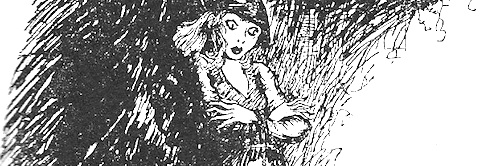
All the girls call me ‘Axe’. Tough name, but nah need fe aks me why, coz of me accent, ell-oh-ell!

They’re like to me – We were gonnay give you a kicking. Two days I’ve been in Glasgow, two days! I go out to a club, and these girls come over and they’re looking mean like they mean business, right. But the music is loud and the girl who’s doing all the talking has this accent, this Scottish accent, and she’s shouting over the music, and I’m like – What? What? And she’s back to me like – What? What? And then the music stops and all you can hear is her shouting what and me shouting what, and suddenly everyone’s laughing.

So the girl who’s doing all the talking, this is her to me – Come over to our table. And I’m like – Okay, cool. So we all get to be mates, and we’re laughing, and I can’t understand half of what they’re saying. I can now, though, later. I’m used to their accent, they’re used to mine though this is one of them to me back then – Oh. My. God. Your accent is weird!

Afterwards some of them are hammered and throwing up in the street, and we’re helping them. And she, this girl who was doing all the talking, she’s like – My name’s Marie, what’s yours? Only the way she says Marie is all Scottish like MAH-ri. And I’m like – I’m Shayla. And she’s like – you wernay scared when we came up to you, Shayla, we were gonnay give you a kicking, you didn’t back down. So I’m like – Why was you going to give me a kicking anyway? And she’s like – It was the way you were looking, looking at the lads in here, looking at us, just the way you were looking.

And she slips her arm through mine and we walk off down the street, and she’s like – Woot! That’s when we’re dodging round one of the other girls who’s not walking straight coz she’s hammered.

Then this is Marie to me when we’re walking down the street – Can you fight? Wannay be in the krew? This is me back to her – Yeah, all right.

So we’re The Gherls. The Gherls, right? They explain it to me once, it’s coz the krew started with, like, Celtic supporters’ girlfriends, and Celtic are called The Bhoys, yeah? But we’re not strictly Celtic supporters or Celtic supporters’ girlfriends any more, not Catholics. Well, Rosary is Catholic. We call her Rosary coz she gets her beads out before a fight, and like counts them with her thumb, then she puts them away and crosses herself. But Shireen is in our krew, and she’s a Muslim and Asian, and she wears a hijab thing and doesn’t drink, and it doesn’t matter even when we’re fighting Asian girls, so just the same it doesn’t matter to me if we’re fighting black girls. It’s the fighting that matters.

There’s ten of us hardcore, and there’s the also-rans, like girls who sometimes are there or girls we can call on, and some of those girls have mates who are okay and will help out. But like most of the time we don’t need them. The hardcore krew got loyalty.

And one day Marie’s like to me – How old are you? And I’m like – Why you aks me that? And she’s like – Axe? Axe? Ell-em-ay-oh, that’s what we’ll call you, your name is Axe. And I’m like – Laughing. My. Effing. Arse. Off.

When you’re fighting, like when I’m fighting, everything is so clear. Lights get really bright and white, and everything like stands out with this hard, black outline, and I feel really alive. I mean really alive, like my whole body is tingling and I can feel everything, and even when I get hurt it’s like the feeling takes over. It’s not like getting hurt normally. It’s different, better. I know that sounds weird, but I know what I mean.

There’s this girl, this Gherl, called Paysh, that’s like short for Patience which is her name, right. She’s cool, really quiet, never says nothing, never says nothing much. When she fights it’s like her fists go really tiny, and when they hit someone they must really hurt. I saw her once, and she’s really fast, and she’s fighting this other girl, and this other girl’s going down coz Paysh punches her in the face three times. Just like that, it took half a second. Bang bang bang. And these big red marks come on the girls face, and the rest of her face is pure white, and she looks like she’s going to cry. So all her mates are coming over like they want to kill Paysh, so we go and stand round Paysh and dare them, and they all back off.

And I’m like – that was sick, Paysh, really sick!

And the rest of The Gherls are like – yeah that was totally sick! And they’re all grinning.

And Paysh is suddenly all excited, and she’s like – Yeah it was sick, fuck yeah, did you see her face? And she’s making those tiny little fists. So anyway one day we’re in this bar, and I’m like – Where’s Paysh? And the others are like – She’s got her finals tomorrow, so she’s studying. And I’m like – What, no, Paysh is a fucking student?

And then the week after that I’m with Paysh shopping, and we go to Marks and Spencer’s café for a coffee, and this is me to her – Paysh, you’re really clever, so why’re you in a krew? Why’re you not, like, at the student union or something?

And she’s very quiet for a while, like she always is. She’s sitting there and I’m thinking how slim she is, and how she looks tall even when she’s sitting down, and how she always wears green but not bright green, not Celtic green, but sort of faded green, and how her hair is somewhere between blonde and red.

And then this is her to me – I don’t know, Axe. It’s as though when I’m at uni I’m on an island, or I’m behind bars, or I’m in a room with no windows full of mirrors. No one can see out. No one takes any notice of anything except what’s going on inside. No one sees that there’s a whole city outside of the uni. Yeah, it’s like I’m on an island and I want to see fish, but I can’t see fish unless I jump into the ocean, unless I make a conscious decision to jump into the ocean and swim and look for fish. So let’s take something simple: if I want a drink and a dance I go into the city, and there’s a club. If I want mates I go into the city, and there’s my krew. Some students if they want to do something dangerous and exciting they climb the big uni spire. When I want to do something and dangerous I get into fights with my krew. Do you understand, Axe?

And I nod, like I kind of understand. Then this is me to her – Yeah, I think so, it’s like when I’m at work it’s all brown and green, but when I’m out with The Gherls its bright yellow and bright blue, and when we’re fighting it’s brilliant white and there’s like wind-chimes going off in me head.

And she’s like – Synaesthesia. And I’m like – What? Whatever. Then we’re smiling at each other.

So one time I’m in our usual club and I’m fixing me makeup in the ladies, and Marie is standing next to me washing her hands. I’m sort of looking at her sideways and comparing her to Paysh coz they both have the same colour hair. But she’s shorter and like wider across the shoulders and hips, and she’s a little bit butch maybe, though not really stone just a little bit. And she’s taking a long time just washing her hands, and she looks over to me.

And she’s like – I really like you, Axe.

And I’m like – I really like you too, MAH-ri.

So then she leans over and kisses me right on the mouth, and her mouth is sort of nice so I kiss her back. Then we stop, and she’s like – Sick, or what? She’s grinning and I’m grinning too, and I’m like – Yeah, sick! And then we go back into the club to our mates.

Then there’s the time I see Rosary in the distance and I follow her, and she goes down streets I don’t know, where I’ve never been, and there’s this big Catholic church all brick and concrete, and she goes in. So I follow her, and there she is sitting in one of those long seats they have, and I go and sit next to her. She’s praying or something coz her eyes are closed and her hands are together and those beads of hers are between her hands. Her lips are moving but she’s not saying nothing. Then it’s like she realises I’m there or she finishes praying, coz she opens her eyes and crosses herself.

And I’m like – Hi! And she’s like – Hi. What are you doing here? And I’m like – I followed you. What are you doing? It’s not Sunday or nothing. And she’s like – I’m going to confession. And I’m like – What’s that? Coz I don’t know nothing about being Catholic.

And she’s like – I go into that box there, and there’s a priest in the other box, the one right next to it, and we cannay see each other but we can hear each other, and I tell him all the bad things I’ve done since the last time I was here. And he makes me promise no to do them again, and he forgives me like in God’s name, and tells me to go and say a bunchay Hail Marys or something as a penance.

So I think for a while, and then I’m like – Do you tell him about the krew and all the fights? And she’s like – Yeah of course.

So then there’s a creak and the door of the box opens and an old woman comes out and walks back through the church. Then Rosary gets up and goes into the box and closes the door behind her, and I suppose she’s telling the priest all about the things she’s done, and it makes me feel a bit weird because I’m sitting there and I’ve been part of the things she’s telling him. And I wonder what I would tell a priest if I was Catholic.

Then there’s this one big fight. There’s been another krew hanging out in the places we like to hang out, the mates of the girl Paysh punched. They’re like to everybody – we like it here, we’re gonnay keep coming here. So we’ve put the word round, Marie’s put the word round, that if they’re there on Friday then they are gonnay get a kicking. So on Friday there they are, and there’s more of them than before, and they’re really loud, they think they are so cool and tough. And Marie goes over to them and she’s like – Outside, round the back, ten minutes. And they’re like – Fuck you Missis Woman, but yeah.

So ten minutes later we’re all in the wynd and we’re thinking like – Where are they? Then we see them coming in at both ends of the wynd, and they’re grinning because they think they’ve got us trapped. And some of them are picking up stuff from the wynd, like sticks and stuff, and someone’s like – Watch out, that blonde hoor’s got a malky.

And Marie’s like – It makes me MAD when someone pulls a malky on me! Then we’re fighting our way out and they can’t keep us in, and Rosary’s up against some girl with a piece of wood, and I’m up against the girl with the malky, it’s a Stanley knife or a box-cutter or something and she cuts me across the face with it. And everything is brilliant white like camera flashes and ringing like bells in me head, and it’s like everyone is dancing and I’m breathing really fast. And I’m hitting the malky girl and she’s running and they’re all running, and we’re like – Woot!

Except Rosary is bent over with her hand on her knees and then she falls over, and someone’s like – She got hit over the head, someone with a piece of wood or something. And I’m like – Look, everyone, get out of here and I’ll stay with her. I’ll call an ambulance on me mobile, it’ll be all right, I’ll say we was mugged or something. Move! Get out of here! Before someone gets the coppers. Move!

So the ambulance comes and takes us to hospital, and Rosary is lying there with a blanket over her and a mask on her face, and I’m like – Rosary! Rosary! And the paramedics are seeing to me because of me cut face and they’re like – Look, keep still, you’re arm’s cut too. And me sleeve’s all wet and dark as they cut it away.

Then we’re at the hospital and there’s a woman doctor puts stitches in me face and me arm, and she’s like – We’ll keep you in overnight. And I’m like – Okay Miss, whatever, but can I have a bed next to me mate? And she’s like – I’ll see what I can do.

And the police are there and they want to talk to me, but I don’t tell them nothing, and I’m just like – We was mugged. We was jumped on. No I didn’t see who it was. It was dark. And they’re like – All right but we might want to talk to you again. And I can see they’re thinking, like – Black girl, black girl, blacks always equals trouble.

So then I’m sitting on this bed and Rosary is on the bed next to me with one of those drip things in her arm and bandages on her head where she got hit, and we’re talking to each other really quiet, and I’m like – You did really good, Rosary, at the fight, and you’ll be all right now the doctor’s seen you. And she’s like – You did really good too, Axe, and I’m glad you’re here. And then her voice goes even quieter, and she’s like – Hail Mary, full of grace. And it’s like she’s counting with her thumb but there’s nothing there, and suddenly her eyes roll and she starts to shake, and I’m like – Nurse! Miss! Miss!

Then there’s people running and pulling the curtains round her bed, and that’s Rosary dying, and I’m crying and I’m like – Rosary! Rosary! And there’s two nurses trying to make me be quiet, but I’m crying and I’m like – Rosary! Rosary!

So that’s when things go brown and green for me again, and the stitches in my arm and my face began to hurt, and Rosary dies and I never get to talk to her again, never get to tell her how great she is.

So we’re all standing round Rosary’s grave, The Gherls are here, and Rosary’s family that I’ve never met before, and there’s a priest and he’s like – And if the Spirit of him who raised Jesus from the dead is living in you, he who raised Christ from the dead will also give life to your mortal bodies through his Spirit, who lives in you. And he calls Rosary Christine McCluskey, because that was her name and I never knew it. I never heard it before. And Shireen isn’t there, she’s standing over by the path coz she can’t be at a Christian burial. So I walk over to her and I put my arm through hers, and Marie turns round and frowns, but I give her a sort of secret wave to let her know it’s all right, and she turns back again.

And this is Shireen to me – I really liked Rosary, I really liked her. And this is me back to Shireen – I really liked her too, we all did. And Shireen doesn’t know what else to say, so she’s like – La ilaha illallah, Muhammad rasulu-llah. And I don’t know what else to say either, so I’m like – Amen.

I’m standing there thinking the priest at Rosary’s church isn’t going to hear any more about us, about me. Now I won’t be in nobody’s confession.

And afterwards when Rosary’s parents have all gone, Marie’s like – No time to waste, we’re dressed in our best all in black, we are gonnay go and find the wee skank with the plank and we’re gonnay do to her what she did to Rosary, and we’re gonnay find the wee hoor who cut Axe with the malky, and we’re gonnay … we’re gonnay… something… like if they can pick up sticks we can pick up bricks.

And we’re all like – Yeah let’s fucking do it.

So we’re walking along in our best all in black, and inside me head there’s this rhyme, and inside I’m like – One two I love you, three four out the door, five six pick up bricks. And I’m looking at Marie and she’s looking back at me, and she’s like – This one’s for Rosary! And it’s cold and me teeth are chattering, and there’s bells in me head, and I’m angry but I’m smiling, and it’s all brilliant white, shining light, and I’m really alive again. Really, really alive.

After the revolution

He had been a capitalist of so great ascent that he had once been called a captain of commerce; now such things were put by, and the jut of his jaw was bravado, belied by the glisten of sweat on his forehead. He was genuinely puzzled when we asked him for his secret dream; having taken a few breaths he said he had always wanted to work with wood, to feel the buzz of the grain against his thumb and the satisfaction of pulling a splinter from his finger when the carpentry was done. We found him a job in a boat yard, the period of his employment was inverse to his aptitude. Eventually he found a niche caring for a girl with Down’s syndrome, who came to call him uncle and to love him. There is no success without attempt; things balance eventually. I have heard that often he expressed something like the guilt of a survivor, which he was until he died of a heart attack; he was found in a water closet, the type that is so small that you have to rest your elbow in the hand-basin and gaze into the mirror. There would have been no pain.

__________

The online literary magazine qarrtsiluni is currently publishing poems in a series themed imitation. The entry for 7th May is my O great maritime bears, which is an emulation of poet Lisa Jarnot. The theme of imitation continues to the bio note which is an imitation of a telegram by the artist Balthus. From the qarrtsiluni site you can download a podcast of the poem, read by Dani Adomaitis.

It stops here!

President Harry S Truman looked around the Oval Office. His eye took in the rich, red drapes, the deep carpet in the same shade, the mahogany of the furniture. He glanced over each shoulder – right, left – to take in the Stars-and-Stripes and his own Presidential standard, and reflected that the room was still very much to the taste of Roosevelt his predecessor. How could it not be? FDR was such a dominating personality. He asked himself whether he had the courage (or the energy, or the time…) to redecorate.

Perhaps at this moment he doubted himself a little, but Truman was indeed a man of character. He looked down at his desk. Yes, here was the new Truman Presidency, ordered, workmanlike, symmetrical – that’s how he would be. A place for his pen, a place for his presidential blotter, a place for everything, yes everything was in order, so why was he frowning?

“Something is missing,” he thought.

His frown deepened when he caught sight of something he had been trying to avoid looking at. A tarpaulin had been laid on the carpet, and on that was the carcass of a freshly-killed white-tailed deer, a fine male with a single bullet hole. It was a gift from an eager, young White House aide who had heard that the President liked hunting. In that the aide had miscalculated – Truman shot grouse, not deer.

The President got up and walked round to the front of his desk. The carcass would not go away of its own accord, it had to be dealt with, a decision had to be made and it was the Commander-in-Chief who had to make it. No one else would make it for him.

“What the hell use would there be in a President who knew how to skin a damn deer?” he asked aloud. The walls of the Oval Office echoed his rhetorical question. He looked down at the white-tailed buck, then to the empty space on his desk. His frown melted. An idea formed in his mind and he made a decision. He lifted the Presidential phone and spoke to his secretary Matthew Connelly.

“Matt,” he said. “Get me the Presidential Butcher. And while you’re at it, get me the Presidential Carpenter and the Presidential Signwriter too…”

Be seen reading a book

Be seen reading a book wherever you go. No, not thumbing a hand-held device, reading an actual book. Be seen to laugh, to smile, to frown; be heard to catch your breath. Take out a pencil and make marginal notes in your own, personal shorthand. Use a bookmark, maybe one main one in stiff card or leather, along with supplementary markers torn from a notepad, maybe a brightly-coloured index tab or two which lead to a favourite or important passage neatly underlined. Take the book everywhere. Let people hear you chuckling and exclaiming even during a comfort break; interrupt your lunchtime apple to read out passages to colleagues; hold your book high whilst sitting on the bus or in the park; when at rest on the summit of a newly-climbed mountain, whip out a paperback from your pocket.

No, this is not an exercise in Luddism. The hand-held device is here to stay. It is an exercise in celebrating what must be the most important technological advance of the past thousand years – print. So much has now been committed to ink on paper. Even though the day of the hand-held device has come, the new literature that has appeared only in a form that can be consumed on such a device is infinitesimal compared to the vast canon of the already-published.

The printer’s boast was always this: that once something is published in print then it cannot be retracted. If you lie then your lie is nailed forever; if you tell the truth it shines forever. A pomposity, maybe, but do the book thing anyway. For me. You know you want to.

And on no account ever refer to it as ‘hard copy’.

__________

I have just finished what I think is my final input into the selection of poems submitted to The Phoenix Rising from the Ashes and am awaiting eagerly a sight of what the final book may look like.

Meanwhile it is time to turn my attention to another possible editing project, this time the work of a single poet. I will keep you posted…

The Stag – a fable*

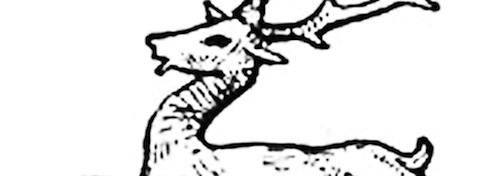
Deep in the heart of the realm of Angria there was a forest. In that forest lived a stag, perhaps the finest stag anyone had ever seen, his antlers spreading like the winter branches of an old beech tree, his flanks red as the ire of winter dawn. In a house just outside the forest there lived a hunter who had vowed to trap and kill the stag, to wear the antlers as his headdress and the russet hide as his cloak. But the stag was many years in age and full strength, wily, swift. He valued his freedom and would bound away while the hunter was still fitting a quarrel to his crossbow. Season upon season, year upon year, the hunter stalked the stag. Prey and predator knew every inch of the forest, every tree, every thicket, every faint sentier, every clearing, every pool, every shadow. At the beginning of one year the stag lifted his head to a new sound, the steady fall of an axe against a tree trunk. He thought little of it as such things are not the concern of deer, but nevertheless he moved through the forest to a place where the noise did not crowd as badly upon such things as did concern him. The sound continued throughout the year, but still the stag thought little of it. Then one day when he approached the edge of the forest he found that his kingdom was much smaller than he remembered, and his way out into the open fields beyond the forest was blocked. There was a high, wooden fence. The hunter had chopped down many trees to make it, and it was cammed in cruel, sharp points. The stag ran to the other side of the forest and found the way blocked there also. He ran along every path he knew and everywhere his was way barred by the fence. He plunged through thickets and briar patches through which he had never gone before, but the fence always thwarted and confounded him. Wherever he could get a run he tried to jump the fence but always, from outside, came the hunter’s mocking laugh or a warning bolt from the crossbow. At last the stag could endure this no more and risked everything on one last, desperate leap. The fence was higher than anything he had ever cleared before, but he gathered all his strength and courage, fixed his eye upon the blue sky above the cruel, sharpened points, and ran. He left the ground, he flew, he soared, wondering if this is what it felt like to be a bird. In mid-leap he could see the open farmland and the hills beyond. It was at that moment that the hunter, who had been waiting for him, loosed his quarrel. It went deep into the stag’s body, right to his heart, checked his leap, and brought him crashing down onto the sharp points. The stag’s eye was still fixed upon the sky and the far hills but now it saw nothing. When he saw what he had done, the hunter dropped his crossbow and his quiver and walked away. He was never seen again, and his house became a cold and empty ruin.
__________
* (c) from ‘Branwell’, a work-in-progress.

Intermetricality: a definition

Intermetricality: the persistence, repetition, or recurrence of rhythms, metres, and patterns, especially unconsciously, especially in folk stories, folk poems, and folk songs. Such patterns may have their origin in non-folk forms, such as the Bible, advertising slogans, and so on, as much as in folk forms. The term intermetricality is akin to intertextuality*, but is more specific.

Off the top of my head, here is a possible modern example. Someone posts a picture of a cat wearing glasses on Facebook, and captions it thus: ‘If you’re under 40 this will remind you of Harry Potter… if you’re over 40 it will remind you of John Lennon’. That particular pattern of balancing two phrases is similar to that found in the Book of Proverbs. This does not necessarily prove a direct relationship between the two but readers will likely be struck by the familiarity of both.

By the way, this word and its definition did not come to me out of nowhere. I coined it to explain something after having been asked to read and comment upon an article by the late Dell Hymes, Ethnopoetics and sociolinguistics: three stories by African-American children, in which he wrote of such repetitions. I don’t pretend to be any kind of expert in this or in any of the academic fields I mention here, I just wanted to establish the coining in a recognisable place and at a recognisable time. Others are now perfectly free to use it.

*The word ‘intertextuality’ was coined by Julia Kristeva, although she herself was probably influenced by the work of semioticians Roland Barthes and Mikhail Bakhtin, and linguist Ferdinand de Saussure

An excerpt from ‘The Chronicles of Anna Lund of Helsingfors, Vampire Hunter’

I can remember a cold evening, very cold, my toes numb in my boots, my fingers aching in my muff, so much so that I wanted to take them out and suck them to make them warm. I was huddled close to my father, his left arm was round my shoulder, and our feet crunched on the snow as the skirts of his coat flapped outwards at my thighs and legs. We were hurrying, and I felt that it was not so much because the winter snow was whipping at our faces, but because it was late. My father was in haste to get home, almost as though he was afraid. A few lights from windows and elsewhere threw patches of yellow glow on the snow, but though every flat surface was white and the wind was drifting it against walls, there were still shadows too dense for my half-shut eyes to see into, and pieces of black wall standing crazily upright like broken teeth or gravestones. Snowflakes clung to my eyelashes, and there was enough warmth in my face to melt some of them and make them run like tears. My legs propelled me almost to fast for me to stay upright, and had it not been for my father’s steadying arm, I believe I would have tripped over my numbed toes. My body and my breath were hot from effort, making my extremities feel even colder by contrast. If there was any sound apart from the crunch of our footfalls – which I seemed to feel rather than hear – it was lost in the wind that buffeted my ears. A winter night in Helsingfors can be cruel.

Then there was a moment when I came closest to falling; that was when my father suddenly stopped. Again I can’t be sure of sounds, but I think he gasped. He pulled me closer to him, pressing my face into his coat. It was rough and harsh against my skin, and I couldn’t breathe, so I slowly twisted my head so I could see out of the corner of my eye, between two of his long fingers as they barred across my face.

I thought I could make out that we were close to our home. If it had been bright daylight, I might have recognized the place where the street bent to the right, and to the left an alleyway led up narrow steps before making a right-angle and losing itself amongst the tenements and go-downs of the city. High on a wall a casement was flapping open in the wind, wrenching back against its own hinges. It was allowing a light to shine down upon the mouth of the alley and the steps. At the margin of the patch of light there seemed to be two vague shadows. One was like a crumpled shape on the ground, the other seemed to bend or loom over it; as the snowflakes dashed against my face, the two shadows seemed to merge into each other, separate, and merge again. Then suddenly, the lower shadow was alone, the looming shadow had disappeared; but instead there was a figure standing at the top of the steps, a man in dark clothes. The light from the casement shone directly onto his face – it was as though his face attracted it. To me it seemed as though his bright eyes were fixed upon me and only me, and he was looking at me, memorizing my half-hidden features. He was grinning, a nasty, fixed grin, and there was something about his teeth – I could not take my eyes away from his grin.

The wind blew my father’s coat across my face for a moment, and when it flapped back again the top of the steps was empty. The man had gone.

Once we reached our house, my father took me up to my bedroom and made me lie down for the night. I didn’t go to sleep immediately, and my father sat there beside my bed, his head bowed as though he was praying. When I did go to sleep – I seem to remember – my dreams took me back to the mouth of the alley. It was always deserted, not only free of snow but as though the steps had been swept by a broom. The casement was always tight shut and curtained. There always seemed to be the echo of running feet…

__________

‘Anna Lund’ is a casual, on-going project of mine. Something might come of it.

Of Sam, Miss Smith, and Justice!

When I was young I read a whimsical book by Beverley Nichols entitled The Tree That Sat Down. The story is set in a wood where four human characters – Judy and her grandmother Old Judy, and Sam and his grandfather Old Sam – run two rival shops. The Judys’ shop is set in the crook and hollow beneath an old willow tree, and there they sell all kinds of good and wholesome things to the talking animals of the wood. The Sams are newcomers and set up a rival shop in a ruined Model T Ford. Young Sam is a hoodlum and uses modern advertising techniques to sell worthless things to the animals, many of whom are nonetheless taken in. Sam recruits the help of Mr. Bruno, a bear who is basically decent but weak. In order to impress the woodland animals, Mr. Bruno has always pretended to come from ‘The Steppes of Russia’ and to be able to speak Russian, but Sam blackmails him, having recognized him from a visit to the circus from which Mr. Bruno had escaped. He becomes Sam’s bearspaw and bearsbody, doing nefarious errands for the young entrepreneur.

Into the wood comes a character who comes and goes through several of Beverley Nichols’ children’s books – the witch Miss Smith, with her attendant squad of toads. Though two or three centuries old, Miss Smith presents herself as a young lady of fashion. She is thoroughly evil, and Nichols describes this in a simple but succulent way:

“… all the evil things in the dark corners knew that she was passing… The snakes felt the poison tingling in their tails and made vows to sting something as soon as possible.  The ragged toadstools oozed with more of their deadly slime… In many dark caves, wicked old spiders, who had long given up hope of catching a fly, began to weave again with tattered pieces of web, muttering to themselves as they mended the knots…”

Sam accepts her help in his commercial war, but soon finds himself dominated by her. She suggests sending a poisoned gift, which she will make, to the Judys. Sam seems terrified at the implications of this, but mutely agrees, and Mr. Bruno is forced to deliver the deadly package. He sets off to do so, but at the last moment surrenders in tears to Constable Monkey and Mr. Justice Owl.

The animals put young Sam on trial for his life. Prosecuting counsel is the Judys’ best friend Mr. Tortoise. Mr. Justice Owl, despite his incompetence, conducts the trial, and Mr. Bruno, Miss Smith, and even the toads (“Swelpmesatan” they croak in chorus as they take the oath) give evidence against Sam. A storm is coming, the wind is rising; Judy looks at Sam cowering in the dock and feels nothing but pity for him. She shouts for mercy, but her cries are carried away in the wind. She looks up to the clouds and prays for some power to save Sam. The clouds roll back and she sees the stern face of the Clerk of the Weather – an angel who had once complained to God about the remorseless sunshine of heaven – who sends a tornado to blow Sam away to a new but hard life.

Mr. Tortoise transforms into a handsome prince – he had been turned into a tortoise until he had learned to better his ways – and marries Judy.

I can recall how incensed I was as a child by Sam’s trial. Certainly he was a wrong’un, a capitalist, and a racketeer, but how could it be fair? The judge was incompetent, the jury of animals was prejudiced against him after learning of the plot to kill Judy, and he had no defense counsel. Moreover he had been an almost-unwilling party to the plot, which had all been the suggestion of Miss Smith. She had made the poison. As far as I could tell Sam hadn’t even touched it, Miss Smith put it into the hands of Mr. Bruno, and now these two co-conspirators were giving evidence against him. I shouldn’t have had any sympathy for Sam, but my outrage was more practical than Judy’s pity. I imagined myself imposing my presence – a girl no older than Judy at the time – upon the court as counsel for the defense, showing how inadmissible the evidence was, how unreliable the witnesses were, how little a part Sam had actually had to play in the scheme, and dashing the prosecution’s case to pieces! How delicious it would have been to have had a battle of wits with Miss Smith as a hostile witness.

As I could not do that, I went through the book from the beginning, scoring out any bad thing that Sam did or said and writing in a virtuous alternative characterization. By the time I had finished the pages were thick with crossings out and were a palimpsest of redemptory fiction.

That was, I believe, the only time I had ever desecrated a book. I am rather glad I did, though, and if I ever get the time and inclination, I will search the second-hand book stalls and car-boot markets for Nichols’ other books that feature Miss Smith. It seems that she catalyses my creativity. I’ll put my pens well out of reach, though.

‘A Woman on the Edge’ – workshop project of prose and poetry: Omega.

One day nature will declare my work-in-progress a canon, and there will be an omega stamped, sealed, upon my work. It will be as final as a horseshoe-print on my skull, a line drawn underneath the last word on the last page. The moment before that line is drawn and the Omega is spoken I know that I will be praying to write just one more line, one more metaphor. Perhaps it would have been as apt a metaphor as – life imitating art – was drawn by those foresters who lately cut down some trees in a piece of Perthshire woodland. No doubt in an act of supposed ‘management’ they culled those on which, a couple of months previously, hand-written poems of mine had been pinned, but more than management it seemed like retribution exacted by the landowners for their having participated in an act of revolution. Cruel landowner! Cruel foresters! The trees were innocent bystanders, or at most unwitting insurrectionists!

Still, it made me think.

It knocked clean out of my head my project of hidden poetry, buried under the earth and leaf-mold of the forest floor. In its place was panic at the thought that a day would come when I produced no new poetry, not simply poetry that would remain unseen. How awful a glimpse of mortality!

I shall seed amongst old books some scraps and notes, lines in my hand on the backs of old envelopes, hints of manuscripts completed but undiscovered, so that there will always be speculation as to whether any ‘canon’ is complete, whether there are poems out there new to the reader’s eye. I shall redecorate my house, writing in felt marker upon a wall before I apply paste and paper, so that – perhaps – when they blue-plaque the building with a reverent Marie Marshall, author and poet, lived here it may be treasure-trove. I shall give my man-of-law a box and specify that it is never to be opened.

Such you may consider to be sleight of hand, deception, half-lies, total falsehoods, and finite even if secretly so. I shall bequeath to other poets a phrase each, an idea, some few words, a sentence, a rhythm, a rhyme – something. Along with each bequest will be a plea for them to run with it, weave it in-and-out of the pommiers of their poetic orchard or of the bollards and signposts of their city streets, to mortar it as a reclaimed brick into their own wall. I will release my works to the world and say: If you have a mind to poetry, then lift these, re-mould them, extract text from them, expand the images and metaphors, or simplify them, encapsulate them in seventeen syllables, do anything you wish… but please be sure to acknowledge them!

Perhaps there is an Edgeland between life and death, and this is why we believe in ghosts; perhaps my own dreams – the ones where I can fly, rather as one treads water – are intimations of this state seen through a crack in time and space. If this is so, I might be watching as it all unfolds. I might be the goose that walks over the grave of the reluctant poet – the one who doesn’t pitch in – and makes him shiver. You have been warned.

‘A Woman on the Edge’ – workshop project of prose and poetry, part 6

Templeton Woods

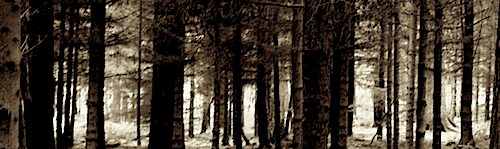
Held in an irregular trapezoid between Dundee and one of its dormitory villages, bordered by a broken road, by the ordered twists and turns and straight-forwards of a golf course, by the rat-run to Coupar Angus, and crowned by a water-tower, is the wood where I walk. I prefer to pick days when I won’t meet anybody, so that in this patch, this scratch of trees on the map, this soledad, I can run and walk alone. I can lose myself, pretend I am in the depths of the antic Caledonian Forest; so I come midweek, maybe in the rain, deliberately to feel the breath knife my lungs and my heartbeat rise to meet it. I feel safe here, there is no denying. Sometimes I feel as though I could pull a blanket of fallen leaves over me and sleep, never to be found, although sometimes felt. I have run here in the dark, bobbing my torch to the fall of my trainers, veering crazily off the path and crashing into branches, and only the cold has held pace with me. I have deliberately stood here waiting for evening to overtake day, for the last sky-metal to turn edge-on to me and withdraw, for the blue-to-black sheath to take its blade, so that I could look up between the trees to see stars, shooting stars, tricks of the light that never came. All this so close to civilisation.

On the 20th of March 1979, eighteen-year-old Carol Lannen was witnessed getting into a man’s car in Dundee. Some time later her naked body lay here in Templeton Woods; she had been strangled, her clothes were never found but her handbag was discovered miles away in Aberdeenshire. A little short of a year later a shy young woman by the name of Elizabeth McCabe went missing. Rabbit hunters found what they thought was a discarded shop-window dummy lying very close to where Carol Lennan’s body had been found. Neither murder has ever been solved, each remains a cause célèbre, and a torment to those who knew and loved each victim.

And yet I still come here, willing myself to be lost, to be alone. Day after day I cross the trail of other walkers, I find litter, hear a dog barking. Woods like this one right here on the edge of things are debatable places. They ought to be wild yet so much of them is touched daily – we come for solitude, for exercise, maybe for sex, for thought, for stars. Twice, as recorded, to leave the aftershock of pain and terror. Oh God, there are edges and then there are edges.