Marie Marshall

Author. Poet. Editor.

Apples and Ink Angels

© Lesley Haycock

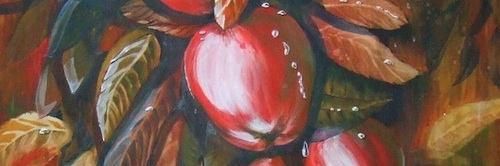
Into my hands today popped a copy of Ink Angels. Edited by Kevin Watt and Elizabeth Neilson, it is an anthology of two hundred or so poems,  out of more than four million on the web site allpoetry.com, picked ‘as examples of having a profound perspective’. “Reading them,” says Kevin, “will take you to a lovely place.” I mention this because my poem Apples, written back in 2007 is included in the anthology. It’s among a wonderful collection… from my point of view it’s worth buying because it contains Don’t ask by L A Smith, who is one of my favourite poets of all time, yet so rarely is she published that she remains barely known outside a circle of friends. Put Ink Angels next on your wish list, after Lupa

How does it feel to have my first novel published?

At last my first novel Lupa is published. It was taken up by an independent publisher in South Africa who offered me a commercial contract. It feels as though the novel has had a long gestation period – it was my first work of full-length fiction and I completed it in 2004, and so it is in some senses a ‘young’ work. I have doggedly resisted the temptation to self-publish or even to accept an ‘author-subsidised’ deal. To my mind conventional publication does still confer legitimacy on a written work. This is not to say that there are not some excellent self-published works out there, nor that conventional publishing exclusively promotes works of great literary merit. We can all point to the exceptions. Nevertheless – I have to tell you – this feels good!

At present the book is available in print or in Kindle form via Amazon. My SA publisher is currently struggling with the problems of printing in both SA and the UK, so a bookshop launch in either country is not imminent. But as so much of the book trade is now on-line Lupa will actually be available internationally before it hits its domestic markets! Who knows – it may end up being printed in China.

Another aspect of being taken on by an ‘indie’ publisher is that such a lot of the publicity and marketing will have to be do-it-yourself. I am going to have to plug it via this site, via social networking, and so on, hoping that people who say they like my writing will actually prove it with a purchase, will recommend it to friends, will write favourable reviews, and so on. Over to you, I guess!

I would like to thank my agent, my publisher, my friends Lucy (who insisted that I wrote this book in the first place) and Joey (who gave it its first critical read-through back in 2004) and everyone who has made this possible for me.

A galley proof day.

(c) P’Kaboo Publishers

The moment you hold a galley proof of your book in your hands is a significant one. It is the moment that your mind-set shifts from ‘if this ever happens’ to ‘this is going to happen’. Of course there is still many a hurdle to jump on the way, but that’s how I felt when I held a preliminary copy of my novel Lupa today. I wonder if other authors feel the same way, and whether it applied as much to Harper Lee with her grand total of one novel – the wonderful To Kill a Mockingbird – as to Erle Stanley Gardner with his massive canon when they received a proof copy. My task today will be reading through the proof to see if anything has been missed during the editing stage.

Lupa is scheduled to be published by an independent publisher outside the UK; the publishers are trying to organise a separate print run in Britain, however, and it will also be available worldwide as an eBook. When I know the final arrangements and the launch date you’ll know too, but it may be in time for Literary Dundee in October.

Meanwhile a UK publisher has asked to see my second novel The Everywhen Angels. I merely mention this in passing because, as every author knows, that is only the very first step and one which might have to be retraced, having led nowhere. Even having a book accepted is part of a process in which each stage provokes a different reaction. There is the initial elation when the publisher says yes, the frustration and boredom when nothing seems to be happening, anger when a publisher’s editor insists on a change to the text – I recall how it felt to sacrifice a line of dialogue from Lupa, a line which I felt was the emotional climax of a key episode, at the insistence of the editor, but it had to be done and done with good grace on my part – anticipation as publication date moves nearer. As writers, authors, poets, we feel all these most keenly; it has to do with the urge to communicate, our art depending on language, the prime mode of human communication.

Ah well, time for a morning cup of tea. There’s a sunny day ahead today, and if I start my reading now I may get out into the fresh air later…

Is it too much to say ‘fallen comrades’?

Over the past couple of days we have lost Maeve Binchy and Gore Vidal. I don’t think I can add anything to obituaries and tributes published elsewhere, except to say that the loss of literary masters and mistresses reminds us very clearly that life is a loan and payback day comes around. Vidal’s Julian is on my to-read list and I mean to get to it soon.

Meanwhile work continues. The sonnet anthology The Phoenix Rising from its Ashes is moving ahead slowly. Due to unforeseen difficulties I have been asked to take over a task from the Editor-in-Chief. I’m sorry that progress seems to be glacial, but that’s the way of publication as I know from my own projects (about which more later, hopefully). Meanwhile the printed ice-cap continues to melt in the heat of E-publishing’s global warming. I feel like a polar bear.

__________
The image of Gore Vidal is from a photograph by David Shankbone.

“No matter how famous I become…”

“No matter how famous I become I will never ask for nor accept, from any publisher or magazine editor, more than the standard fee for any piece accepted. If that means accepting no payment for a particular piece then I’ll accept no payment, and that’s all there is to it!”

I had been in conversation and the subject of a famous poet came up, one who had been asked by a magazine of which I was part of the editorial team if we could reproduce one of her already-published poems. Yes, said her agent, and named a substantial fee. Having recounted this in the conversation I made the declaration above. I said that no poet is greater than her audience, and that everyone has the right to beautiful, radiant things (to quote Emma Goldman).

“Put that on your web site,” came the reply to my declaration. “Look at it again in ten years’ time, and see if you have stuck by your principles!”

Well, there it is. Of course in ten years’ time we won’t have web-sites, we’ll be manifesting ourselves in holographic displays, triggered by our audience’s thought-waves. Or some such…

*

You may be asking what has happened to the many writing projects I have talked about over the past couple of years. Well, most of them have been shelved for one reason or another. Admitting this may make me seem like a writer who can’t stay the course. Well that’s a possibility, I suppose, but on the other hand this year I have completed a new collection of themed poems for submission, by invitation from a particular publisher. The shelved projects may remain shelved, or they may re-emerge later, as they are or reworked. I don’t know.

Meanwhile I’m about to add another project to the list. As a radical departure for me I am hoping to adapt another novelist’s book as a radio drama. That may end up on the shelf as well, but I’m willing to have a go. I shall let you know in due course.

Ode to the Olympic Torch

It’s parody time. The Olympic torch is passing through Scotland at present, and I recalled that four years ago, during the previous Olympiad, I wrote a parody of an ode for a little competition. Basically it is twenty-four lines split into two stanzas, but the underlying structure is six quatrains in alternating lines of iambic tetrameter and pentameter. It limps and hirples like mad and it occurred to me, after starting the first four lines with the apostrophic ‘O’, to start every line with that letter – but remember, this isn’t serious art, it’s a total mickey-take. Enjoy.

O Torch, O thou eternal flame,
    O thou Olympic, ever-burning spark,
O ardent one of Attic fame,
    O thou who lightest up the noisome dark
Of ignorance with searing fire,
    Oh draw’st thou nigh me like some little sun?
Or art thou that bright, burnished lyre
    Osiris bears, who through the heav’ns doth run?
Occult and cryptic, arcane match –
    Obsidian thy sky – thou twinkling star;
Obtuse am I – may I thee catch?
    Oracular, as all such visions are,
Of stuff unknown to mortal mind…
    Ought I to kneel, ought I to bow my head
Obsequiously? And dost thou find
    Our dully-mortal clay both cold and dead?

O Torch, I’ll carry thee by hand –
    Oceanus’ waves must not put out thy glow –
O’er hills; through ev’ry foreign land
    Or continent my feet shall boldly go.
On, on, and onward still I press,
    O’ercome by naught but pride – I shall not tire!
O Torch, illuminate and bless…
    Oh bloody hell – my chiton’s gone on fire!

Thoughts on ‘Ozymandias’ by Percy Bysshe Shelley

I have been in conversation with a friend – I could say I met a traveller from an antique land – about Percy Bysshe Shelley’s famous poem ‘Ozymandias’. I shall let you share a small handful of my thoughts from that conversation. First of all let me transcribe the poem for you to read:

I met a traveller from an antique land
Who said: “Two vast and trunkless legs of stone
Stand in the desert. Near them on the sand,
Half sunk, a shattered visage lies, whose frown
And wrinkled lip and sneer of cold command
Tell that its sculptor well those passions read
Which yet survive, stamped on these lifeless things,
The hand that mocked them and the heart that fed.
And on the pedestal these words appear:
`My name is Ozymandias, King of Kings:
Look on my works, ye mighty, and despair!’
Nothing beside remains. Round the decay
Of that colossal wreck, boundless and bare,
The lone and level sands stretch far away”.

This is probably Shelley’s best known and best loved poem. It is often said to be Shelley in sobriety; the ecstatic artist has been quieted, the revolutionary parlayed into the observer of history, the poet distanced from his subject. I believe otherwise. I see Shelley deeply engaged in this poem.

Shelley is often seen as a poet with a multiple and fragmented identity which emerges in the various personae of the ‘speakers’ of his poems, as well as being imposed on him from outside – the Victorian image of the ethereal versifier, for example, as fostered by his widow, is one such imposition. There is Shelley the inflammatory radical, doling out measured insults to the head of state, ‘an old, mad, blind, despised, and dying king’. There is Shelley the outraged father, spitting barely concealed bile at the Lord Chancellor. There is Shelley the Romantic observer of the Sublime, the inaccessible ‘secret Strength of things’ at Mont Blanc. There is Shelley the grasper for ultimate inspiration in ‘Ode to the West Wind’, begging ‘Be thou, Spirit fierce, my spirit! be thou me, impetuous one!’

To me this is not a random kaleidoscope, not a tumult, not a product of an unstable psyche. To be sure Shelley’s poetry develops through his career, changes, but it remains true, artistically resolute throughout. He is simply not a one-trick pony. He is clever and accomplished technically – hell, who these days could successfully write a wild, ecstatic poem and do it in five cantos of terza rima sonnet form, and make it good?* Like any of us, his mood can change, he can sit and look at things from a different perspective, he can step outside his own thoughts and emotions and observe them as much as he can experience them in the moment.

In ‘Ozymandias’ there appear to be four distinct voices. People normally identify three. Firstly there is the author/speaker; this voice is most often attributed to Shelley himself, and the fact that he only allows the speaker one line is held up as evidence of detachment. Secondly there is the traveller from the antique land, whose taking-over of the narration of the poem is considered to be further indication of objectivity, of Shelley’s status as an observer of history rather than a participant. This voice is contained in quotation marks, deliberately, and again this is taken to indicated distancing. Thirdly there is the voice of Ozymandias – Pharaoh Rameses II – whose inscription raises him above kings, commanding all who consider themselves to be powerful to look on his works and despair. The fourth voice is the Greek historian Diodorus Siculus, the supposed inscription being Shelley’s rendering of a phrase in Diodorus’s historical book on ancient Egypt. Two things should be noted here, firstly that Diodorus used other sources for his own historical works, and secondly that imagination played a part in classical history, with the result that what famous figures ‘said’ is often what the historian felt they ought to have said.

‘Ozymandias’ is taken to be a work of political satire, in particular a retrospective gaze at the rise and fall of Napoleon Bonaparte. Ancient Rome took the best part of two millennia to go from the expulsion of the Tarquins to the fall of Constantinople; France realised its equivalent during the adulthood of a single man, Napoleon. The poem is considered a warning to those who would carve out temporal power for themselves, to the effect that such power will not outlive them. it will fall as surely as the statue of Rameses II fell, worn away by the sands of the desert and by time.

But as I said, I believe that to be a superficial reading, and that Shelley is deeply engaged emotionally and intellectually in this poem. It is a self-referential and introspective work. The second voice, the traveller, is no one external to Shelley. He has given his pen to an inner voice of his own, which will pass judgment on him. I see this because many of Shelley’s familiar themes are actually expressed in this poem. The Sublime is there. Some of it is found in artifice rather than nature, but the words ‘vast’ and ‘colossal’** are there and note a sense of awe that is unmistakable even in a ‘wreck’. The Sublime in nature is in the ‘boundless’ desert, as awesome in its silence and ‘secret strength’ as is Mont Blanc, as relentless and powerful as the West Wind. Imagination is there – imagination of Diodorus on the one hand, and that of Shelley on the other. The face of the statue of Rameses is impassive, yet Shelley imagines a ‘frown’ and a ‘sneer of cold command’. Striving for greatness is there, as Napoleon the revolutionary turned emperor strove, as Shelley the revolutionary turned poet strove when he yearned to be made one with the West Wind, to be, in his artistic power, the Spring to the West Wind’s Winter. Politics certainly is there, even if direct and inflammatory agitprop is not.

But subtly Shelley’s inner voice of judgment mocks, as the hand that framed the statue ‘mocked’***. Ruefully Shelley must acknowledge that he, like all the Romantics, could not quite achieve the quasi-divine power of expression that he wished to. The Sublime desert, the expression of the unattainable, stretches far away.

Because this is all expressed in a short, tightly-wrought sonnet, it is missed by many readers. Scroll back and read it again, think of Shelley’s inner voice, still and small, gently charging him with trying to steal fire from heaven, think of Shelley himself as Ozymandias the failed worker of mighty works, think of him also as the sculptor whose stonework is now brought as low as the king’s power, and think on. When the poem has worked on you, play the arguments out in your own mind…

__________

*I hear some resolute modernists counter ‘Who would want to?’

**From the Colossus at Rhodes, one of the ancient Wonders of the World.

***In the context of the poem, the word has the likely meaning of sculpting, rather as we would use the term ‘mock-up’ today, and not necessarily the meaning of scorn, though that is an implication too, a double-meaning…

Axe

All the girls call me ‘Axe’. Tough name, but nah need fe aks me why, coz of me accent, ell-oh-ell!

They’re like to me – We were gonnay give you a kicking. Two days I’ve been in Glasgow, two days! I go out to a club, and these girls come over and they’re looking mean like they mean business, right. But the music is loud and the girl who’s doing all the talking has this accent, this Scottish accent, and she’s shouting over the music, and I’m like – What? What? And she’s back to me like – What? What? And then the music stops and all you can hear is her shouting what and me shouting what, and suddenly everyone’s laughing.

So the girl who’s doing all the talking, this is her to me – Come over to our table. And I’m like – Okay, cool. So we all get to be mates, and we’re laughing, and I can’t understand half of what they’re saying. I can now, though, later. I’m used to their accent, they’re used to mine though this is one of them to me back then – Oh. My. God. Your accent is weird!

Afterwards some of them are hammered and throwing up in the street, and we’re helping them. And she, this girl who was doing all the talking, she’s like – My name’s Marie, what’s yours? Only the way she says Marie is all Scottish like MAH-ri. And I’m like – I’m Shayla. And she’s like – you wernay scared when we came up to you, Shayla, we were gonnay give you a kicking, you didn’t back down. So I’m like – Why was you going to give me a kicking anyway? And she’s like – It was the way you were looking, looking at the lads in here, looking at us, just the way you were looking.

And she slips her arm through mine and we walk off down the street, and she’s like – Woot! That’s when we’re dodging round one of the other girls who’s not walking straight coz she’s hammered.

Then this is Marie to me when we’re walking down the street – Can you fight? Wannay be in the krew? This is me back to her – Yeah, all right.

So we’re The Gherls. The Gherls, right? They explain it to me once, it’s coz the krew started with, like, Celtic supporters’ girlfriends, and Celtic are called The Bhoys, yeah? But we’re not strictly Celtic supporters or Celtic supporters’ girlfriends any more, not Catholics. Well, Rosary is Catholic. We call her Rosary coz she gets her beads out before a fight, and like counts them with her thumb, then she puts them away and crosses herself. But Shireen is in our krew, and she’s a Muslim and Asian, and she wears a hijab thing and doesn’t drink, and it doesn’t matter even when we’re fighting Asian girls, so just the same it doesn’t matter to me if we’re fighting black girls. It’s the fighting that matters.

There’s ten of us hardcore, and there’s the also-rans, like girls who sometimes are there or girls we can call on, and some of those girls have mates who are okay and will help out. But like most of the time we don’t need them. The hardcore krew got loyalty.

And one day Marie’s like to me – How old are you? And I’m like – Why you aks me that? And she’s like – Axe? Axe? Ell-em-ay-oh, that’s what we’ll call you, your name is Axe. And I’m like – Laughing. My. Effing. Arse. Off.

When you’re fighting, like when I’m fighting, everything is so clear. Lights get really bright and white, and everything like stands out with this hard, black outline, and I feel really alive. I mean really alive, like my whole body is tingling and I can feel everything, and even when I get hurt it’s like the feeling takes over. It’s not like getting hurt normally. It’s different, better. I know that sounds weird, but I know what I mean.

There’s this girl, this Gherl, called Paysh, that’s like short for Patience which is her name, right. She’s cool, really quiet, never says nothing, never says nothing much. When she fights it’s like her fists go really tiny, and when they hit someone they must really hurt. I saw her once, and she’s really fast, and she’s fighting this other girl, and this other girl’s going down coz Paysh punches her in the face three times. Just like that, it took half a second. Bang bang bang. And these big red marks come on the girls face, and the rest of her face is pure white, and she looks like she’s going to cry. So all her mates are coming over like they want to kill Paysh, so we go and stand round Paysh and dare them, and they all back off.

And I’m like – that was sick, Paysh, really sick!

And the rest of The Gherls are like – yeah that was totally sick! And they’re all grinning.

And Paysh is suddenly all excited, and she’s like – Yeah it was sick, fuck yeah, did you see her face? And she’s making those tiny little fists. So anyway one day we’re in this bar, and I’m like – Where’s Paysh? And the others are like – She’s got her finals tomorrow, so she’s studying. And I’m like – What, no, Paysh is a fucking student?

And then the week after that I’m with Paysh shopping, and we go to Marks and Spencer’s café for a coffee, and this is me to her – Paysh, you’re really clever, so why’re you in a krew? Why’re you not, like, at the student union or something?

And she’s very quiet for a while, like she always is. She’s sitting there and I’m thinking how slim she is, and how she looks tall even when she’s sitting down, and how she always wears green but not bright green, not Celtic green, but sort of faded green, and how her hair is somewhere between blonde and red.

And then this is her to me – I don’t know, Axe. It’s as though when I’m at uni I’m on an island, or I’m behind bars, or I’m in a room with no windows full of mirrors. No one can see out. No one takes any notice of anything except what’s going on inside. No one sees that there’s a whole city outside of the uni. Yeah, it’s like I’m on an island and I want to see fish, but I can’t see fish unless I jump into the ocean, unless I make a conscious decision to jump into the ocean and swim and look for fish. So let’s take something simple: if I want a drink and a dance I go into the city, and there’s a club. If I want mates I go into the city, and there’s my krew. Some students if they want to do something dangerous and exciting they climb the big uni spire. When I want to do something and dangerous I get into fights with my krew. Do you understand, Axe?

And I nod, like I kind of understand. Then this is me to her – Yeah, I think so, it’s like when I’m at work it’s all brown and green, but when I’m out with The Gherls its bright yellow and bright blue, and when we’re fighting it’s brilliant white and there’s like wind-chimes going off in me head.

And she’s like – Synaesthesia. And I’m like – What? Whatever. Then we’re smiling at each other.

So one time I’m in our usual club and I’m fixing me makeup in the ladies, and Marie is standing next to me washing her hands. I’m sort of looking at her sideways and comparing her to Paysh coz they both have the same colour hair. But she’s shorter and like wider across the shoulders and hips, and she’s a little bit butch maybe, though not really stone just a little bit. And she’s taking a long time just washing her hands, and she looks over to me.

And she’s like – I really like you, Axe.

And I’m like – I really like you too, MAH-ri.

So then she leans over and kisses me right on the mouth, and her mouth is sort of nice so I kiss her back. Then we stop, and she’s like – Sick, or what? She’s grinning and I’m grinning too, and I’m like – Yeah, sick! And then we go back into the club to our mates.

Then there’s the time I see Rosary in the distance and I follow her, and she goes down streets I don’t know, where I’ve never been, and there’s this big Catholic church all brick and concrete, and she goes in. So I follow her, and there she is sitting in one of those long seats they have, and I go and sit next to her. She’s praying or something coz her eyes are closed and her hands are together and those beads of hers are between her hands. Her lips are moving but she’s not saying nothing. Then it’s like she realises I’m there or she finishes praying, coz she opens her eyes and crosses herself.

And I’m like – Hi! And she’s like – Hi. What are you doing here? And I’m like – I followed you. What are you doing? It’s not Sunday or nothing. And she’s like – I’m going to confession. And I’m like – What’s that? Coz I don’t know nothing about being Catholic.

And she’s like – I go into that box there, and there’s a priest in the other box, the one right next to it, and we cannay see each other but we can hear each other, and I tell him all the bad things I’ve done since the last time I was here. And he makes me promise no to do them again, and he forgives me like in God’s name, and tells me to go and say a bunchay Hail Marys or something as a penance.

So I think for a while, and then I’m like – Do you tell him about the krew and all the fights? And she’s like – Yeah of course.

So then there’s a creak and the door of the box opens and an old woman comes out and walks back through the church. Then Rosary gets up and goes into the box and closes the door behind her, and I suppose she’s telling the priest all about the things she’s done, and it makes me feel a bit weird because I’m sitting there and I’ve been part of the things she’s telling him. And I wonder what I would tell a priest if I was Catholic.

Then there’s this one big fight. There’s been another krew hanging out in the places we like to hang out, the mates of the girl Paysh punched. They’re like to everybody – we like it here, we’re gonnay keep coming here. So we’ve put the word round, Marie’s put the word round, that if they’re there on Friday then they are gonnay get a kicking. So on Friday there they are, and there’s more of them than before, and they’re really loud, they think they are so cool and tough. And Marie goes over to them and she’s like – Outside, round the back, ten minutes. And they’re like – Fuck you Missis Woman, but yeah.

So ten minutes later we’re all in the wynd and we’re thinking like – Where are they? Then we see them coming in at both ends of the wynd, and they’re grinning because they think they’ve got us trapped. And some of them are picking up stuff from the wynd, like sticks and stuff, and someone’s like – Watch out, that blonde hoor’s got a malky.

And Marie’s like – It makes me MAD when someone pulls a malky on me! Then we’re fighting our way out and they can’t keep us in, and Rosary’s up against some girl with a piece of wood, and I’m up against the girl with the malky, it’s a Stanley knife or a box-cutter or something and she cuts me across the face with it. And everything is brilliant white like camera flashes and ringing like bells in me head, and it’s like everyone is dancing and I’m breathing really fast. And I’m hitting the malky girl and she’s running and they’re all running, and we’re like – Woot!

Except Rosary is bent over with her hand on her knees and then she falls over, and someone’s like – She got hit over the head, someone with a piece of wood or something. And I’m like – Look, everyone, get out of here and I’ll stay with her. I’ll call an ambulance on me mobile, it’ll be all right, I’ll say we was mugged or something. Move! Get out of here! Before someone gets the coppers. Move!

So the ambulance comes and takes us to hospital, and Rosary is lying there with a blanket over her and a mask on her face, and I’m like – Rosary! Rosary! And the paramedics are seeing to me because of me cut face and they’re like – Look, keep still, you’re arm’s cut too. And me sleeve’s all wet and dark as they cut it away.

Then we’re at the hospital and there’s a woman doctor puts stitches in me face and me arm, and she’s like – We’ll keep you in overnight. And I’m like – Okay Miss, whatever, but can I have a bed next to me mate? And she’s like – I’ll see what I can do.

And the police are there and they want to talk to me, but I don’t tell them nothing, and I’m just like – We was mugged. We was jumped on. No I didn’t see who it was. It was dark. And they’re like – All right but we might want to talk to you again. And I can see they’re thinking, like – Black girl, black girl, blacks always equals trouble.

So then I’m sitting on this bed and Rosary is on the bed next to me with one of those drip things in her arm and bandages on her head where she got hit, and we’re talking to each other really quiet, and I’m like – You did really good, Rosary, at the fight, and you’ll be all right now the doctor’s seen you. And she’s like – You did really good too, Axe, and I’m glad you’re here. And then her voice goes even quieter, and she’s like – Hail Mary, full of grace. And it’s like she’s counting with her thumb but there’s nothing there, and suddenly her eyes roll and she starts to shake, and I’m like – Nurse! Miss! Miss!

Then there’s people running and pulling the curtains round her bed, and that’s Rosary dying, and I’m crying and I’m like – Rosary! Rosary! And there’s two nurses trying to make me be quiet, but I’m crying and I’m like – Rosary! Rosary!

So that’s when things go brown and green for me again, and the stitches in my arm and my face began to hurt, and Rosary dies and I never get to talk to her again, never get to tell her how great she is.

So we’re all standing round Rosary’s grave, The Gherls are here, and Rosary’s family that I’ve never met before, and there’s a priest and he’s like – And if the Spirit of him who raised Jesus from the dead is living in you, he who raised Christ from the dead will also give life to your mortal bodies through his Spirit, who lives in you. And he calls Rosary Christine McCluskey, because that was her name and I never knew it. I never heard it before. And Shireen isn’t there, she’s standing over by the path coz she can’t be at a Christian burial. So I walk over to her and I put my arm through hers, and Marie turns round and frowns, but I give her a sort of secret wave to let her know it’s all right, and she turns back again.

And this is Shireen to me – I really liked Rosary, I really liked her. And this is me back to Shireen – I really liked her too, we all did. And Shireen doesn’t know what else to say, so she’s like – La ilaha illallah, Muhammad rasulu-llah. And I don’t know what else to say either, so I’m like – Amen.

I’m standing there thinking the priest at Rosary’s church isn’t going to hear any more about us, about me. Now I won’t be in nobody’s confession.

And afterwards when Rosary’s parents have all gone, Marie’s like – No time to waste, we’re dressed in our best all in black, we are gonnay go and find the wee skank with the plank and we’re gonnay do to her what she did to Rosary, and we’re gonnay find the wee hoor who cut Axe with the malky, and we’re gonnay … we’re gonnay… something… like if they can pick up sticks we can pick up bricks.

And we’re all like – Yeah let’s fucking do it.

So we’re walking along in our best all in black, and inside me head there’s this rhyme, and inside I’m like – One two I love you, three four out the door, five six pick up bricks. And I’m looking at Marie and she’s looking back at me, and she’s like – This one’s for Rosary! And it’s cold and me teeth are chattering, and there’s bells in me head, and I’m angry but I’m smiling, and it’s all brilliant white, shining light, and I’m really alive again. Really, really alive.

After the revolution

He had been a capitalist of so great ascent that he had once been called a captain of commerce; now such things were put by, and the jut of his jaw was bravado, belied by the glisten of sweat on his forehead. He was genuinely puzzled when we asked him for his secret dream; having taken a few breaths he said he had always wanted to work with wood, to feel the buzz of the grain against his thumb and the satisfaction of pulling a splinter from his finger when the carpentry was done. We found him a job in a boat yard, the period of his employment was inverse to his aptitude. Eventually he found a niche caring for a girl with Down’s syndrome, who came to call him uncle and to love him. There is no success without attempt; things balance eventually. I have heard that often he expressed something like the guilt of a survivor, which he was until he died of a heart attack; he was found in a water closet, the type that is so small that you have to rest your elbow in the hand-basin and gaze into the mirror. There would have been no pain.

__________

The online literary magazine qarrtsiluni is currently publishing poems in a series themed imitation. The entry for 7th May is my O great maritime bears, which is an emulation of poet Lisa Jarnot. The theme of imitation continues to the bio note which is an imitation of a telegram by the artist Balthus. From the qarrtsiluni site you can download a podcast of the poem, read by Dani Adomaitis.

It stops here!

President Harry S Truman looked around the Oval Office. His eye took in the rich, red drapes, the deep carpet in the same shade, the mahogany of the furniture. He glanced over each shoulder – right, left – to take in the Stars-and-Stripes and his own Presidential standard, and reflected that the room was still very much to the taste of Roosevelt his predecessor. How could it not be? FDR was such a dominating personality. He asked himself whether he had the courage (or the energy, or the time…) to redecorate.

Perhaps at this moment he doubted himself a little, but Truman was indeed a man of character. He looked down at his desk. Yes, here was the new Truman Presidency, ordered, workmanlike, symmetrical – that’s how he would be. A place for his pen, a place for his presidential blotter, a place for everything, yes everything was in order, so why was he frowning?

“Something is missing,” he thought.

His frown deepened when he caught sight of something he had been trying to avoid looking at. A tarpaulin had been laid on the carpet, and on that was the carcass of a freshly-killed white-tailed deer, a fine male with a single bullet hole. It was a gift from an eager, young White House aide who had heard that the President liked hunting. In that the aide had miscalculated – Truman shot grouse, not deer.

The President got up and walked round to the front of his desk. The carcass would not go away of its own accord, it had to be dealt with, a decision had to be made and it was the Commander-in-Chief who had to make it. No one else would make it for him.

“What the hell use would there be in a President who knew how to skin a damn deer?” he asked aloud. The walls of the Oval Office echoed his rhetorical question. He looked down at the white-tailed buck, then to the empty space on his desk. His frown melted. An idea formed in his mind and he made a decision. He lifted the Presidential phone and spoke to his secretary Matthew Connelly.

“Matt,” he said. “Get me the Presidential Butcher. And while you’re at it, get me the Presidential Carpenter and the Presidential Signwriter too…”