Marie Marshall

Author. Poet. Editor.

Tag: fantasy

Of Sam, Miss Smith, and Justice!
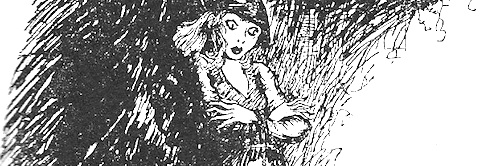
When I was young I read a whimsical book by Beverley Nichols entitled The Tree That Sat Down. The story is set in a wood where four human characters – Judy and her grandmother Old Judy, and Sam and his grandfather Old Sam – run two rival shops. The Judys’ shop is set in the crook and hollow beneath an old willow tree, and there they sell all kinds of good and wholesome things to the talking animals of the wood. The Sams are newcomers and set up a rival shop in a ruined Model T Ford. Young Sam is a hoodlum and uses modern advertising techniques to sell worthless things to the animals, many of whom are nonetheless taken in. Sam recruits the help of Mr. Bruno, a bear who is basically decent but weak. In order to impress the woodland animals, Mr. Bruno has always pretended to come from ‘The Steppes of Russia’ and to be able to speak Russian, but Sam blackmails him, having recognized him from a visit to the circus from which Mr. Bruno had escaped. He becomes Sam’s bearspaw and bearsbody, doing nefarious errands for the young entrepreneur.

Into the wood comes a character who comes and goes through several of Beverley Nichols’ children’s books – the witch Miss Smith, with her attendant squad of toads. Though two or three centuries old, Miss Smith presents herself as a young lady of fashion. She is thoroughly evil, and Nichols describes this in a simple but succulent way:

“… all the evil things in the dark corners knew that she was passing… The snakes felt the poison tingling in their tails and made vows to sting something as soon as possible.  The ragged toadstools oozed with more of their deadly slime… In many dark caves, wicked old spiders, who had long given up hope of catching a fly, began to weave again with tattered pieces of web, muttering to themselves as they mended the knots…”

Sam accepts her help in his commercial war, but soon finds himself dominated by her. She suggests sending a poisoned gift, which she will make, to the Judys. Sam seems terrified at the implications of this, but mutely agrees, and Mr. Bruno is forced to deliver the deadly package. He sets off to do so, but at the last moment surrenders in tears to Constable Monkey and Mr. Justice Owl.

The animals put young Sam on trial for his life. Prosecuting counsel is the Judys’ best friend Mr. Tortoise. Mr. Justice Owl, despite his incompetence, conducts the trial, and Mr. Bruno, Miss Smith, and even the toads (“Swelpmesatan” they croak in chorus as they take the oath) give evidence against Sam. A storm is coming, the wind is rising; Judy looks at Sam cowering in the dock and feels nothing but pity for him. She shouts for mercy, but her cries are carried away in the wind. She looks up to the clouds and prays for some power to save Sam. The clouds roll back and she sees the stern face of the Clerk of the Weather – an angel who had once complained to God about the remorseless sunshine of heaven – who sends a tornado to blow Sam away to a new but hard life.

Mr. Tortoise transforms into a handsome prince – he had been turned into a tortoise until he had learned to better his ways – and marries Judy.

I can recall how incensed I was as a child by Sam’s trial. Certainly he was a wrong’un, a capitalist, and a racketeer, but how could it be fair? The judge was incompetent, the jury of animals was prejudiced against him after learning of the plot to kill Judy, and he had no defense counsel. Moreover he had been an almost-unwilling party to the plot, which had all been the suggestion of Miss Smith. She had made the poison. As far as I could tell Sam hadn’t even touched it, Miss Smith put it into the hands of Mr. Bruno, and now these two co-conspirators were giving evidence against him. I shouldn’t have had any sympathy for Sam, but my outrage was more practical than Judy’s pity. I imagined myself imposing my presence – a girl no older than Judy at the time – upon the court as counsel for the defense, showing how inadmissible the evidence was, how unreliable the witnesses were, how little a part Sam had actually had to play in the scheme, and dashing the prosecution’s case to pieces! How delicious it would have been to have had a battle of wits with Miss Smith as a hostile witness.

As I could not do that, I went through the book from the beginning, scoring out any bad thing that Sam did or said and writing in a virtuous alternative characterization. By the time I had finished the pages were thick with crossings out and were a palimpsest of redemptory fiction.

That was, I believe, the only time I had ever desecrated a book. I am rather glad I did, though, and if I ever get the time and inclination, I will search the second-hand book stalls and car-boot markets for Nichols’ other books that feature Miss Smith. It seems that she catalyses my creativity. I’ll put my pens well out of reach, though.

Bat, man, batman, batsman.

Crypto-anthropology is a word I thought I might have invented (like ‘polemophonic’ – pertinent to the sound of warfare, ‘polemophonics’ – the study of the sounds of warfare) but it seems not. A pity, considering my interest in the Moosh-Moosh. But then I didn’t invent ‘futilitarian’ or ‘eukelele’ either, although the latter is only a pre-existing, alternative spelling. Here is my butterfly mind flitting from flower to thoughtflower for the brief summer of its life, digressing from the off. Here’s what I mean to say:

Cities grow. Ours did. Track outwards from the centre and you will see where the margins were, how they advanced and were filled in, how they swallowed neighbouring villages and towns, how there are rural names for roads and faubourgs mixed in with the newer names that commemorate royalty, trees, Scottish islands. Between the city and me there is woodland and parkland, but in that woodland there is a golf course. Golf courses are things of the Scottish ‘edge’ as farmers diversify in hard times. Also there is a water tower for the nearest of the city’s housing schemes that lie on the other side of the wood. The parkland, once the estate of a conquering admiral, is now a pleasure park for the citizens, complete with zoo and funfair. Only on the edge could such things be.

Is my village itself still a village? Its dormitory status makes it almost a suburb, yet it has or had a number of edge-features – a caravan park, and at one time an indoor play-area for children with a ball-pool and such like. Oh flit, flitter, flutter, fritillary. Anyhow, here’s what I mean to say… no really…

Attached to our Millennium Hall are a bowling green and playing fields. There is fitba of course, but also a cricket pitch. Cricket is not unknown in Scotland, of course, and much further north in the land too, but it is nevertheless a curiosity to many, something you would have to turn your head to gawk at if you were passing on a bus. It isn’t entirely a haven for expatriate English and third-generation South Asian Scots either, but it is an edgy place where crypto-anthropology has recently taken a strange turn. I think so. I had to think so when someone told me that the cricket team had a member who was half-man and half-bat.

I remember thinking that they were making a play on the word ‘bat’, but no, they meant it literally. There is a man nominally on their playing strength who has the arms and wings of a bat. He goes by the name of Doug Millar. He can fly, though he hardly ever does, and only once has done so on the field of play. He was fielding at silly-point when a farmer’s son from Forfar let fly a square cut with his full strength. Doug dived out of the way to avoid harm – there was no way he could have stopped the ball, let alone caught it, without risk of injury – and in diving he spread his wings. He only flapped them once but that was enough to allow him to glide over the outfield towards the Third Man boundary where he banked sharply, caught a thermal, and soared. Thankfully the umpire was about to call a drinks break anyway and Doug wasn’t even off the field long enough to warrant substitution by Twelfth Man. He returned red-faced and apologetic for his lapse.

Doug is not of this world. He is a Thogrian, which many folk mistakenly write as ‘Thorgian’, a unique marooneer on our planet and a castadrift from the world of Goldilocks 4. The cricket club doesn’t shout about him, they’re cagey blokes. If he could handle the willow or the cork-and-leather a wee bit better, or if ever he flew from Fine Leg to take a catch at Gully, it might cause questions amongst the rules committee of the league in which our village team plays. But he’s a plodder with both ball and blade and an average though conscientious fielder, driven less by skill than by his love for the game.

I have always wanted to talk to him but have never succeeded. I heard that he was due to be at the last home game so I went there and hung about the pavilion, searching amongst the whited players on the field or waiting their innings on deck chairs. I couldn’t see him. Then someone told me he was in the scorers’ hut for that match and couldn’t be disturbed. And that’s when I caught sight of him, very briefly, walking back to the hut with a tray of teacups and a teapot, his wings folded across his back. For some reason he had affected a Mohawk haircut.

I am told that if he excels in any respect it is as a scorer. His entries in the score book are precise, instant, and accurate. He uses an ancient Parker fountain pen but never makes a blot, and indeed there is a little Gothic flourish every time he records a ‘W’ for wicket. I think that he’ll be in that hut whenever I make an appearance at the cricket pitch. I think I have missed my chance. The hut is sacrosanct.

You see… I want to tell him that I can fly too, even though I only have conventional arms. I can’t soar as he does, though I have tried it once or twice when leaping from the King’s Seat, beyond Abernyte. Each time I could feel the wind under my arms, but my descent was too rapid and I had to resort to flapping hard to maintain any height and to land safely. I want to share with him that sweet, intimate knowledge of the upper air and of seeing the land turn beneath me. I have to speak this truth to someone who will not say I have been dreaming.

The Happiness Machine*

This will be the last entry I make in my journal. I may not die today but nevertheless I shall write no more. I have written and read and studied all my life and, yes, I have painted. I have painted faithfully as Master Leonardo da Vinci taught me, because there could be no other possible response to his selfless and incandescent love. I have no more to do and must set my house in order – praecipe domui tuae morieris enim et non vives, says the scripture. I have made my will and have left all Master Leonardo’s works, designs, and notes, and indeed all scraps and chits with his signature upon them or in his hand, to my son Orazio. They are to remain here in Vaprio d’Adda, safe in the hands of our family, for ever. They are now our birthright – or, no, we are their custodians.

There is an exception. I make this confession now. It is not a sin so I do not need to make it to a priest. It is a work of Christian charity, I see this now in my old age, in my final days. While I was young I might, I might, have dared to challenge or to stir things up, but now I seem to hear to echoes of a great hall of judgment, I know that all my deeds are being weighed, I will be judged. The exception is one bundle of papers that I have burned. It was the design for a machine and notes on its construction and use. I wept as I burned them for the simple reason that Master Leonardo had entrusted them to me on his deathbed. I was with him in France when he died, and it was I and not the King of France – disbelieve the legends! – who cradled his head as he died. I returned the Master’s love with a pupil’s devotion and its incandescence is within me still. He put his trust in me to seek a time and place where the knowledge in those papers would be accepted and I betrayed that trust. God above, will that weigh against me?

Leonardo’s designs were, the master himself told me, refinements and improvements of some earlier patterns for a machine that had actually been built by Verrochio, his own teacher. You all think of Verrochio as a painter, but just like Master Leonardo he was a natural philosopher skilled in geometry, architecture, medicine, and alchemy. Hearing that Verrocchio was dying, Master Leonardo journeyed from Milan to Venice to be with him, and he received the first draft of the designs he later gave to me, and he heard from Verrocchio’s own lips the story of the building and demonstration of the machine. He told it to me and whether he put flesh on the skeleton in his telling I do not know, but as he recounted it to me it was as though I heard the voices, saw the scene, witnessed the workings of the machine for myself.

It all happened in the time of His Holiness Pope Paul the Second. His Holiness was, in a way, a natural philosopher too, inasmuch as he loved machines. They delighted him, he understood them, appreciated the beauty of the mathematical principles behind their processes. It was said that he built his own Archimedes’ screw in the Vatican in order to demonstrate its properties to his cardinals. He authorized the setting up of printing presses throughout the Holy See and all Christendom, but immediately he had done so he realised their power, their potential for independence, as though they had minds of their own and could decide whether to lie or speak the truth. He imposed strict control on their construction and use. It was said that he had a small army of clerks who drew up an index of every press in existence and every printed work they produced. All natural philosophers who were concerned with the building of machines brought the plans or working models before the Holy Father who, if he approved of them, would affix his seal to the plan and grant a license for their construction.

Master Verrocchio was one such maker of machines, and one day he gained an audience with His Holiness for the purpose of demonstrating a machine of his devising. It consisted of a fixed chair over which two hoops were suspended in such a way that they could each spin freely. Each hoop had, on the outside of what I might call its northern, western, southern, and eastern points, a counterweight of lodestone, placed so that there was a tendency for the hoops to return from any eccentric alignment to one of ninety degrees relative to each other. The inside of each hoop was lined with reflecting plates like those described in the writings of Ibn al-Haytham. As a description that is the bare bones of it. There was much more to it, great delicacy and precision in its construction (oh, much more so in the drawings of Master Leronardo, believe me), but I shall leave all that dark.

Master Verrocchio explained to the Holy Father that it was an engine for generating happiness and that he had devised, it out of a sense of caritas, for the benefit of mankind. He hoped that the Pontiff, as the Vicar of Christ who wished nothing but good for all His children, would be the first to try its efficacy.

The Holy Father agreed, and seated himself in the central chair. Master Verrochio made adjustments to ensure that the machine was at a certain orientation relative to the sun, the moon, and the known bearings of divers points on the earth, and set it in motion. Slowly at first and then faster, faster, faster until they were a blur, the hoops spun around the Holy Father, who sat gripping the arms of the chair. The facets of the reflecting plates on the inside of the hoops merged, and it seemed to onlookers as though the Holy Father’s face was magnified in them, round and shining. To the amazement of those onlookers that face began to smile, to beam, to grin, and then its eyes closed and great guffaws of delighted laughter could be heard over the mechanical whirring. The Holy Father was laughing as merrily as a child at a fair.

Master Verrochio let this continue for some minutes and then applied some careful friction to the moving parts of the machine, one by one, causing the spinning to slow. More and more slowly spun the hoops, until at last they stopped.

Wiping a tear from his eye with the sleeve of his vestment, the Holy Father stepped, still smiling, from the machine. He was still smiling, but with a smile that was at once beatific and confident, when he turned not to Master Verrochio to congratulate him but to an attendant. He ordered bell, book, and candle to be brought. He ordered firewood and faggots. He ordered pitch, oil, and torches. He ordered all these things to be fetched without a moment’s delay, while Master Verrochio stood mutely by, half bewildered and half afraid for his life and his immortal soul.

Once everything for which the Holy Father had called was assembled, he solemnly excommunicated and burned… the happiness machine.

When it had been reduced to ashes, he turned to Master Verrochio, thanked him for the demonstration, blessed him with the sign of the cross in nomine patris et filii et spiritus sancti, and held out his hand so that Master Verrochio could kiss the ring on his finger. There was no further exchange between them and Master Verrochio left the papal presence never to return.

He had realised perhaps (though it is more likely he was now afraid to defy the Holy Father openly by continuing with his machine) what I came to realise once the sobriety of age had overtaken the rashness of youth, and what I realise more than ever now that proof of my mortality is stark before me. What was once supposedly evident to me in my confident and humanistic youth has faded and faded to be replaced by a simple and blessed faith – oh such a thing as never happened in the case of my own beloved Master Leonardo! – and my eyes are opened. If man could, by his own contrivance, build some machine, distil some elixir, devise some physical or mental exercise to ensure his happiness, what need would there be for the guiding presence of Mother Church? What need would there be for the salvation of his immortal soul. What need would there be – dare I breathe this even now? – for Christ Jesus? When I ask these questions I know that the act of destroying the last record of the happiness machine, although it was in defiance of my earthly Master whom I loved without reservation, it was in obedience to my Heavenly Master to whom all love, all reverence, all obedience are due. I will go to my eternal rest with peace in my heart. Peace, indeed, but not happiness. That is not my lot, nor anyone’s – homo ad laborem nascitur et avis ad volatum. The book is now closed.

Written on the 31st day of January, anno domini MDLXX, at Vaprio d’Adda, by me, Fancesco Melzi.

__________

* This story is inspired by, but not based on, the story of the same name by Ray Bradbury

‘A Woman on the Edge’ – workshop project of prose and poetry, part 3

The moosh-moosh

In the marginal lands between city and countryside there lives a type of rare hominid known as the ‘moosh-moosh’. The name appears to be of Romany origin and until recently these shy creatures would only reveal themselves to travelling folk. In fact so secretive and shy are they that most settled folk continue to deny their existence.

Their natural habitat is, or was according to anthropological speculation, the cave. However since intensive agriculture has decimated the wild places of Britain in the south, and deforestation and sheep-farming has done the same in the north, the moosh-moosh have moved into the new wilderness that humans have created, the wilderness that is neither urban nor rural but which is found on the margin between the two.

In build they resemble humans almost exactly, except for their apparent superior muscle tone. They are stocky but not fat. Their skin is pale but is hardly visible except on the face, the rest of their heads and bodies being covered in a light, reddish-brown fur. Their faces are large and broad but not un-handsome. Some observers believe them to be descended from the last remnants of the Neanderthalers, but this is mere speculation. They go naked but appear to be totally without any sense of shame. Deprived of their natural habitat, they have occupied such spaces as unwanted cargo containers. A small group was discovered living in an old Nissen hut on what was a WW2 airfield but upon which a new housing estate was encroaching, and it was this extended family that became the first moosh-moosh to encounter its homo sapiens cousins, or at least the settled and civilised branch of our species, with more regularity than before, gaining a certain controversial fame in academic circles and becoming a minor tourist attraction, especially for a few savvy if brash Americans.

Communicating with moosh-moosh is problematical. Folklore tells us that they and the Romany people once made themselves understood by a system of mutual hand-signs and by a few syllables of human speech, but if that folklore is based on truth it is a tenuous truth and the faculty has long-since evaporated. The interface between us and the moosh-moosh is akin to that between an adult and an autistic child, except that they will meet our eye with a steady gaze. There is no hint of comprehension in that gaze, with the exception that if you hurt one of them their expression hints at puzzlement and sadness. They seem to be asking silently “Why?” Violence is alien to them.

Their own speech sounds like a cross between the cooing of doves and a human whistle. It is quiet speech and they use it sparingly, spending long periods in communal silence. I have tried to imitate their sounds whenever I have been amongst the ‘Nissen Family’, as this particular group has come to be known, and whenever I have done so they have turned a softened gaze upon me as if to say that they appreciate my attempts. The only time I have ever seen a definite communication between moosh-moosh and homo sapiens was when I arrived at the same time as a knot of transatlantic tourists. The moosh-moosh were about to eat, which they do communally, and a female came behind us making insistent, shepherding gestures, urging us to sit down with them.

Moosh-moosh food is simple, consisting of a kind of cake made from the seeds of wild grasses sweetened with honey or with whatever berries are in season, or flavoured with hedgerow herbs. They share their food evenly between all who are present, even with homo sapiens, although the latter sometimes find it hard to digest. I am always conscious that they have scarcely enough to spare. In winter they are, if anything, less semi-visible than they are at other times of the year; it was thought that they hibernate – the Romany always said so – but in fact they spend most of this time when little sustenance is available huddled together for warmth in foraged straw and under salvaged tarpaulins.

Their groups and extended families are without hierarchy and are highly co-operative. If two or more discrete groups should meet there is no competition, but rather all direct themselves towards mutual benefit. Their delight is in each other, and it is a full and complete delight.

They make no art, no music, and of course no literature, but their appreciation of the natural world appears to be total. It is an appreciation apparently not born of awe or of anything mystical but rather seems to be one of immersion, joy, participation. It is a happy state free of the twin mental yokes of religion and science, a state which proves that mutuality rather than competition is the highest law of evolution.

The last time I sat down with the ‘Nissen Family’ of moosh-moosh I felt their hands gently resting on my shoulders and arms. Their gaze had softened and seemed to express some kind of sympathy. I realised that I had been crying. I tried to smile, and indeed their caresses were comforting, but this display of empathy, this acceptance of myself almost as one of them was so poignant that my tears continued. There was so much I wanted to say to them.

Oh, my dear Nissen Family, as dear to me as my own family! My dear, precious, innocent moosh-moosh! If only you knew my true nature and the nature of all of my brothers and sisters, the homo sapiens. If only you knew the depth and height of our jealousy, our insecurity, our vainglory. If only you knew how cruel we are. You, I know, are no children except inasmuch as you have preserved the innocence of childhood. You are no distant cousin, no Neanderthal throwback. You are of the same root and stock as we are, you are people, but you are people who took the decision long ago to follow the path of pure wisdom, to seek nothing but that which was good, nothing but what you actually needed. You are wise beyond our capacity to be wise. Yet in that wisdom you are as foolish as saints. What are fences and hedges to you? What are the divisions and boundaries that we set up in the face of nature to you? What are the frowns on the faces of farmers and householders to you when you forage their barley and their chives? What is our folly to you, the folly that points to something and says “Mine”?

If only I could convey this to you before it is too late, before you become nothing more than a dwindling number of anthropological or zoological specimens, a theme park, ‘Moosh-Moosh-Land’, an insignificant detail of history, a small entry in Wikipedia, a cuddly toy. If only you would realise this before we come for you, before we take you away, before we make you our playthings, before we study, catalogue, abuse, dissect, and destroy you, before we turn upon its head your evolutionary success and make a lie out of it. We are monsters, my dear family, monsters. We are ugly in our complexity, ogres, madmen!

You sit here in utter patience, lambs of the God you do not know, every one. Why do you not start up, why do you not run? Why do you not find all your tribes and families and hide in what remains of the forest? Why do you not go deep into our abandoned mines and conceal yourselves? Why do you not remove yourselves from our sight and memory before we remove you entirely from the world? Why do you sit so patiently, witnesses to all that is good, a light that will soon be put out? Are you somehow driven to prove to us what brutes we are?

We are your brothers and sisters but we are also your executioners. We hold your death warrant in our hands.