Marie Marshall

Author. Poet. Editor.

Tag: fiction

The wonderful world of social media

Twitter

Just how circular can things get around here? I’m blogging the fact that I’m now on Twitter, and I’m going to share this blog entry on my Facebook status and also on Twitter. All I need now is for people to re-blog my blog, share my Facebook post, and re-tweet my tweet. Move over Stephen Fry, I’m wondering where all this will end…

Ebooks Etc

temp

Ebooks Etc is the name of a bookshop with branches in Pretoria and Centurion in South Africa. If you drop in you’ll find Lupa stocked on their shelves. Discerning folk, these Southern Hemisphere types, if you ask me.

M.

Almost time to catch a fish… or not!

© Oversteps Books

© Oversteps Books

Although my brand new collection of poems, I am not a fish, has not yet been officially launched, I have just been handed a copy. I have to say it looks good, well finished, and of course it’s always a pleasure to see one’s own work right there in hard copy. In due course I hope to sell some signed copies by mail order; I expect that these will actually cost a little more than you would pay in a shop or from a distributor, in order to cover packing and postage, but that can’t be helped. Stay tuned here for more news about the official publication date. (I’ll also be looking at the possibility of selling signed copies of my novel Lupa by the same method.)

Cool

Cool

I hate strange cities. I avoid travelling unless I have to for work, and even then I wriggle out if it if I can. I pretend I’m nowhere at all, hurrying back from my appointments to hide away in my hotel room and flick through the television channels, settling on the least dreadful show. Sometimes I do get sick of this, and resolve to go out, leaving a mental trail of elastic thread back to my hotel, like an umbilical cord that attenuates and attenuates as I go. Long before it snaps, I let it reel me in, and I retrace my steps exactly no matter what temptation tugs me sideways.

Occasionally what seems to me like a wild spirit of adventure makes me disobey and kick against my agoraphobia. These are no big deal – I might go ten paces down a side street, or into a late-opening store for a few minutes, until the frisson of defiance is threatened again by a panic attack coming on and the feeling that I’m going to be sick. I know, I know! To you for whom it’s no adventure at all to roam the phoney souks and bazaars of the world’s far-flung towns, it must be laughable to hear someone so timid in her home country. But to tell the truth, beyond my own patria chica of a few streets and byways, everything is alien to me. Maybe I understand other women – who knows? – but beyond that everything animal, vegetable, or mineral, all that is natural or artificial, seems kind of inert and soulless to me. I guess that is why I’ve always been on my own. Sometimes I’ve provoked interest in other people, but it has always been short-lived when they don’t find that vital point of contact with me. I watch it happening. I can see it, but I can’t do anything about it.

What magic was around that one day, during that last professional mini-exile a few months ago? Normally there’s a voice in my head nagging me to forget the evening sunshine and go back to my hotel, but on this occasion something cemented me to the spot, by the door of a small bar. Easily answered. The magic was in the siren voice of a tenor saxophone, that’s what.

Precisely, I caught a snatch of a run of notes, repeated, repeated again and toyed with. Over the hum of conversation and the clink of glasses beyond the dark, open doorway, this simple playfulness, all within a single chord, I heard as suddenly thrown aside by the saxophonist, caught briefly by the right hand of the pianist, before the latter began to comp and the sax took up the melody of a standard. “Why, that’s…” I began to say out loud, and took a step towards the door.

I can’t say I actually remember walking into the bar. It was dark, half full, mercifully free of smoke – that I do remember. I must have ordered an apple cider with ice. I must have paid for it. I must have found my way to a small, unoccupied table, because that’s what I do recall. The table’s surface was slightly tacky against my bare elbows, the chair hard and almost uncomfortable, the cider was sweet on my lips and sharp on my taste-buds, the ice painful to my teeth, the jazz quartet…

Say what you like, black and white musicians come to jazz from totally different directions. Never mind what pressures homogenize them, there are still times when the racial mix of a band is as strange as a dog in a dress. The most liberal person – and people of my generation always are consciously and conscientiously liberal – listens out for tell-tale jarrings, slight… I don’t know what… I’m not a musician. Really. But I listen; music is lodged in my idiotikos and it’s something I escape into, burrowing down into melody and rhythm, resting there hearing and feeling things which may or may not be in it. So there I was, my umbilical cord somehow detached or forgotten for the evening, my lips sipping zinging apple from a glass, my elbows sticking to a table, my ears taking in sound which my mind was trying to filter unwanted ambient noise out of, my eyes making a composition from the oblong backdrop of the small stage on which were three black men and one white woman.

One man was at the piano – a grand, wedged tight into stage right, my left – and I could see him, head and shoulders only, looking down and sometimes flicking his gaze upwards to check out the saxophonist, as though looking re-established or reinforced a mental link. Another man was at the drums, taking in the rest of down-stage, loose, relaxed, smiling, chopping a syncopated be-bop as loose as himself with sticks or brushes, a swinging dynamo behind the flow of the music. A third, intense, brooding, brow lined with concentration, eyes shut, head nodding on the off-beat, hunched himself over the double-bass. All three were dark-suited, the drummer’s and bass-player’s neckties were loose, and I felt with them because I too, in my own way, was making a little gesture of non-conformity, defiance, simply by being here and conspiring with them to make or to hear music. I was engaged. They were not background noise. They were not wallpaper. Not to me.

In front of the three men was the saxophonist. Between numbers there was very little chat between her and the others, or amongst them generally, and no patter at all to the audience. Could we have been called an audience? Hardly anyone else apart from me was engaged; there was always a pitter-pattering of applause, like a brief rain-shower, at the end of each number, and maybe a couple of other people applauded solos along with me. The band hardly breathed between numbers, hardly waited for the brief applause to die down, seeming to regard it as a minor distraction along with the conversation, and the cross-currents of tinkling glass and the cash drawer opening and closing. Captained tenuously by the saxophonist, they cruised through standards and easy-winners, giving them an edge, a swing. I heard Cole Porter, I heard Gershwin, and then even Lennon and McCartney, Bricusse and Newley, Lionel Bart. Applause was a little louder the more people recognised a tune.

They had just eased their way through “Have You Met Miss Jones”, and the saxophonist put down her tenor and picked up a soprano for the first time since I’d come in. The sling her tenor had hung from was now lying loosely between her breasts, emphasising them slightly, making a sharp V, bisected by the fly-front of her white shirt. The shirt itself was picked up by one of the few spotlights almost randomly lighting the small stage. The shoulders inside the shirt were broad but spare; the arms, though I couldn’t see them, gave the impression of muscle tone, the wrists were slender, the fingers long. I caught myself thinking with a lot of “the”, sub-consciously de-personalising her, trying to ignore the fact that she was attractive. And she was. I saw a sister, about ten years my junior, and simultaneously an object of desire, an equal. Beneath my involvement with the music was an admiration for the roundness of her hips, which her formal slacks emphasised. She was tall, her hair short, feathered, spiky, and black. Her face was pale, slender, and seemed to hang from high cheekbones. Her playing… her playing was instinctive, intelligent, understanding, restrained enough for this time and place where experimentation was neither needed nor wanted, but still probing, flirting with a kind of effrontery.

Now, with the soprano to her lips, she led the combo effortlessly into “Every Time I Say Goodbye”. I recognised it immediately, right in the first bar, and I heard in it a distinct echo of John Coltrane’s Paris concert. It was no carbon copy, but the way she handled the melody said, “I’ve heard it, I know it, I understand it, and here’s my reply, my ‘take’”. She took the melody, and her improvisation made it fly like the loops, swoops, and sudden turns of a lapwing’s flight, and culminated her solo with a series of skylark trills, making my mind come up with all these silly bird-images – but wow! My applause for the solo, and at the end of the number, was louder than before, and she glanced over. Then she had a longer-than-usual word with the pianist, who nodded and mouthed something to the bass-player who nodded too.

As the saxophonist put down the soprano, and re-attached the tenor to its sling, the bass was already sounding out a few preliminary notes, making his instrument enter into a conversation of sorts with the piano. Then he picked up a familiar riff, and my heart jumped. It was Miles Davis’ “So What?” – the sextet version. It was like he was asking a question over and over, and the piano and sax started to answer with a flip comeback, “So… what? So… what?” Then suddenly they were off; the drummer swung on the hiss-cymbal, set the high-hat chapping the off-beat, clipping rim-shots across the swing; the bass player making large steps, four-square up and down the neck of the big fiddle; the pianist, watchful, comping. And oh that woman on the sax!

She didn’t exactly ignore the audience, didn’t turn her back on us, but she did turn sideways and drop her head, holding her horn close. Without imitating a muted trumpet, she was suddenly introspective, centring the music on herself, and I heard and understood the tribute to, the imitation of… no, the emulation of… Miles Davis’s initial solo. She took me with her. Her playing wasn’t Davis’ total self-absorbance – not to me, anyhow – but rather it left a way in, a window through which she showed the inner workings of her mind. Again it said, “I heard this, I understood, now here is what I have to say.” The fact that she took a trumpet part and moulded it to suit her tenor sax made me take notice of what she had to say.

Suddenly she abandoned the introspection, turned to face us full on, and relaxed out of her hunch. With eyes wide open she began to paint with brash, primary colours, launching into a second full-length solo. This was a tribute to Julian Adderley, Miles’ second soloist. It was loud, straight-ahead, bluesy, confident, adult yet playful. It was a joy, and I found my foot tapping and my head nodding as I listened.

As that second solo seemed to be coming to an end, I made to clap. But she took a breath, and turned the music round again. Her blowing became more concrete, more like sound for its own sake. She took runs and chords and tested them, searched them, used them to search other ideas and feelings. The music was less bluesy, hanging less and less upon the driving swing of her rhythm section, cutting more and more across it, probing, looking for something that was always beyond the reach of her fingertips. No, I was wrong about that, because I am sure she was holding back. But again, her playing said to me, “I have heard John Coltrane!” I held my breath and listened. No one plays like Coltrane did, but she played like someone who had known him and loved him and understood him. She played like someone on the same pilgrimage. And just when I thought she could pull out nothing more, she started to overblow, to make sounds that were fuzzy with harmonics and overtones as she made the reed in the tenor’s mouthpiece protest. The bass-player was still hunched and intense, but the pianist and drummer were playing freely and without inhibition, the former hitting loud chords, the latter syncopating wristy blows on the crash-cymbal and grinning broadly as he did so. The whole began to compete with conversations, and people bent towards their companions and put their hands alongside their mouths, looking over in annoyance. The music was beginning to be too risky for the environment.

But that was ok, because as suddenly as it had all happened the triple-solo of the sax faded, the music regained subtlety and composure, and the pianist took a short, tinkling solo.

As the sax-player took a step back and a breath, I couldn’t hold back a whoop as I applauded her solo. And I gave the whole piece a standing ovation at the end. The band stood too, to take a brief and final bow. It was the end of their set. The sax-player looked briefly in my direction, winked, cocked an index finger, and mouthed something which might have been “Thanks”.

The world was suddenly very empty simply because the stage was empty. I struggled to bring back the sensation of listening to that triple solo, but although I felt as though I could sing every note of it in my mind, its immediacy was gone. I felt like asking, “Did the earth move for you?” but there was no one to ask. The ambient noise of the bar was total now, even though it was no louder than before. There was nothing to draw my attention from it. As my teeth clattered against my glass, the conversations around me engulfed me without becoming any clearer in themselves. I was drowning, and realised that it was death to breathe. I recognised this panic and wondered if I shut my eyes and counted to ten, would I be transported back to my hotel room.

I have no idea what would have happened next if someone had not slipped into the seat opposite mine, and pushed across another iced apple cider.

“Hey!” said the saxophonist, smiling.

She was wearing jeans and a sweater now, and she had bought me a drink. I felt somehow that was the wrong way round.

“That was… I mean… hi, hello… that was just so amazing.”

“Thank you. I noticed you liked it. Not many people who come in here could care less about the jazz. I’ll get my ass kicked by the owner – he likes me to stick to standards. But I saw you dug the Cole Porter, so I asked the guys if they would mind playing something for you. They were ok about it.”

“You played it for me?”

“Uh huh.”

“Wow… I don’t think anyone has ever played anything for me before. But thanks. I mean it really was great. You got into something there – I could hear something of Davis, and Cannonball, and Coltrane of course, but it was all you at the same time. You were creating, not just being a copycat.”

She grinned again. “That’s nice of you to say, and it’s great to get someone in here who’s really into jazz. You know Sonny Rollins said – If Charlie Parker had been a gunslinger, there’d be a lot of dead copycats!”

“You’re too cool to shoot,” I said, and then thought to myself, “God, how lame!” But she was still smiling. There was a couple of bars rest. I sipped the drink she’d bought me and thought of what to say next.

“How long have you been?” I said. “I mean… into jazz?”

“My dad brought me up on Duke Ellington. Then I heard stuff like Brubek and the MJQ, and then I got into Trane, and Ornette, and Sonny, and Roland Kirk, and Pharaoh, and listened to everything I could on a jazz station. I took up sax in junior high, but there’s only so much you can do in a school band. I went for about four years in my late teens deliberately not listening to any jazz at all, so that I would play stuff that was all my own. Then I started listening again, and realised I could hear what was really going on. Trane and Sonny had been talking to me before, but now it was like I spoke the same language. Maybe with an accent, but I could talk back to them.”

“And now you’re fronting a quartet of your own.”

“Yeah, kinda. They’re some guys I know. Been playing on and off with them for about a year now. It works.”

“It certainly does. You read each other, you’re on the same wavelength. I don’t know what else to say.” I really didn’t. My isolation makes me gauche. I converse mostly with myself, and find little to say to anyone else. I was drowning again, but I wouldn’t reach out for her, I wouldn’t let her pull me out of the water. There was a pause, and I looked away as I felt her eyes searching my face.

“You look flushed – are you ok?” she said.

“I guess… maybe I’d better…”

“Look, give me a minute to get my jacket and I’ll meet you outside.” She got up before I could answer, and I was alone at the table again. Then, seemingly without any period of transience or mode of transit, I was back in front of the doorway, outside. It had gone dark, and a breeze played with a Styrofoam cup in the gutter, making it skitter. God knows how long I’d been in the bar, now I felt the umbilical tug; I knew which way to walk to get to my hotel – it was only five minutes away at most – but everywhere seemed different, and the breeze made me feel chilly.

Then there she was, coming out of the doorway pulling on a leather jacket.

“Hey!” she said again.

“Your horn?” I asked.

“The guys took it for me,” she said, and then stood there smiling, while I treated her to another silence.

“Look… “ I said. “I would really like to see you some more. I mean I don’t live around here, but we could… Do you want some coffee? I have a coffee-maker in my hotel room? Oh my God – sorry – that sounds so crass!”

But she was still smiling, and it was open, unaffected by my crassness.

“Hmm, coffee,” she mused.

The  she leant forward, and that embouchure that had kissed Davis and Adderley and Coltrane kissed me!

“Cool!” she said.

And it was. Very. As was the whole of the rest of that summer.

__________

‘Cool’ © 2007-2013 Marie Marshall

Murder at Manderley

poirot

I’ve often wondered what might have happened if Rebecca had been written by Agatha Christie instead of Daphne Du Maurier. Maybe it would have ended like this…

__________ 

“Mesdames, Messieurs,” said the dapper little Belgian. “Thank you all for coming here at my invitation. I apologise for incommoding you. I would have preferred to have assembled you at Monsieur de Winter’s home at Manderley, but unfortunately the recent conflagration has prevented that. I hope that you have made yourself as comfortable as one may be here in the room where the inquest into Madame de Winter’s death was held.”

Poirot moved a few paces to his right, stopped, and turned to face the company. Every eye was on him. The company, seated or standing, looked at him expectantly; he, in his turn looked at them.

“We are here to reveal the late Madame de Winter’s murderer,” he said. At that there were gasps and cries of “What?” Colonel Julyan rose to his feet.

“I say, look here, Moosior Poirot,” he objected. “Rebecca de Winter’s death was suicide. The facts bear that out. The finding of the inquest was unequivocal and the evidence was conclusive. The lady took her own life. Do you now dispute that?”

“Mon cher Colonel, I do not for one moment dispute either the facts or the evidence,” said the detective mildly. “I merely dispute the interpretation put upon them. If you and the ladies and gentlemen here will hear me out with patience, then I, Poirot, will reveal to you what actually happened on the day Madame de Winter died, and why.”

The room fell silent again, and Poirot continued. “There can be no doubt that the late Madame de Winter did not die by her own hand, that she in fact was murdered. Furthermore, Mesdames et Messieurs, there is no doubt that the person by whose hand she did died is, at this very moment, here in this room!”

Again there were gasps, glances were shot from one person to the next, and a babble of questions were directed at Poirot. He held up a manicured hand.

“S’il vous plait, s’il vous plait. Poirot will reveal all to you, I promise that in a very short time all mystery will be cleared away, everything that can be made known to you, shall be made known. But first, I have asked Chief Inspector Japp of Scotland Yard to be with us…” Poirot raised his voice slightly as he mentioned the Chief Inspector’s name, and that very person entered the room making his way to  the Belgian’s side. “… in case his presence should be needed. Now then, Mesdames et Messieurs, to the matter of the crime about which Poirot has been exercising the little grey cells. There is more than one of you who had reason to resent the late Rebecca de Winter, and perhaps that resentment might have – how do you say? – boiled over into a rage of homicide. For example you… Monsieur Favell.”

“Damn you, you detestable little frog,” snapped Jack Favell, grinding out his cigarette. “I’ve good mind to throttle you where you stand! I loved Rebecca.”

“Where Poirot stands, he stands!” said the Belgian, ignoring both Favell’s insult and its inaccuracy. “You show sufficient anger to be capable of murder perhaps. Indeed you did love the lady, but how often do we see love and jealousy go hand in hand? For certainment she had other lovers – a crime passionelle would not have been impossible. However I believe that you lack the courage. Your way is to creep around, not to confront – your surreptitious visit to Manderley to see Madame Danvers when Monsieur de Winter was absent shows as much. Non, you are not the murderer. Shall we see who else might have a motive. Perhaps Monsieur Crawley, the estate manager.”

Frank Crawley raised his eyebrows in surprise.

“You, Monsieur Crawley, are the devoted friend and faithful employee of Monsieur de Winter. You have worked for him for many years, taking care of the estate for which you yourself have much love. And yet – Poirot is correct, is he not? – Madame Rebecca once made the romantic overture to you. You could not stand the thought that one day the estate that you loved would come into her hands, the hands of a woman who would deceive her husband, your friend.”

“By George, you’re right!” said Frank Crawley. “She did, just the once. I was shocked, I can tell you, and for a good while I had my doubts about the kind of woman she was. But if she was unfaithful to Mr de Winter she managed to conceal it well enough from me, and I thought it had been an isolated… mistake.”

“Oh, but isolated it was not,” said Poirot. “Again am I not correct, Major Lacey?”

Major Lacey turned red, looked down, and mumbled something.

“Good grief, Giles!” exclaimed Beatrice Lacey.

“But again, there is not enough there to light a spark from which murder can burst into flame,” said Poirot. “Leaving aside the late Madame de Winter’s flirtings, there is at least one person present to whom she was deliberately and viciously cruel – le pauvre Monsieur Ben.”

Ben, standing at the back of the room, his battered hat clutched in his hand, realised that he was being spoken about. There has panic in his eyes.

“I didn’t do nothing,” he said, piteously. “Don’t send me to the asylum… I don’t want to go to the asylum…”

Poirot’s look was kindly. “Have no fear, Monsieur Ben,” he said, gently. “No one will ever send you to that dreadful place which you fear so much. As you say, you did nothing. You do not have the necessary skill to pilot a boat, to sink it, to return to the shore, and to cause to disappear all the evidence of this. Non, Monsieur Ben, the one person who ever threatened you with that dreadful place is gone, never to return.”

“She’s gone, that one,” said Ben.

“I shall make sure Ben is provided for, sir,” interjected Frank Crawley. Poirot made a short bow towards him, and continued.

“Who else is there who had motive or opportunity? Frith, the butler, standing there in our presence? Non, I can reveal that the butler did not do it. In fact, the finding of the inquest, it was almost correct. It is possible to say that the late Madame de Winter did indeed kill herself. Rather than suffer the wreck of her youthfulness and beauty, rather than die in pain from the fatal disease from which, we now know, she was suffering, she walked up to and stared into the face of her death, at the hands of you… Monsieur de Winter.”

“I knew it!” cried Jack Favell, jumping to his feet as Chief Inspector Japp moved swiftly to intercept him and push him back down into his chair. “Max, you swine! It was you all along.”

Maxim de Winter rose from his chair, and his young, rather dowdy second wife rose with him. He stood, his eyes steady on Poirot’s. “Go on,” he said, and Poirot, returning his steady gaze, did so.

“On the day in question you confronted your late wife in the boathouse cottage. There she taunted you about her infidelities – about which you already knew – but this time perhaps her taunts were insupportable, perhaps she said she would break her word, her promise of silence, and ruin your reputation and your family name. All the anger and resentment that you had held inside, at that moment it became too much to bear. You took up a gun and you shot her through the heart. After that you carried the body to the boat, piloted it out into the bay, spiked the hull, opened the sea-cocks, and rowed back to shore in the dinghy. You made sure that there was no evidence of the shooting in the boathouse. When a drowned woman was found later, you took the opportunity to identify her as your wife, even though you knew she was not – that was no mistake. No one would have known, had it not been for the shipwreck and for the discovery by the diver of your late wife’s boat. There, is Poirot not correct?”

“Say nothing, Maxim,” said Mrs de Winter, her voice quiet but firm.

Japp stepped forward. “Maximilian de Winter, I’m arresting you…” Poirot’s hand was on his arm, and the puzzled policeman stopped in mid-sentence.

“Not possible, mon cher Japp,” he said. “If indeed Monsieur de Winter remains silent, makes no confession, there is not one shred of material evidence against him. The bullet which killed his late wife passed through her body without leaving any mark upon her skeleton, and although the exercise of Poirot’s little grey cells is, as ever, impeccable, I must admit that without Monsieur de Winter’s confession there is no case. Even the accessory after the fact, the second Madame de Winter cannot be touched by the law. Oh yes, Madame, you have known for some time. Your fainting fit at the inquest, just at the moment when your husband’s testimony was beginning to appear shaky, it was most convenient. But it did not deceive Poirot! Enfin, you were about to leave for Southampton, if you go now you will still be in time to catch your steamer. Do not stand there – go! Go before Poirot changes his mind and gives you into the hands of the good Chief Inspector!”

Maxim de Winter seemed about to say something, but his little wife had caught his sleeve, her eyes as hard as steel. Without another word they both left the room.

“Look here, Poirot, this won’t do!” said Chief Inspector Japp, rounding on him. “You had a murderer and an accessory right here and you let them off scot free!”

“Scot free, mon cher Japp? Mais non. I have condemned them to a life sentence. Maxim de Winter is deprived of the house he loved, and the childlike qualities of his second wife, which so endeared her to him, have gone for ever. Their life together will be a prison of conjugal ennui. But resume your seats Mesdames et Messieurs, because there is another crime to consider – the burning down of Manderley.”

“Surely that was an accident, a fault with an electric lamp or something, wasn’t it?” asked Colonel Julyan.

“Non, mon Colonel, it was most certainly an act of arson.”

“Oh, I’ll put my hand up to that one,” said Jack Favell, taking a cigarette from its case and tapping it on the lid. “I always was a little careless with a cigarette lighter.”

Poirot turned to him and gave a weak smile. “Non, Monsieur Favell, it was not you. You could not have returned from the visit to Doctor Baker, when Madame Rebecca’s illness became known, in time to set the house ablaze before the de Winters returned. Impossible for a man to drive that fast and to take the correct route when he is – how do you say? – so well acquainted with a hip flask. But on this occasion you make perhaps an uncharacteristically generous gesture, one of protection, because you have guessed what Poirot has guessed, and you seek to protect someone of whom you are fond, someone who has always been on your side, someone whom no doubt you telephoned after the meeting with Doctor Baker. Madame Danvers, I must address my next remarks to you.”

The housekeeper sat rigid on her chair, her hands gripping the arms, an expression of utter hatred in her eyes as she looked at Poirot.

“You had disappeared, Madame, and we would not have found you had you not tried to sell some of the late Madame de Winter’s jewellery.”

“She gave me those, before she died. Keepsakes, presents,” said the housekeeper, through clenched teeth. “They were mine to do with as I pleased.”

“Perhaps, perhaps,” said the little Belgian. “The ownership of the jewels is of no importance. For a time, you were under suspicion for the murder, but your devotion to the lady was too great for that crime. The arson, however, is another matter. The fire began and had its greatest intensity in the east wing, in the bedroom of the second Madame de Winter, whose presence you resented, and whom you once tried to persuade to commit suicide. This was a crime of hate, an attempt to blot out all trace of the woman who had usurped the place of the one to whom you were so devoted. Again, is Poirot not correct?”

“Evangeline Danvers, I am arresting you… oh for heaven’s sake, Poirot, what now?”

Poirot had gently interposed himself between the policeman and the housekeeper, shaking his head. “Once more, mon cher Japp, unless Madame Danvers cares to confess, there is no material evidence. Well, Madame, do you wish to – please pardon the expression – make the clean breast of it?”

Getting to her feet, Mrs Danvers merely said, “Rot in hell – all of you!”, turned, and left the room.

“Wait for me, Danny,” called Jack Favell, following her.

“Poirot, I must say this is a bad show all round,” said Chief Inspector Japp with not a little irritation. “You got me down here with assurance of murder and arson, and now I have to go back to the Yard empty handed. If you’ll excuse me, ladies and gentlemen, I have a train to catch.”

“I give you this assurance, mon cher Japp,” said Poirot with a smile. “None of the people who committed a crime have escaped. At the very least they will wake up each night from dreams of the wreck of their lives, and of the burned shell of the great house of Manderley!”

“Moosior Poirot,” said Colonel Julyan, when everyone else had gone. “What will you do now. I for one would like to hear more about some of the cases which you have solved – professional interest, you know, as a magistrate. Can I persuade you to stay in Kerrith for a while longer? The local food they serve at the inn has a first class reputation.”

Poirot politely declined. “Alas, mon Colonel, I believe I ought to take also the London train, and make my peace with the good Chief Inspector. But I thank you for the kind invitation. Another time, perhaps, when you next visit London.”

Bowing and handing the Colonel his card, Poirot left. As he made for the station he sighed with relief. He thought, “I shall escape from this Cornwall – ses brouillards, ses orages, ses naufrages! – and most especially from the prospect of having to endure its cuisine. Oh those gastronomically detestable – how do they call them? – pasties!”

Herpetoglossia

I just made that word up. The neologisms just keep on coming…

(On reading the comments below, probably herpetolalia is just as good…)

Editing

fish

I am not a fish is now on the last stages of editing, and I should know the publication date soon. Meanwhile a short passage has been reinserted in a key scene in Lupa; its absence doesn’t spoil the book (if you have a copy already), but I’m relieved to restore an emotional dimension to the scene in question. Editing and revision of a written work are not necessarily closed processes…

A Tale from the Hill Country

Curl Up and Burn
short story by Samuel Snoek-Brown
http://eunoiareview.wordpress.com/2013/02/03/curl-up-and-burn/ 
review by Marie Marshall

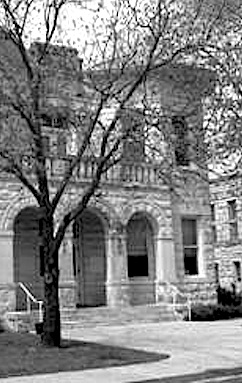
Kendall County Courthouse, Texas.

Kendall County Courthouse, Texas.

I would not normally review a short story, but this particular one by Sam Snoek-Brown is ten-thousand-or-so words long, and if the narrative were expanded it would start to knock on the door of novella. However, a short story it is, lean of excessive development and sharply focused. That leanness pulls us along and makes sure our attention is not diverted.

The subject matter is a ‘statutory rape’ case in Texas, its effects on the community and the persons involved, and its aftermath. The story’s style of presentation is one of reportage. It is written as if it is a magazine article. The narrator is as detached and non-judgmental as an investigative reporter, but his presence ‘interviewing’ and interacting with the personae of the story allows their character to be drawn out. The cut-and-paste nature of the narrative allows it to be episodic, which accentuates that drawing-out – for example, the meeting between the narrator and the convicted man’s father, the latter’s pickup blocking the road, a shotgun pointedly on display on the gun-rack, is loaded with tension and menace.

Another thing that this episodic treatment enables is a presentation of the ‘facts’ in a non-linear way. The fact that a man has been convicted of statutory rape and has served twelve years in a tough prison is made known very early in the story. The details of the case are revealed, but not necessarily in chronological sequence. Rather they are cut with historical detail, sections of modern supposed interviews with townsfolk, and with descriptions of the protagonist’s drives around his home town, where he and the crime of which he has been convicted are well-known, and of his obsession with building and maintaining a model of the town in which things he observes in everyday life modify the layout. Essentially there is no final resolution to the story, but we do realise that a story has been told. The protagonist’s final statement is terse, almost threatening in tone, but remains enigmatic.

Adding to the air of reportage is the research, including historical research, that the author has pasted into the story. The story is set in a real town in Texas – the author himself was brought up in Texas and can therefore be relied upon to give the setting an air of authenticity. Of course his storytelling style does take over from the journalistic style in places, notably in the descriptions of the protagonist’s run-in with his Nemesis, a local Deputy, and the title is a storyteller’s title, not a journalist’s.

I have a couple of niggles – no story is perfect, let’s face it. Firstly there is much made of a teenage girl’s ‘chatting on the internet’; I don’t know whether Texas was a long way ahead of us (I’m writing this from the point of view of a British reader), but in the early 1990s, when this was supposed to have taken place, chatrooms and emails were not as common as they now are, and most households, if they had a computer, were on a dial-up system for the internet, which took up phone time and therefore parents’ money. I could be out-of-touch, but this detail momentarily halted my ride through the story. Secondly, the girl in question is Chinese-American, and whilst her father has the English given name John, her full name appears to be wholly Cantonese. When a Chinese character appears in a work be a non-Chinese writer, I often wonder – maybe unfairly, I’ll grant you – whether her name has been plucked out of the air. I put the name of this character into an image search engine and came up with pictures of a male boxer. Like I said, these are only niggles, and could be my own reading quirks.

When it comes down to it, this is a compelling story, excellently written and insightful, moral but not moralistic. Sam Snoek-Brown is a tireless craftsman of the short story, and Curl Up and Burn shows that he has been working out.

‘On The Platform’ at Fearie Tales

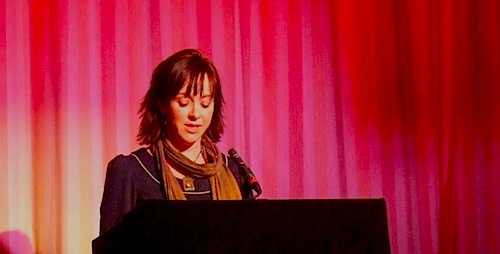
Helen Logan reading ‘On The Platform’, 1st Feb 2013. Image © Bookseeker Agency

Helen Logan reading ‘On The Platform’, 1st Feb 2013. Image © Bookseeker Agency

As previously reported, my short story On The Platform was one of the winners of this year’s ‘Fearie Tales’ competition at Pitlochry’s Winter Words Literary Festival. Winter Words kickstarts the literary year for Scotland, and features a list of writers and other people in the public eye. ‘Fearie Tales’ is its annual competition for stories of a ghostly, macabre, or supernatural nature, and this year actress Helen Logan gave my story a highly atmospheric reading…

… a young woman is waiting on a lonely station platform late at night… she meets a strange, dark man who starts to talk to her about supernatural matters… is one of them a ghost, and if so, which one?

The audience, which included broadcaster James Naughtie, was rapt throughout the reading and appreciative afterwards. Already I have ideas buzzing for my entry to the competition next year!

News from ‘Winter Words’

© Bookseeker Agency

© Bookseeker Agency

Deep winter in the Highlands of Scotland, with a foot of snow gradually starting to thaw as our changeable weather takes another swing. In the town of Pitlochry, at their famous Festival Theatre, the annual Winter Words literary festival is under way. I have just heard that my poem ‘Beatrice the rat tells Mr. Coelacanth about the Wisecrack city elves’ (from my soon-to-be-published collection I am not a fish) was premiered at their ‘Poetry Please’ event. Also I am once again amongst the winners of their ‘Fearie Tales’ competition for tales of the supernatural, and my ghost story ‘On the Platform’ will be read out during the final weekend of the festival. There are plenty of other interesting events at the festival too. Can you make it?