Marie Marshall

Author. Poet. Editor.

Tag: poetry

“No matter how famous I become…”

“No matter how famous I become I will never ask for nor accept, from any publisher or magazine editor, more than the standard fee for any piece accepted. If that means accepting no payment for a particular piece then I’ll accept no payment, and that’s all there is to it!”

I had been in conversation and the subject of a famous poet came up, one who had been asked by a magazine of which I was part of the editorial team if we could reproduce one of her already-published poems. Yes, said her agent, and named a substantial fee. Having recounted this in the conversation I made the declaration above. I said that no poet is greater than her audience, and that everyone has the right to beautiful, radiant things (to quote Emma Goldman).

“Put that on your web site,” came the reply to my declaration. “Look at it again in ten years’ time, and see if you have stuck by your principles!”

Well, there it is. Of course in ten years’ time we won’t have web-sites, we’ll be manifesting ourselves in holographic displays, triggered by our audience’s thought-waves. Or some such…

*

You may be asking what has happened to the many writing projects I have talked about over the past couple of years. Well, most of them have been shelved for one reason or another. Admitting this may make me seem like a writer who can’t stay the course. Well that’s a possibility, I suppose, but on the other hand this year I have completed a new collection of themed poems for submission, by invitation from a particular publisher. The shelved projects may remain shelved, or they may re-emerge later, as they are or reworked. I don’t know.

Meanwhile I’m about to add another project to the list. As a radical departure for me I am hoping to adapt another novelist’s book as a radio drama. That may end up on the shelf as well, but I’m willing to have a go. I shall let you know in due course.

Ode to the Olympic Torch

It’s parody time. The Olympic torch is passing through Scotland at present, and I recalled that four years ago, during the previous Olympiad, I wrote a parody of an ode for a little competition. Basically it is twenty-four lines split into two stanzas, but the underlying structure is six quatrains in alternating lines of iambic tetrameter and pentameter. It limps and hirples like mad and it occurred to me, after starting the first four lines with the apostrophic ‘O’, to start every line with that letter – but remember, this isn’t serious art, it’s a total mickey-take. Enjoy.

O Torch, O thou eternal flame,
    O thou Olympic, ever-burning spark,
O ardent one of Attic fame,
    O thou who lightest up the noisome dark
Of ignorance with searing fire,
    Oh draw’st thou nigh me like some little sun?
Or art thou that bright, burnished lyre
    Osiris bears, who through the heav’ns doth run?
Occult and cryptic, arcane match –
    Obsidian thy sky – thou twinkling star;
Obtuse am I – may I thee catch?
    Oracular, as all such visions are,
Of stuff unknown to mortal mind…
    Ought I to kneel, ought I to bow my head
Obsequiously? And dost thou find
    Our dully-mortal clay both cold and dead?

O Torch, I’ll carry thee by hand –
    Oceanus’ waves must not put out thy glow –
O’er hills; through ev’ry foreign land
    Or continent my feet shall boldly go.
On, on, and onward still I press,
    O’ercome by naught but pride – I shall not tire!
O Torch, illuminate and bless…
    Oh bloody hell – my chiton’s gone on fire!

Thoughts on ‘Ozymandias’ by Percy Bysshe Shelley

I have been in conversation with a friend – I could say I met a traveller from an antique land – about Percy Bysshe Shelley’s famous poem ‘Ozymandias’. I shall let you share a small handful of my thoughts from that conversation. First of all let me transcribe the poem for you to read:

I met a traveller from an antique land
Who said: “Two vast and trunkless legs of stone
Stand in the desert. Near them on the sand,
Half sunk, a shattered visage lies, whose frown
And wrinkled lip and sneer of cold command
Tell that its sculptor well those passions read
Which yet survive, stamped on these lifeless things,
The hand that mocked them and the heart that fed.
And on the pedestal these words appear:
`My name is Ozymandias, King of Kings:
Look on my works, ye mighty, and despair!’
Nothing beside remains. Round the decay
Of that colossal wreck, boundless and bare,
The lone and level sands stretch far away”.

This is probably Shelley’s best known and best loved poem. It is often said to be Shelley in sobriety; the ecstatic artist has been quieted, the revolutionary parlayed into the observer of history, the poet distanced from his subject. I believe otherwise. I see Shelley deeply engaged in this poem.

Shelley is often seen as a poet with a multiple and fragmented identity which emerges in the various personae of the ‘speakers’ of his poems, as well as being imposed on him from outside – the Victorian image of the ethereal versifier, for example, as fostered by his widow, is one such imposition. There is Shelley the inflammatory radical, doling out measured insults to the head of state, ‘an old, mad, blind, despised, and dying king’. There is Shelley the outraged father, spitting barely concealed bile at the Lord Chancellor. There is Shelley the Romantic observer of the Sublime, the inaccessible ‘secret Strength of things’ at Mont Blanc. There is Shelley the grasper for ultimate inspiration in ‘Ode to the West Wind’, begging ‘Be thou, Spirit fierce, my spirit! be thou me, impetuous one!’

To me this is not a random kaleidoscope, not a tumult, not a product of an unstable psyche. To be sure Shelley’s poetry develops through his career, changes, but it remains true, artistically resolute throughout. He is simply not a one-trick pony. He is clever and accomplished technically – hell, who these days could successfully write a wild, ecstatic poem and do it in five cantos of terza rima sonnet form, and make it good?* Like any of us, his mood can change, he can sit and look at things from a different perspective, he can step outside his own thoughts and emotions and observe them as much as he can experience them in the moment.

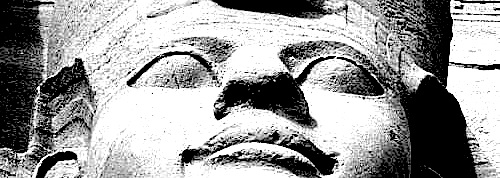
In ‘Ozymandias’ there appear to be four distinct voices. People normally identify three. Firstly there is the author/speaker; this voice is most often attributed to Shelley himself, and the fact that he only allows the speaker one line is held up as evidence of detachment. Secondly there is the traveller from the antique land, whose taking-over of the narration of the poem is considered to be further indication of objectivity, of Shelley’s status as an observer of history rather than a participant. This voice is contained in quotation marks, deliberately, and again this is taken to indicated distancing. Thirdly there is the voice of Ozymandias – Pharaoh Rameses II – whose inscription raises him above kings, commanding all who consider themselves to be powerful to look on his works and despair. The fourth voice is the Greek historian Diodorus Siculus, the supposed inscription being Shelley’s rendering of a phrase in Diodorus’s historical book on ancient Egypt. Two things should be noted here, firstly that Diodorus used other sources for his own historical works, and secondly that imagination played a part in classical history, with the result that what famous figures ‘said’ is often what the historian felt they ought to have said.

‘Ozymandias’ is taken to be a work of political satire, in particular a retrospective gaze at the rise and fall of Napoleon Bonaparte. Ancient Rome took the best part of two millennia to go from the expulsion of the Tarquins to the fall of Constantinople; France realised its equivalent during the adulthood of a single man, Napoleon. The poem is considered a warning to those who would carve out temporal power for themselves, to the effect that such power will not outlive them. it will fall as surely as the statue of Rameses II fell, worn away by the sands of the desert and by time.

But as I said, I believe that to be a superficial reading, and that Shelley is deeply engaged emotionally and intellectually in this poem. It is a self-referential and introspective work. The second voice, the traveller, is no one external to Shelley. He has given his pen to an inner voice of his own, which will pass judgment on him. I see this because many of Shelley’s familiar themes are actually expressed in this poem. The Sublime is there. Some of it is found in artifice rather than nature, but the words ‘vast’ and ‘colossal’** are there and note a sense of awe that is unmistakable even in a ‘wreck’. The Sublime in nature is in the ‘boundless’ desert, as awesome in its silence and ‘secret strength’ as is Mont Blanc, as relentless and powerful as the West Wind. Imagination is there – imagination of Diodorus on the one hand, and that of Shelley on the other. The face of the statue of Rameses is impassive, yet Shelley imagines a ‘frown’ and a ‘sneer of cold command’. Striving for greatness is there, as Napoleon the revolutionary turned emperor strove, as Shelley the revolutionary turned poet strove when he yearned to be made one with the West Wind, to be, in his artistic power, the Spring to the West Wind’s Winter. Politics certainly is there, even if direct and inflammatory agitprop is not.

But subtly Shelley’s inner voice of judgment mocks, as the hand that framed the statue ‘mocked’***. Ruefully Shelley must acknowledge that he, like all the Romantics, could not quite achieve the quasi-divine power of expression that he wished to. The Sublime desert, the expression of the unattainable, stretches far away.

Because this is all expressed in a short, tightly-wrought sonnet, it is missed by many readers. Scroll back and read it again, think of Shelley’s inner voice, still and small, gently charging him with trying to steal fire from heaven, think of Shelley himself as Ozymandias the failed worker of mighty works, think of him also as the sculptor whose stonework is now brought as low as the king’s power, and think on. When the poem has worked on you, play the arguments out in your own mind…

__________

*I hear some resolute modernists counter ‘Who would want to?’

**From the Colossus at Rhodes, one of the ancient Wonders of the World.

***In the context of the poem, the word has the likely meaning of sculpting, rather as we would use the term ‘mock-up’ today, and not necessarily the meaning of scorn, though that is an implication too, a double-meaning…

After the revolution

He had been a capitalist of so great ascent that he had once been called a captain of commerce; now such things were put by, and the jut of his jaw was bravado, belied by the glisten of sweat on his forehead. He was genuinely puzzled when we asked him for his secret dream; having taken a few breaths he said he had always wanted to work with wood, to feel the buzz of the grain against his thumb and the satisfaction of pulling a splinter from his finger when the carpentry was done. We found him a job in a boat yard, the period of his employment was inverse to his aptitude. Eventually he found a niche caring for a girl with Down’s syndrome, who came to call him uncle and to love him. There is no success without attempt; things balance eventually. I have heard that often he expressed something like the guilt of a survivor, which he was until he died of a heart attack; he was found in a water closet, the type that is so small that you have to rest your elbow in the hand-basin and gaze into the mirror. There would have been no pain.

__________

The online literary magazine qarrtsiluni is currently publishing poems in a series themed imitation. The entry for 7th May is my O great maritime bears, which is an emulation of poet Lisa Jarnot. The theme of imitation continues to the bio note which is an imitation of a telegram by the artist Balthus. From the qarrtsiluni site you can download a podcast of the poem, read by Dani Adomaitis.

Be seen reading a book

Be seen reading a book wherever you go. No, not thumbing a hand-held device, reading an actual book. Be seen to laugh, to smile, to frown; be heard to catch your breath. Take out a pencil and make marginal notes in your own, personal shorthand. Use a bookmark, maybe one main one in stiff card or leather, along with supplementary markers torn from a notepad, maybe a brightly-coloured index tab or two which lead to a favourite or important passage neatly underlined. Take the book everywhere. Let people hear you chuckling and exclaiming even during a comfort break; interrupt your lunchtime apple to read out passages to colleagues; hold your book high whilst sitting on the bus or in the park; when at rest on the summit of a newly-climbed mountain, whip out a paperback from your pocket.

No, this is not an exercise in Luddism. The hand-held device is here to stay. It is an exercise in celebrating what must be the most important technological advance of the past thousand years – print. So much has now been committed to ink on paper. Even though the day of the hand-held device has come, the new literature that has appeared only in a form that can be consumed on such a device is infinitesimal compared to the vast canon of the already-published.

The printer’s boast was always this: that once something is published in print then it cannot be retracted. If you lie then your lie is nailed forever; if you tell the truth it shines forever. A pomposity, maybe, but do the book thing anyway. For me. You know you want to.

And on no account ever refer to it as ‘hard copy’.

__________

I have just finished what I think is my final input into the selection of poems submitted to The Phoenix Rising from the Ashes and am awaiting eagerly a sight of what the final book may look like.

Meanwhile it is time to turn my attention to another possible editing project, this time the work of a single poet. I will keep you posted…

Decanto, April 2012

The April 2012 issue of Decanto magazine is now published, featuring many fine pieces of poetry. It is obtainable from Masque Publishing. Featured poet is Dave Seddon, and I am honoured to have one of my own poems in this issue too.

The Stag – a fable*

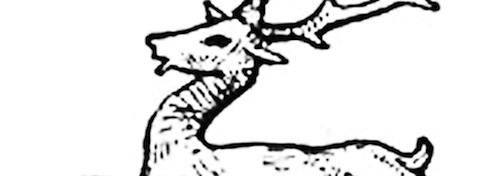
Deep in the heart of the realm of Angria there was a forest. In that forest lived a stag, perhaps the finest stag anyone had ever seen, his antlers spreading like the winter branches of an old beech tree, his flanks red as the ire of winter dawn. In a house just outside the forest there lived a hunter who had vowed to trap and kill the stag, to wear the antlers as his headdress and the russet hide as his cloak. But the stag was many years in age and full strength, wily, swift. He valued his freedom and would bound away while the hunter was still fitting a quarrel to his crossbow. Season upon season, year upon year, the hunter stalked the stag. Prey and predator knew every inch of the forest, every tree, every thicket, every faint sentier, every clearing, every pool, every shadow. At the beginning of one year the stag lifted his head to a new sound, the steady fall of an axe against a tree trunk. He thought little of it as such things are not the concern of deer, but nevertheless he moved through the forest to a place where the noise did not crowd as badly upon such things as did concern him. The sound continued throughout the year, but still the stag thought little of it. Then one day when he approached the edge of the forest he found that his kingdom was much smaller than he remembered, and his way out into the open fields beyond the forest was blocked. There was a high, wooden fence. The hunter had chopped down many trees to make it, and it was cammed in cruel, sharp points. The stag ran to the other side of the forest and found the way blocked there also. He ran along every path he knew and everywhere his was way barred by the fence. He plunged through thickets and briar patches through which he had never gone before, but the fence always thwarted and confounded him. Wherever he could get a run he tried to jump the fence but always, from outside, came the hunter’s mocking laugh or a warning bolt from the crossbow. At last the stag could endure this no more and risked everything on one last, desperate leap. The fence was higher than anything he had ever cleared before, but he gathered all his strength and courage, fixed his eye upon the blue sky above the cruel, sharpened points, and ran. He left the ground, he flew, he soared, wondering if this is what it felt like to be a bird. In mid-leap he could see the open farmland and the hills beyond. It was at that moment that the hunter, who had been waiting for him, loosed his quarrel. It went deep into the stag’s body, right to his heart, checked his leap, and brought him crashing down onto the sharp points. The stag’s eye was still fixed upon the sky and the far hills but now it saw nothing. When he saw what he had done, the hunter dropped his crossbow and his quiver and walked away. He was never seen again, and his house became a cold and empty ruin.
__________
* (c) from ‘Branwell’, a work-in-progress.

Intermetricality: a definition

Intermetricality: the persistence, repetition, or recurrence of rhythms, metres, and patterns, especially unconsciously, especially in folk stories, folk poems, and folk songs. Such patterns may have their origin in non-folk forms, such as the Bible, advertising slogans, and so on, as much as in folk forms. The term intermetricality is akin to intertextuality*, but is more specific.

Off the top of my head, here is a possible modern example. Someone posts a picture of a cat wearing glasses on Facebook, and captions it thus: ‘If you’re under 40 this will remind you of Harry Potter… if you’re over 40 it will remind you of John Lennon’. That particular pattern of balancing two phrases is similar to that found in the Book of Proverbs. This does not necessarily prove a direct relationship between the two but readers will likely be struck by the familiarity of both.

By the way, this word and its definition did not come to me out of nowhere. I coined it to explain something after having been asked to read and comment upon an article by the late Dell Hymes, Ethnopoetics and sociolinguistics: three stories by African-American children, in which he wrote of such repetitions. I don’t pretend to be any kind of expert in this or in any of the academic fields I mention here, I just wanted to establish the coining in a recognisable place and at a recognisable time. Others are now perfectly free to use it.

*The word ‘intertextuality’ was coined by Julia Kristeva, although she herself was probably influenced by the work of semioticians Roland Barthes and Mikhail Bakhtin, and linguist Ferdinand de Saussure

Is it too soon to move to ‘planet e’?

I have been part of the editorial team on a poetry-publishing project for some time. It has been hard, slow, but rewarding work, and I have persevered in the knowledge that two volumes of international poetry – the very best of a particular poetry genre – were being steadily accumulated. It has been in most respects a labour of love.

Recently the owner and Editor-in-Chief made the decision that the finished work would be available only as an e-book*. He had several good reasons for this, not least of which was that electronic books are the future, are already replacing the conventional hardback and paperback, and will be the principal if not the sole mode of consuming literature very, very soon. We appear to be on the eve of that cultural state.

But is this the case? I know many people who have either had their poetry and prose published, or who aspire to, and amongst them the great majority see the measure of success of that endeavour in terms of print. Still. I am also led to believe that at this time the e-book and printed book markets are exclusive. People who buy e-books do not buy paper, and people who buy printed books do not buy e-books, with the result that if a writer or publisher concentrates on one medium alone then a portion of the potential readership will not be reached with the product.

I can recall science fiction stories of the past where people spoke of ‘viewing a book’, by which they meant consuming literature on a screen rather than picking up a book in their hands. For decades we have smiled at the idea. A book, after all, is so much more than the sum of the words in it. It is the weight, the texture, the smell, the flip of the pages when you run your fingers over it. It is the size and shape, it is the component of the library shelf, it is the masterpiece lost in the fire at Alexandria, it is the icon. It is the apotheosis of the invention of moveable type. In that science fiction genre the utopia of electronic literacy was balanced by the dystopia of a world devoid of the physicality of the book that burned at Fahrenheit 451. The loss of the book seemed like something that would never happen.

The other day I was given a Kindle to examine. It was an interesting and powerful tool. It had a custom cover with a little light on an extendable stalk, it had a ‘book’ right there on the screen and I could do all the things with it that I could do with a real live book. I could hold it close (magnify the screen image), I could make pencil notes in the margin (annotate), I could put an old bus ticket between two pages (bookmark). It was a totally neat gadget. So why didn’t it hold my attention? Why did it feel as though I was being sold short? Am I simply an old stick-in-the-mud, a Luddite? Should literature go the same way as music – wholly from a physical to an electronic and virtual method of distribution?

I would like to know what other people think, so this is an invitation to people to contact me. Please feel free to leave a comment below, if you have a WordPress account, or to email me at Ms_Marie_Marshall{a}hotmail.com, or (now here’s a thought!) write me a letter. The object of this is not to prove somehow that I am right and the Editor-in-chief is wrong – this is not an exercise in leverage – nor do I imagine that your answers will have the validity of a professional poll. But what you say will inform me and will enlarge the picture that I see from here.

Thank you in advance.

__________

* Amendment 24th Feb. The Editor-in-chief later reversed the decision. When he came to read this particular blog entry he got in touch (on 23rd February) and asked me to replace the sentence above. I was reluctant to do so as it was my understanding at the time and agreed with my recollection of what he had said. I did undertake to post separately that the decision had been reversed. To be scrupulously fair I am reproducing here the words that the Editor-in-chief would have preferred to see originally: “Recently the owner and Editor-in-Chief made the decision that the finished work would be available in print and and as an e-book, perhaps possibly only as an e-book, though nothing is firm for the time being.”

Welshday: The inebriate Detective Inspector Rimbaud sings the praises of his love

I am old, too old for this bright love,
and yet I am dazzling in its ardency.
The slight snow greys my green body,
and my law-burns choke their weeping
in a jumble of scree and dirty ice.
As the citric sunlight of February afternoons

fades to madness-in-winter,
hopeless piping, desperate picayunes,

the gabble of the steep-in-age,
so you walk in, evening-cloaked,
a swirl of velvet, a silent falling,
a brief brush of lips against mine
and – O gods of my imagined tribe,
how such things burn hard on me!

I am demented for ever,
caught in the cold flow of eternity,

made cold, hot, cold, hot, cold
by your bright and coal-red lips,
the only fire, the sole light,
the lone sun in a black universe,
the one illumination of lost souls.
I should climb the ridge of your cheekbones,

the savannah of your hair,
the tearpaths of your face, jewelled rhones

and channels of soft weeping,
the bays and bights of your arms,
the long strand of your scapulae,
the bitter wind of your nape scouring
your shoulders’ mystery.
At times your kisses are baked bread,

the truth of straight-grown trees
with their cones fallen brown-red

and their honest, grey-and-green needles,
their brown cone-bells rustle-ringing;
the surprise of sea-scents, your kisses,
the gentle knock of a loosely-moored boat
against a grey-and-green wall
where the mad moonlight comes walking.

This is the alchemy of my love,
the whiskey talking.

__________

Welshday (you will need reminding) is a project I conceived in late 2008. It was to be some sort of verse-drama in which a fictionalised Irvine Welsh was conducted through a shadowy Edinburgh by an alcoholic policeman and a totally silent mime-artist, amongst others. Irvine Welsh himself gave me his permission (his actual words were “No worries – go ahead”), but since then I have only returned to work on it from time to time. It has been one of those many projects for which there are ideas but no handle to grip.

However, when I have returned to it, it has often given me a stand-alone poem. The one above is part of a planned section of the drama in which Irvine Welsh relates an ancient tale of Finn MacCool, Welsh and Rimbaud make punning variations upon the theme ‘mony a mickle maks a muckle’ using the names of sundry Scottish towns, Rimbaud rhymes endlessly using the words ‘Leith’, ‘Police’, and ‘fish’ to prove he is not drunk (whilst proving only that drink does not affect his ability to rhyme), and the Chorus reminds them where and who they are.

__________

Some small news of publications. My piece of flash fiction High Park, Toronto, can be read on-line at BoySlut. The Carnage Conservatory recently ran a three-liner of mine.