Marie Marshall

Author. Poet. Editor.

Be seen reading a book

Be seen reading a book wherever you go. No, not thumbing a hand-held device, reading an actual book. Be seen to laugh, to smile, to frown; be heard to catch your breath. Take out a pencil and make marginal notes in your own, personal shorthand. Use a bookmark, maybe one main one in stiff card or leather, along with supplementary markers torn from a notepad, maybe a brightly-coloured index tab or two which lead to a favourite or important passage neatly underlined. Take the book everywhere. Let people hear you chuckling and exclaiming even during a comfort break; interrupt your lunchtime apple to read out passages to colleagues; hold your book high whilst sitting on the bus or in the park; when at rest on the summit of a newly-climbed mountain, whip out a paperback from your pocket.

No, this is not an exercise in Luddism. The hand-held device is here to stay. It is an exercise in celebrating what must be the most important technological advance of the past thousand years – print. So much has now been committed to ink on paper. Even though the day of the hand-held device has come, the new literature that has appeared only in a form that can be consumed on such a device is infinitesimal compared to the vast canon of the already-published.

The printer’s boast was always this: that once something is published in print then it cannot be retracted. If you lie then your lie is nailed forever; if you tell the truth it shines forever. A pomposity, maybe, but do the book thing anyway. For me. You know you want to.

And on no account ever refer to it as ‘hard copy’.

__________

I have just finished what I think is my final input into the selection of poems submitted to The Phoenix Rising from the Ashes and am awaiting eagerly a sight of what the final book may look like.

Meanwhile it is time to turn my attention to another possible editing project, this time the work of a single poet. I will keep you posted…

Decanto, April 2012

The April 2012 issue of Decanto magazine is now published, featuring many fine pieces of poetry. It is obtainable from Masque Publishing. Featured poet is Dave Seddon, and I am honoured to have one of my own poems in this issue too.

The Stag – a fable*

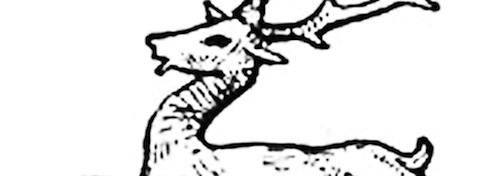
Deep in the heart of the realm of Angria there was a forest. In that forest lived a stag, perhaps the finest stag anyone had ever seen, his antlers spreading like the winter branches of an old beech tree, his flanks red as the ire of winter dawn. In a house just outside the forest there lived a hunter who had vowed to trap and kill the stag, to wear the antlers as his headdress and the russet hide as his cloak. But the stag was many years in age and full strength, wily, swift. He valued his freedom and would bound away while the hunter was still fitting a quarrel to his crossbow. Season upon season, year upon year, the hunter stalked the stag. Prey and predator knew every inch of the forest, every tree, every thicket, every faint sentier, every clearing, every pool, every shadow. At the beginning of one year the stag lifted his head to a new sound, the steady fall of an axe against a tree trunk. He thought little of it as such things are not the concern of deer, but nevertheless he moved through the forest to a place where the noise did not crowd as badly upon such things as did concern him. The sound continued throughout the year, but still the stag thought little of it. Then one day when he approached the edge of the forest he found that his kingdom was much smaller than he remembered, and his way out into the open fields beyond the forest was blocked. There was a high, wooden fence. The hunter had chopped down many trees to make it, and it was cammed in cruel, sharp points. The stag ran to the other side of the forest and found the way blocked there also. He ran along every path he knew and everywhere his was way barred by the fence. He plunged through thickets and briar patches through which he had never gone before, but the fence always thwarted and confounded him. Wherever he could get a run he tried to jump the fence but always, from outside, came the hunter’s mocking laugh or a warning bolt from the crossbow. At last the stag could endure this no more and risked everything on one last, desperate leap. The fence was higher than anything he had ever cleared before, but he gathered all his strength and courage, fixed his eye upon the blue sky above the cruel, sharpened points, and ran. He left the ground, he flew, he soared, wondering if this is what it felt like to be a bird. In mid-leap he could see the open farmland and the hills beyond. It was at that moment that the hunter, who had been waiting for him, loosed his quarrel. It went deep into the stag’s body, right to his heart, checked his leap, and brought him crashing down onto the sharp points. The stag’s eye was still fixed upon the sky and the far hills but now it saw nothing. When he saw what he had done, the hunter dropped his crossbow and his quiver and walked away. He was never seen again, and his house became a cold and empty ruin.
__________
* (c) from ‘Branwell’, a work-in-progress.

Intermetricality: a definition

Intermetricality: the persistence, repetition, or recurrence of rhythms, metres, and patterns, especially unconsciously, especially in folk stories, folk poems, and folk songs. Such patterns may have their origin in non-folk forms, such as the Bible, advertising slogans, and so on, as much as in folk forms. The term intermetricality is akin to intertextuality*, but is more specific.

Off the top of my head, here is a possible modern example. Someone posts a picture of a cat wearing glasses on Facebook, and captions it thus: ‘If you’re under 40 this will remind you of Harry Potter… if you’re over 40 it will remind you of John Lennon’. That particular pattern of balancing two phrases is similar to that found in the Book of Proverbs. This does not necessarily prove a direct relationship between the two but readers will likely be struck by the familiarity of both.

By the way, this word and its definition did not come to me out of nowhere. I coined it to explain something after having been asked to read and comment upon an article by the late Dell Hymes, Ethnopoetics and sociolinguistics: three stories by African-American children, in which he wrote of such repetitions. I don’t pretend to be any kind of expert in this or in any of the academic fields I mention here, I just wanted to establish the coining in a recognisable place and at a recognisable time. Others are now perfectly free to use it.

*The word ‘intertextuality’ was coined by Julia Kristeva, although she herself was probably influenced by the work of semioticians Roland Barthes and Mikhail Bakhtin, and linguist Ferdinand de Saussure

Is it too soon to move to ‘planet e’?

I have been part of the editorial team on a poetry-publishing project for some time. It has been hard, slow, but rewarding work, and I have persevered in the knowledge that two volumes of international poetry – the very best of a particular poetry genre – were being steadily accumulated. It has been in most respects a labour of love.

Recently the owner and Editor-in-Chief made the decision that the finished work would be available only as an e-book*. He had several good reasons for this, not least of which was that electronic books are the future, are already replacing the conventional hardback and paperback, and will be the principal if not the sole mode of consuming literature very, very soon. We appear to be on the eve of that cultural state.

But is this the case? I know many people who have either had their poetry and prose published, or who aspire to, and amongst them the great majority see the measure of success of that endeavour in terms of print. Still. I am also led to believe that at this time the e-book and printed book markets are exclusive. People who buy e-books do not buy paper, and people who buy printed books do not buy e-books, with the result that if a writer or publisher concentrates on one medium alone then a portion of the potential readership will not be reached with the product.

I can recall science fiction stories of the past where people spoke of ‘viewing a book’, by which they meant consuming literature on a screen rather than picking up a book in their hands. For decades we have smiled at the idea. A book, after all, is so much more than the sum of the words in it. It is the weight, the texture, the smell, the flip of the pages when you run your fingers over it. It is the size and shape, it is the component of the library shelf, it is the masterpiece lost in the fire at Alexandria, it is the icon. It is the apotheosis of the invention of moveable type. In that science fiction genre the utopia of electronic literacy was balanced by the dystopia of a world devoid of the physicality of the book that burned at Fahrenheit 451. The loss of the book seemed like something that would never happen.

The other day I was given a Kindle to examine. It was an interesting and powerful tool. It had a custom cover with a little light on an extendable stalk, it had a ‘book’ right there on the screen and I could do all the things with it that I could do with a real live book. I could hold it close (magnify the screen image), I could make pencil notes in the margin (annotate), I could put an old bus ticket between two pages (bookmark). It was a totally neat gadget. So why didn’t it hold my attention? Why did it feel as though I was being sold short? Am I simply an old stick-in-the-mud, a Luddite? Should literature go the same way as music – wholly from a physical to an electronic and virtual method of distribution?

I would like to know what other people think, so this is an invitation to people to contact me. Please feel free to leave a comment below, if you have a WordPress account, or to email me at Ms_Marie_Marshall{a}hotmail.com, or (now here’s a thought!) write me a letter. The object of this is not to prove somehow that I am right and the Editor-in-chief is wrong – this is not an exercise in leverage – nor do I imagine that your answers will have the validity of a professional poll. But what you say will inform me and will enlarge the picture that I see from here.

Thank you in advance.

__________

* Amendment 24th Feb. The Editor-in-chief later reversed the decision. When he came to read this particular blog entry he got in touch (on 23rd February) and asked me to replace the sentence above. I was reluctant to do so as it was my understanding at the time and agreed with my recollection of what he had said. I did undertake to post separately that the decision had been reversed. To be scrupulously fair I am reproducing here the words that the Editor-in-chief would have preferred to see originally: “Recently the owner and Editor-in-Chief made the decision that the finished work would be available in print and and as an e-book, perhaps possibly only as an e-book, though nothing is firm for the time being.”

Welshday: The inebriate Detective Inspector Rimbaud sings the praises of his love

I am old, too old for this bright love,
and yet I am dazzling in its ardency.
The slight snow greys my green body,
and my law-burns choke their weeping
in a jumble of scree and dirty ice.
As the citric sunlight of February afternoons

fades to madness-in-winter,
hopeless piping, desperate picayunes,

the gabble of the steep-in-age,
so you walk in, evening-cloaked,
a swirl of velvet, a silent falling,
a brief brush of lips against mine
and – O gods of my imagined tribe,
how such things burn hard on me!

I am demented for ever,
caught in the cold flow of eternity,

made cold, hot, cold, hot, cold
by your bright and coal-red lips,
the only fire, the sole light,
the lone sun in a black universe,
the one illumination of lost souls.
I should climb the ridge of your cheekbones,

the savannah of your hair,
the tearpaths of your face, jewelled rhones

and channels of soft weeping,
the bays and bights of your arms,
the long strand of your scapulae,
the bitter wind of your nape scouring
your shoulders’ mystery.
At times your kisses are baked bread,

the truth of straight-grown trees
with their cones fallen brown-red

and their honest, grey-and-green needles,
their brown cone-bells rustle-ringing;
the surprise of sea-scents, your kisses,
the gentle knock of a loosely-moored boat
against a grey-and-green wall
where the mad moonlight comes walking.

This is the alchemy of my love,
the whiskey talking.

__________

Welshday (you will need reminding) is a project I conceived in late 2008. It was to be some sort of verse-drama in which a fictionalised Irvine Welsh was conducted through a shadowy Edinburgh by an alcoholic policeman and a totally silent mime-artist, amongst others. Irvine Welsh himself gave me his permission (his actual words were “No worries – go ahead”), but since then I have only returned to work on it from time to time. It has been one of those many projects for which there are ideas but no handle to grip.

However, when I have returned to it, it has often given me a stand-alone poem. The one above is part of a planned section of the drama in which Irvine Welsh relates an ancient tale of Finn MacCool, Welsh and Rimbaud make punning variations upon the theme ‘mony a mickle maks a muckle’ using the names of sundry Scottish towns, Rimbaud rhymes endlessly using the words ‘Leith’, ‘Police’, and ‘fish’ to prove he is not drunk (whilst proving only that drink does not affect his ability to rhyme), and the Chorus reminds them where and who they are.

__________

Some small news of publications. My piece of flash fiction High Park, Toronto, can be read on-line at BoySlut. The Carnage Conservatory recently ran a three-liner of mine.

The Phoenix Rising from its Ashes

The Phoenix Rising from its Ashes is the title of the international anthology of sonnets for which I am one of the editorial team. The project has grown since its inception, to the extent that it will now be published in two volumes. The first will be the poems in English and French, the official non-Native languages of Canada, and is scheduled to be out by the end of 2012. The second volume will be of poems in other languages. That volume is expected to be on sale in spring 2013.

Working on this anthology has been a rewarding experience – a real labour of love. I have read hundreds of sonnets and have had to reject many which are remarkably strongly written. However, most of the kudos for this work should go and will go to Editor-in-Chief Richard Vallance and Co-Editor Jim Dunlap, whose continuing workloads far exceed those of the rest of the team.

I will post occasional news of The Phoenix here, along with news of other publications in which I might be involved either as author or editor. A propos that , I am now collecting work for the next online issue of the zen space. I am looking for original haiku and haiga, so please do feel free to get in touch. I recommend reading all the pages on the site before submitting.

Decanto, February 2012

The February issue of Decanto poetry magazine is now available from Masque Publishing. It is packed full of international poetry including a poem by myself. Featured poet in this issue is Jackie Fellaque.

An excerpt from ‘The Chronicles of Anna Lund of Helsingfors, Vampire Hunter’

I can remember a cold evening, very cold, my toes numb in my boots, my fingers aching in my muff, so much so that I wanted to take them out and suck them to make them warm. I was huddled close to my father, his left arm was round my shoulder, and our feet crunched on the snow as the skirts of his coat flapped outwards at my thighs and legs. We were hurrying, and I felt that it was not so much because the winter snow was whipping at our faces, but because it was late. My father was in haste to get home, almost as though he was afraid. A few lights from windows and elsewhere threw patches of yellow glow on the snow, but though every flat surface was white and the wind was drifting it against walls, there were still shadows too dense for my half-shut eyes to see into, and pieces of black wall standing crazily upright like broken teeth or gravestones. Snowflakes clung to my eyelashes, and there was enough warmth in my face to melt some of them and make them run like tears. My legs propelled me almost to fast for me to stay upright, and had it not been for my father’s steadying arm, I believe I would have tripped over my numbed toes. My body and my breath were hot from effort, making my extremities feel even colder by contrast. If there was any sound apart from the crunch of our footfalls – which I seemed to feel rather than hear – it was lost in the wind that buffeted my ears. A winter night in Helsingfors can be cruel.

Then there was a moment when I came closest to falling; that was when my father suddenly stopped. Again I can’t be sure of sounds, but I think he gasped. He pulled me closer to him, pressing my face into his coat. It was rough and harsh against my skin, and I couldn’t breathe, so I slowly twisted my head so I could see out of the corner of my eye, between two of his long fingers as they barred across my face.

I thought I could make out that we were close to our home. If it had been bright daylight, I might have recognized the place where the street bent to the right, and to the left an alleyway led up narrow steps before making a right-angle and losing itself amongst the tenements and go-downs of the city. High on a wall a casement was flapping open in the wind, wrenching back against its own hinges. It was allowing a light to shine down upon the mouth of the alley and the steps. At the margin of the patch of light there seemed to be two vague shadows. One was like a crumpled shape on the ground, the other seemed to bend or loom over it; as the snowflakes dashed against my face, the two shadows seemed to merge into each other, separate, and merge again. Then suddenly, the lower shadow was alone, the looming shadow had disappeared; but instead there was a figure standing at the top of the steps, a man in dark clothes. The light from the casement shone directly onto his face – it was as though his face attracted it. To me it seemed as though his bright eyes were fixed upon me and only me, and he was looking at me, memorizing my half-hidden features. He was grinning, a nasty, fixed grin, and there was something about his teeth – I could not take my eyes away from his grin.

The wind blew my father’s coat across my face for a moment, and when it flapped back again the top of the steps was empty. The man had gone.

Once we reached our house, my father took me up to my bedroom and made me lie down for the night. I didn’t go to sleep immediately, and my father sat there beside my bed, his head bowed as though he was praying. When I did go to sleep – I seem to remember – my dreams took me back to the mouth of the alley. It was always deserted, not only free of snow but as though the steps had been swept by a broom. The casement was always tight shut and curtained. There always seemed to be the echo of running feet…

__________

‘Anna Lund’ is a casual, on-going project of mine. Something might come of it.

Of Sam, Miss Smith, and Justice!

When I was young I read a whimsical book by Beverley Nichols entitled The Tree That Sat Down. The story is set in a wood where four human characters – Judy and her grandmother Old Judy, and Sam and his grandfather Old Sam – run two rival shops. The Judys’ shop is set in the crook and hollow beneath an old willow tree, and there they sell all kinds of good and wholesome things to the talking animals of the wood. The Sams are newcomers and set up a rival shop in a ruined Model T Ford. Young Sam is a hoodlum and uses modern advertising techniques to sell worthless things to the animals, many of whom are nonetheless taken in. Sam recruits the help of Mr. Bruno, a bear who is basically decent but weak. In order to impress the woodland animals, Mr. Bruno has always pretended to come from ‘The Steppes of Russia’ and to be able to speak Russian, but Sam blackmails him, having recognized him from a visit to the circus from which Mr. Bruno had escaped. He becomes Sam’s bearspaw and bearsbody, doing nefarious errands for the young entrepreneur.

Into the wood comes a character who comes and goes through several of Beverley Nichols’ children’s books – the witch Miss Smith, with her attendant squad of toads. Though two or three centuries old, Miss Smith presents herself as a young lady of fashion. She is thoroughly evil, and Nichols describes this in a simple but succulent way:

“… all the evil things in the dark corners knew that she was passing… The snakes felt the poison tingling in their tails and made vows to sting something as soon as possible.  The ragged toadstools oozed with more of their deadly slime… In many dark caves, wicked old spiders, who had long given up hope of catching a fly, began to weave again with tattered pieces of web, muttering to themselves as they mended the knots…”

Sam accepts her help in his commercial war, but soon finds himself dominated by her. She suggests sending a poisoned gift, which she will make, to the Judys. Sam seems terrified at the implications of this, but mutely agrees, and Mr. Bruno is forced to deliver the deadly package. He sets off to do so, but at the last moment surrenders in tears to Constable Monkey and Mr. Justice Owl.

The animals put young Sam on trial for his life. Prosecuting counsel is the Judys’ best friend Mr. Tortoise. Mr. Justice Owl, despite his incompetence, conducts the trial, and Mr. Bruno, Miss Smith, and even the toads (“Swelpmesatan” they croak in chorus as they take the oath) give evidence against Sam. A storm is coming, the wind is rising; Judy looks at Sam cowering in the dock and feels nothing but pity for him. She shouts for mercy, but her cries are carried away in the wind. She looks up to the clouds and prays for some power to save Sam. The clouds roll back and she sees the stern face of the Clerk of the Weather – an angel who had once complained to God about the remorseless sunshine of heaven – who sends a tornado to blow Sam away to a new but hard life.

Mr. Tortoise transforms into a handsome prince – he had been turned into a tortoise until he had learned to better his ways – and marries Judy.

I can recall how incensed I was as a child by Sam’s trial. Certainly he was a wrong’un, a capitalist, and a racketeer, but how could it be fair? The judge was incompetent, the jury of animals was prejudiced against him after learning of the plot to kill Judy, and he had no defense counsel. Moreover he had been an almost-unwilling party to the plot, which had all been the suggestion of Miss Smith. She had made the poison. As far as I could tell Sam hadn’t even touched it, Miss Smith put it into the hands of Mr. Bruno, and now these two co-conspirators were giving evidence against him. I shouldn’t have had any sympathy for Sam, but my outrage was more practical than Judy’s pity. I imagined myself imposing my presence – a girl no older than Judy at the time – upon the court as counsel for the defense, showing how inadmissible the evidence was, how unreliable the witnesses were, how little a part Sam had actually had to play in the scheme, and dashing the prosecution’s case to pieces! How delicious it would have been to have had a battle of wits with Miss Smith as a hostile witness.

As I could not do that, I went through the book from the beginning, scoring out any bad thing that Sam did or said and writing in a virtuous alternative characterization. By the time I had finished the pages were thick with crossings out and were a palimpsest of redemptory fiction.

That was, I believe, the only time I had ever desecrated a book. I am rather glad I did, though, and if I ever get the time and inclination, I will search the second-hand book stalls and car-boot markets for Nichols’ other books that feature Miss Smith. It seems that she catalyses my creativity. I’ll put my pens well out of reach, though.