Marie Marshall

Author. Poet. Editor.

Burning Man 2016

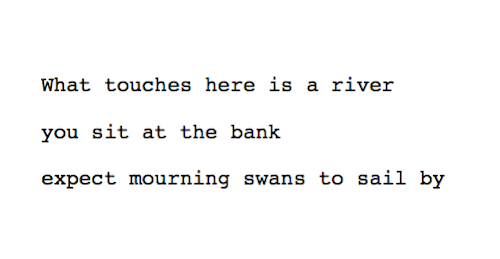
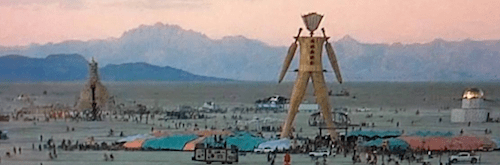
3There’s a lot that can be said about the Burning Man festival, held every year in the Nevada desert, and not all of it is positive. But the one thing that I support is that its internal function depends on everything being free – not bought and sold, not even bartered, but free. Everything is, somehow, paid on. Now, of course I don’t attend, for many, many practical reasons, but this year I have had a remote presence. Not only did I write the script for the Guild History of I Tamburisiti di FIREnze, as posted here before, but I also provided some poetry for display there.

This poem, and this, are among several that were displayed inside the portable toilets!

This one, however, was displayed in the Temple.

I have to say that I am very glad to be able to contribute something to the overall experience of Burning Man, and to do it with no thought or expectation of anything in return. It’s a principle I admire, support, and wish to foster.

4

©Marie Marshall

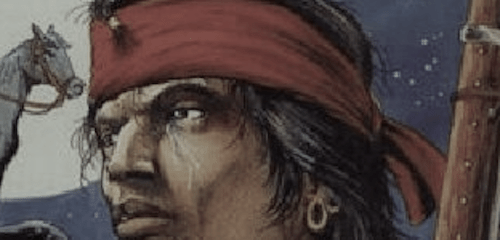
The Last Bullet

(c) Dynamite comics

image ©Dynamite Comics

“The Wild West, that’s what they called it,” said the Ranger, his breath rasping like a blacksmith’s file on a horseshoe.

“Called it, you said. Called it. Called, not call,” said the figure in buckskins, kneeling beside him. The Ranger drew in his breath sharply and winced, his eyes shutting hard and his teeth clamping together in a rictus. When the pain eased a little, he opened his eyes again and looked long into the face of his kneeling companion.

“Yes, Tonto,” he said softly, “Past tense. The Wild West is dying, just as I am.”

His companion did not contradict him, did not say anything for several minutes.

“How come we got so old, you and me, Kemo Sabe?” he said at last. “How come the world got smaller the older we got?” There was no trace now of ‘Fort Indian’ in his voice, there was no one around to object to his talking like a white man – the only white man for miles was lying there by him, his head resting on a saddle, and that white man was his brother, as good as. Gently he tried to staunch the blood that ran from the deep gashes in the Ranger’s side, with a piece of cloth torn from a spare saddle-blanket. The Ranger winced again, and turned his head to look at the corpse lying about ten feet away from them.

“I never killed a man before today,” he said.

“You didn’t kill a man today,” said Tonto, looking over at the corpse as well. It seemed to be shrinking in size, becoming more emaciated, as though the desert sand was trying to claim it. A wind nagged at the clothes that covered it – the Levi’s, the old cattle duster pulled up around its waist, the battered sombrero that covered its head, the bandana knotted loosely round its neck. The corpse’s fingers were curled, as though they were clawing at the sand. It’s frame was big and broad still, even with the illusion of shrinking. Tonto did not want to lift the sombrero to check. He knew what he would see, and knew he wouldn’t like it. He shivered a little and told himself it was the fault of that nagging wind.

“That wasn’t a man,” he went on. “More like – my kin have a word – more like a Wendigo.”

“What will you do, Tonto?” said the Ranger, softly and hoarsely, changing the subject.

“Me? Go back to Canada, I guess.”

“You never told me what brought you to Texas in the first place.”

“You never asked.”

“True enough.”

Tonto continued to press the piece of blanket against the Ranger’s side, but the Ranger pushed his hand away.

“No. No. I’ll hold that,” he said. “There are three things I want you to do for me, Tonto, and you have to do them without question. First thing is, dig a grave for me, while there is still daylight. No, no, just do it. Second thing, once you’re through doing that, take my mask off, let me show my old face to the setting sun. Last thing – here! – take this. Take my gun. There’s one bullet left. One silver bullet.”

Tonto reached for the gun, but stopped.

“No. Not that. I can’t,” he said.

“Tonto, you must! You must! Or you’ll have no peace, ever. You can go to Canada, or Alaska, or China if you want to, but you’ll have no peace. This gun, this last bullet, they’ll protect you, and they’ll end this once and for all. They’ll put the final period at the end of an old legend, one we shouldn’t have been in. This is one story of The Lone Ranger and Tonto they’ll never tell, and by golly I’m glad of that. Leave me riding off into the sunset of some other tall tale, with someone asking who the masked man was. Let the other thing, that thing over there… well… I guess that’s died its own death… part of a different legend. With luck, me too.”

The Ranger’s voice had become very quiet, barely a whisper, as though giving these instructions to his companion had taken what remained of his strength. Tonto tucked the six-gun into his belt, propped the Ranger against the saddle with his face towards the setting sun, and untied the mask. Then he fetched the shovel an old prospector had given him, and set about digging a grave. He knew why he needed the grave. It would buy him time. From time to time he stopped digging and looked over at the Ranger. There was still something there in his sere face of the young man he had been at their first meeting, but it was buried beneath a few decades’ wear-and-tear, and now beneath pain too. Each time Tonto stopped to look, he listened for the Ranger’s breathing. Eventually there was none. He laid down the shovel and half-carried half-dragged the Ranger’s body to the grave, letting it fall in as gently as he could. But down in the grave it looked broken and untidy, nothing of his old friend left, so he quickly shoveled the dirt and sand on top.

When that task was over, Tonto sat with his back against the saddle. He took the pistol out of his belt and checked it, checked it again, and checked it a third time. He looked over at the corpse of the rougarou – there was no danger there, it was dead. It had taken four silver bullets from the Ranger’s gun and had kept coming. The fifth, fired at point blank range, had found its heart, but not before its teeth had ripped into the Ranger’s flesh. The sixth was still in the chamber. Tonto checked it again.

A little way off, the Ranger’s white horse – the third to have been given the name ‘Silver’ – whinnied. It was getting dark. The last glow of sunset faded from the horizon. The moon had risen behind Tonto in a cloudless sky, lighting up the desert, casting a shadow behind the little mound of earth he had piled over his dead friend, his dead brother. It was the last night of the full moon.

Tonto blinked a couple of times, wiped away something wet from his cheek, and cocked the pistol. Any disturbance to that little mound would give him some warning, he would be ready. This night’s watch was his. He would do what he had to do.

(c) Topps Comics

image ©Topps Comics

I Tamburisti di FIREnze – project now running!

12010699_1465307271.6343_funddescriptionI told you in my last news update here about my contribution to Camp Thump Thump’s presentation for Burning Man 2016 I Tamburisti di FIREnze. Well, it has grown arms and legs since then. The text has tripled and the story of the Guild – part fact, mostly fiction, and a little bit Time-Lord – has been brought up to the present day. The plan of the Project Coordinator is to adapt what I have written into a large, scrapbook-like record, to be put on display at the Guild’s mobile HQ on the Playa at this year’s Burning Man, so that people who drop in to the workshop can read it and marvel! I have to say I’m honoured.

Now, the essence of Burning Man is that things are given freely. The members of the Camp Thump Thump team give up their time, energy, materials, and finished products entirely gratis, in the spirit of that BM ethos. But outside of Burning Man – in the world in which preparations are made – things cost money. I wish they didn’t, I wish that everything in the world wasn’t reduced to a commodity and that the Burning Man ethos would spread beyond its borders, but such a thing has yet to be. I live in hope.

This year the team will be doing their bit to spread that ethos beyond its borders by making and donating a dozen drums to a school on the ‘outside’.

Meanwhile, the team is obliged to raise money for transport, workshop construction, materials, etc., and are obliged therefore to ask for donations. If you would like to know more, please click on this link, watch the video, read the blurb, and see if you are able to make a cash donation. If you do nothing else, please help by spreading the word – reblog this item, put it out on social media, tell your friends over a cup of coffee.

I can’t get there myself, but it is so exciting for me to be a ‘remote’ part of the Camp Thump Thump team, helping to create I Tamburisti di FIREnze.

BMstrip

A script to finish, a man to burn, a drum to build…

During my sabbatical from novel-writing, I haven’t exactly been idle. Here are a couple of things that are going on right now.

girl-gang

Turning my short story ‘Axe’ into a screenplay. I had been working closely with a Scottish screen-writer to turn my short story ‘Axe‘ into a drama for TV or the ‘big screen’. Currently, many scenes have been written, both from the story itself and from additional narrative material I have provided – and it’s looking good!

However, the screen-writer has had to pull out, for unforeseen private reasons, and he’s not certain whether he’ll be able to take up the task again. I fully understand the reasons he gave me, and he left the ball in my court as to what to do next. Between us we have a substantial amount of material. I think my choices are as follows:
1. Do nothing, in the hope that the screen-writer may be able to resume the project at a later date; this of course runs the risk of the whole project stalling completely.
2. Try to finish the script myself; this is not my area of expertise, and I am, after all, on a writing sabbatical.
3. Get together with my literary agent and look for another screen-writer; my previous collaborator would be okay with that, but it would need someone who could build seamlessly onto the work already done.

I’ll let you know what turns up.

I Tamburisti di FIREnze. If you don’t already know about Burning Man, find out about it. It’s a festival, for want of a better word, or rather an annual gathering of people in the middle of a desert in Nevada, USA. Whilst there, people perform, make things, share, live together, interact, laugh, work, and generally enjoy themselves. But the main thing is that they do so entirely without money transactions, or even barter transactions. Everything that is provided is a gift entirely without strings, given in the hope that everything will be paid forward in some way. It seems to work, right down to the clearing away of site debris afterwards.

renThis year the theme is The Renaissance. I was contacted a few days ago by the Project Coordinator of ‘Camp Thump Thump’, a group that regularly attends Burning Man, giving lessons in drum-making and drumming, letting people build, play, and take away their own drums. For 2016 the group has adopted a theme based on renaissance Italy – the time of the Borgias, the Medici, and Leonardo da Vinci – and have reinvented themselves as I Tamburisti di FIREnze for the duration of this year’s Burning Man. The Coordinator asked me to provide some Renaissance-flavoured text for their use, and I have been working on pen-portraits of (fictitious) 16c Guild-members for her.

I’m not yet sure whether or how my work will be used, but again if it is, I’ll let you know.

The wheat-child

wheat-childThe Sun came to the Earth and had a child with her. That child was a field of wheat, and it grew from its mother towards its father, becoming more and more golden.

The wheat-child learned from its mother and father how to mind its manners and show respect to its betters. So when that fierce knight, Sir North Wind, moved through the field in his shining steel armour, the wheat-child bowed to him as he passed. And when Lady South Wind came with her warm kisses, the wheat-child bowed to her. And when Boyar East Wind strode in from the Steppes, singing mournful songs, the wheat-child bowed to him. And when Widow West Wind let her tears fall on him, the wheat-child bowed to her.

But one night, while the Earth slept and the Sun was away on business on the other side of the world, the cruel landlord Squire Frost patrolled the fields, and because such as he walk silently, the wheat-child did not bow to him. Squire Frost was angry at the wheat-child for not showing respect, so he called on all his labourers, the Hailstones, to come with their scythes and sickles and reaping hooks to lay waste to the field and kill the wheat-child.

In the morning, when the Earth awoke and the Sun returned home, they saw the wheat-child lying on the ground, and their sadness was great. The Earth made to quake and to throw up mountains, and the Sun made to cover everything with fire, but suddenly they saw, in a corner of the field, one solitary stalk of wheat that Squire Frost’s cruelty had treemissed. So the Sun and the Earth called upon their friends the Four Winds, and together they made seasons to nourish all that was left of the wheat-child. And eventually that single stalk of wheat became a great Tree.

The great Tree grew straight and tall, and lived longer than any child of Sun and Earth ever had, even longer than Empress Slow of the Galapagos, whom the Tree could remember as a tiny tortoise when he was already as tall as a hill. The longer the Tree lived the more the Sun and the Earth whispered a secret to him, and that secret is that trees need not bow to anyone.

What’s that, little one? Yes, I expect the great Tree is living still. Unless some one has cut him down. Now go to sleep – even the Sun and the Earth have to do that, so why shouldn’t you!

The disappearing original…

Regular readers will know that from time to time I write about art in general. It is not an easy subject to write about, strange though that may seem, because each one of us has prejudices that are difficult to shake off. To one of my readers, for example, technique or technical skill is all-important. To that person, Caravaggio’s work is ‘better’ than Rothko’s because the former’s is representational and skillfully so. Yet as a writer I know only too well that Virginia Woolf, Tolstoy, John Steinbeck, J K Rowling, Barbara Cartland, E L James, and I all use the same technical skills as each other in writing, and that nevertheless we do not produce works of equal – what? – worth, quality, whatever. Nor do we all enjoy equal success, nor is that success necessarily commensurate with any particular literary merit, nor, to come full circle, is that literary merit necessarily relative to our levels of technique. To my mind this subverts the idea that technique is an over-riding rubric for judging artistic worth.

fountain

Duchamp, ‘Fountain’, 1917

“But this argument,” my reader who values technique above all may object, “has been used since the early twentieth century, as an excuse for treating as high art presentation after presentation where skill and care have been abandoned in favour of facility of execution. A child could have painted some ‘modern art’. A chimpanzee could have. Experts have been fooled. A urinal, bought no doubt from a builder’s merchant, has been exhibited as a sculpture.”

I dare say that is all true. And I dare say that my friend never ceases to be irritated therefore by the whole idea of Conceptual Art. This was defined by American artist Sol LeWitt thus:

In conceptual art the idea or concept is the most important aspect of the work. When an artist uses a conceptual form of art, it means that all of the planning and decisions are made beforehand and the execution is a perfunctory affair. The idea becomes a machine that makes the art.

It is an attitude that uses what is presented as art to question the nature of art itself. I dare say that during the period of its currency, a lot of people have jumped on a clever-clever bandwagon. Nevertheless I would say that as a broad movement in art it has certainly made us think. Specifically it has made us think hard about the authorial presence in art. In my own writing – although of course I do write conventional novels, short stories, and poetry – I have never ceased to question my own ‘presence’, and have experimented with work outside my ‘normal’ field. For several years in my regular poetry blog I dispensed with the idea of ‘text’ as it is commonly understood, and presented poems as jpg images. These have looked like text in Courier font, but they have all been images. Though I hardly ever stated this much, I hoped that people would question whether they were looking at words or a picture. Did anyone? I don’t know.

Also I wondered whether it served any purpose to caption each one “© Marie Marshall”. It often seemed an act of desperation rather than fact, an attempt to re-establish the authorial presence where I had only just abandoned it, or where it was at the very least debatable.

Recently the affordance of regular space on someone else’s blog prompted me to carry out a conceptual experiment. Here’s how it went:

The main concept was an exploration of what was an ‘original’ piece of art. I was approaching it in a way that only the technology of the internet could afford – I dare say this concept is not unique, but it was to me. I started with a piece of scrap A4 paper, some magic markers, and some highlighters. On the sheet of paper I made one rectangle of red and one rectangle of yellow. In the red rectangle I placed an upper-case letter ‘F’, and in the yellow a lower-case ‘f’.

The presence of the letters was itself a supplementary ‘concept’. The ‘Ff’ asked viewers – or readers if you prefer – how minimal a presentation recognisable lettering could be and still convey some kind of meaning; and if that meaning contained expression, was it in any way ‘poetic’. I did not and do not invite the answers yes, or no, or maybe, although I know at least one of my regular readers will give one without hesitation. I merely posed the question and let it hang there.

Anyhow, the next stage was to scan the piece of paper. Having made a scanned image, I shredded the paper. Then I used the standard image-handling programme on my computer to adjust the colour and sharpness of the image. Next I posted it to the blog where I was guesting. Lastly, I deleted the image from my own computer. The only place where the product of all this activity was viewable was on a web page which, when the site owner closed the guesting period, was out of my control.

I won’t labour this point, but having revealed the process, I was asking people viewing the final product whether they considered what they were viewing to be an ‘original’, or whether an ‘original’ existed at any ‘stage’ of the process.

It has always made me chuckle that although one raison d’être of conceptual art has been to challenge the commodification of art, some works have attracted big money from collectors, galleries etc. My ‘Ff’ had, like so much on the blogosphere, no commercial value whatsoever.

You may be wondering why I haven’t included in this article a glimpse of ‘Ff’, or at least a link to it. That’s because the owner of the blog recently removed all the guest items. I took a deliberate step of placing ‘Ff’ in peril when I put it somewhere over which I had no control. That was part of the concept. Its disappearance now adds another layer of questioning. It existed. Does it still exist in the memory* and experience of those viewers and readers who looked at it? Does it count as my work at all, now that it is ‘lost’? Does ‘lost’ work belong in the recognised corpus of any artist or writer, past or present?

It would of course be counter-productive to attempt to answer any of my own questions.

__________

* Memory is not like a photograph album anyway, but rather it is like a million-million tiny bombs of sensation, each exploding in an instant – there and gone – each somehow related, sometimes arcanely, to the next. A sight, a sound, a feeling, a scent, they populate a space in your mind that sometimes seems infinite, more often like a room in a house…


Peace, War, Honour, and Death

Peace, War, Honour, and Death – a fable

Honour 1It happened that War saw a beautiful woman, whose name was Peace. Desiring her, he took her away to live with him. But Peace was never happy, and when he asked her why, she answered that it was because she was cold, for though War is hot he can never pass his warmth on to anyone.

One day a knight, whose name was Honour, rode by.

“This man serves me,” thought War, and called out to the knight, “Sir Knight, take off your cloak and give it to my lady Peace!”

The knight stopped, took off his cloak, and unsheathed his sword. Having cut his cloak in two, he put one half of it around Peace’s shoulders to warm her, the other half round his own, and rode away. From that moment, to his name was added Martinus Martianus, Warlike, and the word Generous was written on the cloak about his shoulders, for it takes an act of generosity to give warmth to anyone.

Soon the knight found himself in a battle, as all of his kind do. There he met with impartial Death, as one day do we all, good and bad. Death caught the knight with his scythe and he fell. The knight’s halved cloak was not enough to soak up his blood, which flowed like a stream. The stream became a great river of clear water, known as Generosity, and it flowed through the desert known as Indifference…

You ask me why? It is because, little one, all things are held in the Great Balance, and it must be so. Time for you to go to sleep, for sleeping and wakefulness are held in the Great Balance too…

Keats and Chapman refuse to leave you in peace

1Keats and Chapman2 were having a friendly game of quoits one day. They were neck-and-neck on points, each being as good as the other at the sport. Chapman, desperate to pull ahead, flung his penultimate quoit to the furthest peg, and ringed it perfectly. He drew back to let fly his last missile, when Keats stopped him.

“Tell you what, old man,” he said, “if you can pull that shot off again, we’ll say you double your tally and win outright. But if you miss, your score is wiped out to zero. What say, old sport?”

Chapman agreed, and put his entire skill and effort into the last pitch. The quoit sailed through the air in a perfect parabola. It struck the peg, spun on its side, and for a moment teetered there. Keats and Chapman held their breath. If the quoit fell one way, it would decide the match for Chapman, if the other, Keats.

The quoit fell. It almost circled the peg. It fell to the side.

“Unrequoited. Love,” said Keats.

Once more Chapman had to go and lie down in a darkened room for a while.

The Lost Manuscript of Aë

Ae

The Lost Manuscript of Aë – a fable

There was once a very rich man who had in his castle an incomparable collection of beautiful things. He loved them, and would spend hours in his galleries and libraries, and amongst his showcases. There were paintings before which he would stand, lost in the world that they depicted or suggested, whether the painting was an intricate interior, a landscape, or a mere splash of primary colour. There were ancient musical instruments which, when he plucked, struck, or blew them, released into the room tones that had never been heard for centuries – he had a lyre, for example, that was said to have been carried to hell and back by a minstrel looking for his lover. There were statues so beautiful that the urge to kiss their lips was almost irresistible – one of them was so beguiling that the sculptor had fallen in love with it himself, and gone mad when his love remained unrequited. There were books of poetry, philosophy, and fable that transported the reader between all the realms of Fun and Profundity. There were weapons that the heroes of the world had wielded in defence of the weak and in pursuit of the wicked – there was a bow said to have been strung by a demiurge and drawn by a demigod. There were machines that were marvels of ancient and modern invention – each one had changed the world when they had been introduced. There were jewels, royal regalia from the past, emerald rings that burned brighter than forest sunlight, jade necklets that seemed warm to the touch as though the emperor who had worn them had only just taken them off – the, scepters, orbs, diadems, and touchstones of the most enlightened princes and the most terrible tyrants.

There was just one thing he lacked, something which he coveted and desired beyond all else. He had heard of the vanished civilisation of Aë, which some men say flourished thousands of years ago and others say is legend. He had been told how their last artefact – a manuscript that contained everything that gave joy and wisdom – had come down through the ages, or indeed had never existed. Rumour had reached him that this manuscript, which had been lost, was now found, and was circulating amongst men, or was so in someone’s drunken dream.

If it existed, he had to have it. He called his most trusted employee to him, and charged him with the task of tracking down and obtaining the manuscript. His man set out and, to cut a long story short, found the lost manuscript of Aë. It is not recorded how he found it – some say he won it on the turn of a card, others that he seized it in a brawl with an inebriated sailor, others still that he found it hidden in a cave, and others still that he paid a Romany woman half his patron’s fortune for it. No matter how he came by it, he went out a boy and came back a man. And he gave the manuscript to his rich patron.

The rich man unrolled the manuscript. It was old, it was beautiful, it was in Aëan. The rich man looked around at his people – his servants, his employees, his acolytes, his friends whom he had gathered together to see his new possession, others who had simply come on the off chance – did anyone read Aëan? No, certainly not amongst them. But someone did know of a scholar of antiquities who was adept at old languages and undecipherable glyphs, and so he was sent for.

The scholar, with the rich man always in attendance, worked for months at the manuscript. Piece by piece he began to make sense of it, and piece by piece he told the rich man what it said. Yes, there was joy in it. Yes, there was wisdom in it. The rich man was glad. But eventually, when the scholar had translated some three-fifths of it, he sadly came to the conclusion that the manuscript, though old, was not Aëan. It was a fake.

The rich man was devastated. He was not angry with his employee, who had done his best, but he did send him out to see if he could find the real one. In fact he found two, both of which were also fakes. The rich man never did possess the lost manuscript of Aë, and one day he gave his entire collection to the nation, which dispersed it amongst its many museums. One spin-off, however, was a general interest in all things Aëan, a fashion for Aëan gew-gaws and imaginary robes and adornments, market stalls full of scrolls and parchments with supposed Aëan glyphs all over them.

Is there a moral to this story?

A moral? Yes, never underestimate the power of bathos in fiction.

Ah.

Coming down the road I saw an elephant

Loving in truth, and fain in verse my love to show,
That she, dear she, might take some pleasure in my pain, –
Pleasure might cause her read, reading might make her know,
Knowledge might pity win, and pity grace obtain, –
I sought fit words to paint the blackest face of woe;
Studying inventions fine her wits to entertain.
Oft turning others’ leaves, to see if thence would flow
Some fresh and fruitful showers upon my sunburn’d brain.
But words came halting forth, wanting invention’s stay;
Invention, Nature’s child, fled step-dame Study’s blows;
And others’ feet still seem’d but strangers in my way.
Thus great with child to speak and helpless in my throes,
Biting my truant pen, beating myself for spite,
“Fool,” said my Muse to me, “look in thy heart and write.”

Sir Philip Sidney
Sonnet 1, Astrophil and Stella

When a friend, having read my piece on rearward prepositions and double no-nos, asked me if I actually did stick to any of the ‘rules’ of English, I stopped to consider the matter. I came to the conclusion that I probably did, but largely without knowing it, having absorbed many of them in the course of everyday communication, as well as having them handed down to me in education. After all, I speak French, so I’m aware of the grammatical construction of a different language. Also I did two or three years Latin at school, so I know well enough where men like Dryden and Lowth are coming from. But the main thing is that it doesn’t matter much where I got my own usage from, because now I have had a lifetime of just letting it flow – latterly as a writer and poet – and finding out that every word we speak, write, or type is a work of creation. We are beings of expression, not simply of information.
ps2Still, however, my friend pressed me. “Notwithstanding your refreshingly anarchic view of your native language, is there a line you will not cross? Is there one of these fussy rules that you yourself would not dream of transgressing?”

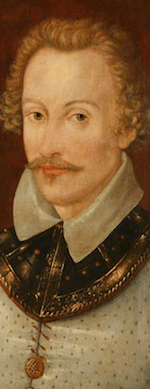
Well, to be honest, there is one that always hits me right in the eye, makes me turn up my nose, purse my lips, grind my teeth, set my jaw, and wiggle my ears – the misrelated participle, or a clause containing one. Much though today’s liberal linguists tell me not to worry, the damn thing still bugs me. That’s why I started this article with a sonnet by Sir Philip Sidney. What a poet! Although he did not, strictly speaking, introduce the sonnet form into English poetry, it was his work that gave it currency in the late 16c. The lines of the sonnet above are ‘alexandrines’, having twelve syllables each, and many of them defy the reader’s expectation of strictly iambic metre. Thus, here in the childhood of the English sonnet, before Shakespeare’s pentameter had become the norm, we have a form with a remarkable amount of freedom and expressiveness. But right there at the end in the lines…

Thus great with child to speak and helpless in my throes,
Biting my truant pen, beating myself for spite,
“Fool,” said my Muse to me, “look in thy heart and write.”

… can be seen a monumental grammatical misrelation. It is the poet who is great with child, helpless, biting his pen, and beating himself, but in apposition to that we find his Muse related grammatically to all that helplessness and beating.

Do I care that much? Well, in this context, in the context of this marvelously free-running poetry, no I don’t. if anything, the grammatical misrelation, deliberate or not, seems to fit the voice of the poem – the poet and lover, distracted and frustrated, groping for the right words and being surprised by some simple advice from his Muse, which breaks in on his mood. It’s almost as if the misrelation signals that sudden but refreshing intrusion. But consider the following:

Sitting on some iron railings, the Royal Family were easy to see.

Yes, I suppose they would be, perched up there, but it hardly fits with the ideal of regal dignity! Of course we know that it’s not the Queen, the Duke of Edinburgh, et al, who are perched on the railings, but the onlooker, and the context of that statement would make that clear. However, what strikes me about that sentence is that the misrelation and the picture it conjures up makes it ugly, awkward, and breaks my own rule of euphony. I simply wouldn’t say it, because saying it would make me feel uncomfortable, would make me feel that I was saying something ugly, and that’s a good enough reason not to say it.

Consider another sentence:

Born in Russia, his operas are considered his finest work.

The misrelation in this sentence is much less startling, because although the opening phrase ‘Born in Russia’ is in apposition to the grammatical subject of the second phrase, ‘his operas’, it’s pretty obvious we’re talking about the composer himself. It’s a relatively harmless example, and not excessively ugly.

What worries me, however, is that if we don’t make a point of avoiding, as far as we can, this kind of misrelation, we are going to find ourselves, from time to time, stumped. Consider the following scenario: I’m sitting at my computer right now, and a friend rushes in to my room. “Guess what,” she says, “coming down the road I saw an elephant!” She says no more than that, but waits for my reaction. My grammatical brain tells me instantly that it was she who was coming down the road. 12But wait! Because we’re so used to misrelation, how can I be sure about that? Three pictures form in my mind. Firstly, based on grammar, I see my friend walking down the road, and spotting an elephant in a fenced paddock. Secondly I see the elephant coming down the road, and my friend seeing it from the relative safety of an upstairs window. Thirdly – oh what the hell! – I see my friend coming down the road from one direction and the elephant coming down the road from the other. I have to ask her for clarification.
“What do you mean?” I ask.

“What do you mean what do I mean?” she asks with a frown. “I mean coming down the road I saw an elephant!”

And we’re back to square one.

I wonder, actually, whether inserting a comma into her sentence would help? Is there any difference between…

Coming down the road I saw an elephant.

… and

Coming down the road, I saw an elephant.

The trouble is, you can’t actually hear a comma. Isn’t English absolutely wonderful! That, by the way, was a rhetorical question.