Marie Marshall

Author. Poet. Editor.

Tag: poem

Perdition captcha my soul but I do love thee!

captcha1

I’m going to take a wild punt here and claim that I’m the first poet ever to publish – commercially, that is, not self-publish, blog, etc. – a poem entirely made up of captcha words. The poem is entitled ‘More words from the Old-Man-of-the-woods’ companion’, and it can be found in my new collection of poems, I am not a fish.

I’m sure that if someone has done this before I’ll hear about it…

You, Midge, and the box. (A poetic exercise for Richard Siken)*

Siken

There is a harsh, yellow light coming right in, right past the

drapes.

It is steady, like a searchlight but dimmer.

Hotter. You

came here along a cinder path, you came of your own free will,

and here you are.

Midge is mute in the rectangular room,

she can’t hear you, taking things out of the box, putting

things

into the box. Three nails, a book, and a folded scarf.

You call to her,

Midge look at me,

and she answers but it is like underwater, like at the pool when

you

are underwater and everyone is talking and laughing on

deckchairs. The box is blue, rectangular, with sharp corners.

The lid

is battered and won’t fit,

and the lock scratches your fingers.

Midge comes and licks your fingers and complains that they taste

of gasoline,

and you can smell it. You know this is not

the

right box, but you can’t say.

It is full of clouds. It is full of clouds

and peeling sunshine. Also the cries of children from outside,

and a backfire from an old car.

It is sick and cold here, and aching joints,

and all the time the television flickers. The shadows in the

room,

in the harsh yellow light, are hard, and they move.

They make a man’s shape, the seaside man, the man you know.

The

man lies down beside the box.

He nestles to it and shivers,

because

his back is bare, and Midge says

Look there, at how they criss-cross like tic-tac-toe.

The

man has scars and deep wheals

like the furrows in a ploughed field.

The man

has scars like dogtooth check. The scars are like rivulets of

tears,

running with rainwater, wheel-ruts, the mud sucking at

your feet.

There is a cold, cold mist in the fields, but not here in

the

rectangular

room.

It is still summer.

It is still.

It is summer. Dust is dancing

in the sunlight, though the sunlight never moves. The man

turns his face to you,

and

you know him because he has been on a thousand billboards.

He has laughed at you from magazines,

from the magazines your mother once bought for you.

He

is saying

Quick, come quick. Or go. Come with me or go.

But he isn’t moving. Lying there with one arm

round

the box, while

Midge is taking out the nails, the book, the folded scarf, and

putting them in a neat row.

You take them

and make the order go backwards;

a nail, another nail, another nail, a book, a scarf folded neatly.

She

takes them

and makes the order go backwards.

Backwards and forwards,

a neatly folded scarf, a book, another nail, another nail, a nail.

She

takes the scarf and knots it round her neck,

she stands upon a chair,

a black chair with a red seat and Arabic writing like a prayer.

The

man is laughing and Midge says

Goodbye, and goodbye,

there

is a sound outside like a single backfire from an old car.

You look from the light to the empty box,

from the empty box to the light. From the overturned chair to

the light, and always to the blue,

empty box.

__________

* There are dangers with imitating the style of another poet. Firstly that your product will be a poor imitation, secondly that it will be a parody – these two don’t necessarily go hand-in-hand, but that’s just for starters. A few years ago I was asked to write, as an experiment, a poem in emulation of Richard Siken’s ‘The Dislocated Room’. At the time I hadn’t come across any of his work, but I bought his 2005 collection Crush and read the poem. Siken is one of these poets whose work I don’t know if I actually like, but nonetheless I find it compelling. ‘The Dislocated Room’, like other poems by him, seems to convey a sense of unease; images, phrases, whole scenes seem to repeat, but from a different angle or with a layer added; there is the ‘familiar unfamiliarity’ of a disturbing dream, one which is almost but not quite a nightmare. It starts thus:

It was night for many miles and then the real stars in the purple sky,

like little boats rowed out too far,

begin to disappear.

And there, in the distance, not the promised land,

but a Holiday Inn,

with bougainvillea growing through the chain link by the pool.

The door swung wide: twin beds, twin lamps, twin plastic cups

wrapped up in cellophane

and he says No Henry, let’s not do this.

I’m a fairly good parodist, so in my experiment I had to try to avoid that pitfall, hence I used the word ‘emulate’ above, rather than ‘imitate’. However, I couldn’t possibly get inside Richard Siken’s head. What I felt I could do was get close to the unease, the disturbing images, the implications of violence in the original poem. I needed to get out of the dislocated room and into another place to do it, a place inside my own head with my own unease; and so what I think emerged wasn’t a Siken poem but a Marie Marshall poem with Siken harmonics, undertones, overtones.

I’m posting this for the simple reason that this morning I stumbled across a reference to Richard Siken on Twitter, and it set me thinking.


Time for Tea

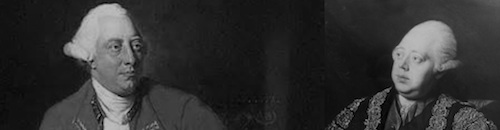
George and North

I don’t usually write doggerel, but this morning someone (who makes her tea by putting a teabag into a cup of cold water and heating it in the microwave) challenged me to write a poem in five minutes, instructing Americans how to make a decent cup of tea. The verses below took a little longer than five minutes and are fairly creaky, but they’ll do, with a downhill slope, a following wind, and a shove.

“The contrabanders took our stock
Of tea, and dumped it in the dock
At Boston!” spluttered Royal George,
As anger raised his Royal Gorge.

Lord North replied, “It gets much worse
– enough to make a bishop curse.
They never ever warm the pot
With water that is boiling hot,

 Stand for three minutes, pour it out
Quite slowly, to heat up the spout;
Two spoons of English Breakfast ‘tay’
And one heaped likewise of Earl Grey

 Into the pot, then pour more water
Hot as Herodias’s daughter,
Leave it to stand, put out a jug
Of milk, also a china mug

(Likewise pre-heated, as the pot,
With water that is boiling hot;
There is a slight controversy –
Add tea to milk, or milk to tea?

  It really is a case of taste –
Just never let heat go to waste!)
And don’t forget the bowl and tongs
For sugar. This array belongs

 To Britain! It’s the only way
To make a British cup of ‘tay’
The Yankees’ tea’s a bloody joke –
Colonials? Let them drink coke!

King George burst out, “How do they make it?
Look… tell me, Freddie… I can take it!”
Lord North replied to him, “God Save
Your Majesty – the microwave!”

(I’ll get my coat…)

‘The most quoted poem in the English language’


This is the most quoted poem in the English Language 2

The above, which actually is a genuine poem of mine, owes a debt to Don DeLillo, his novel White Noise, and the most photographed barn in America. Credit where credit’s due.

M.

Will we see ‘Sonnetto Poesia’ again?

Shortly after I posted this item, I heard from the Editor-in-Chief that he had decided against the re-launch mentioned below. That’s his prerogative, and I respect his decision.
__________

Well, it has been some time since the last print copy of Sonnetto Poesia was seen. Officially the magazine closed more than a year ago, but of course the editorial team has been involved in producing The Phoenix Rising from the Ashes anthology, which is due out in June. But the whisper now is that the magazine may well be re-launched on line. It’s early days, but I’ll let you know for definite as I get more news – probably by late July.

Meanwhile, what would readers want from a magazine devoted to a traditional verse form like the sonnet? Where does formal verse stand in the twenty-first century? As you know, I cut my teeth on formal verse – it gave me an appreciation of technical power in poetry and has informed my writing of free and experimental poetry – and I regard the Chinese walls between styles of poetry as being unhelpful and in need of demolition. Is it a contradiction, therefore, for me to be involved with and concerned about publications dedicated solely to one poetic form?

I would be interested to hear your views.

M.

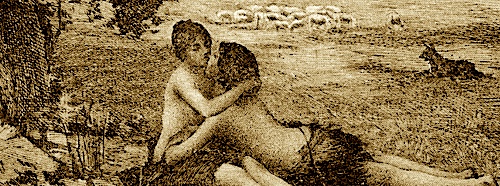
Love is pleasin’

lovers

New words to an old folk tune.
__________

   Oh love is pleasin’ and love is teasin’
Love is a treasure when first it’s new,
But as it grows older so love grows colder
And fades away like the morning dew.

When I was much younger I had a hunger
To drink my life from a lovin’ bowl.
My world is now stranger, I see the danger
To all who hazard their heart and soul.
I left my dear father, I left my mother,
I left my birthplace and childhood home.
I kept both my eyes on some grey horizon,
And far away let my footsteps roam.

   Oh love is pleasin’ and love is teasin’
Love is a treasure when first it’s new,
But as it grows older so love grows colder
And fades away like the morning dew.

Recallin’ a maiden – my memory’s fadin’ –
I broke my vow that we’d never part.
She begged me to stay but I roved away,
And more than my vow, broke a faithful heart.
Recallin’ a lady in woodland shady,
Stealin’ a kiss while she lay asleep;
I was but a dream though, not what I seemed,
And left her cruelly to mourn and weep.

   Oh love is pleasin’ and love is teasin’
Love is a treasure when first it’s new,
But as it grows older so love grows colder
And fades away like the morning dew

So pull back the covers, reveal my lovers,
Show me my fruitless and wasted life,
Show me the heartache and bitter heart-break,
Many  a promise but never a wife!
Wherever the wind blows, through open windows,
I pass away like a dyin’ song;
But don’t you be grievin’ because I’m leavin’,
That’s been my way my whole life long.

   Oh love is pleasin’ and love is teasin’
Love is a treasure when first it’s new,
But as it grows older so love grows colder
And fades away like the morning dew.

© Marie Marshall 2010

A reminder about the Aval-Ballan Poetry Competition

(c) Lesley Haycock

(c) Lesley Haycock

Just a reminder for all writers of poetry that this competition is still very much live, and that there is room for your entry. Click the painting above to go to the competition web site.

M

‘Powm!’

Ginsberg Orlovsky

A ‘powm’ – with or without exclamation mark – is a poem that punches above its weight. Not every day you get to read a new word.

M.

The Aval-Ballan Poetry Competition

(c) Lesley Haycock.

(c) Lesley Haycock.

A new venture for me (to add to author/poet/editor) is competition judge. Aval-Ballan is a Scottish-based arts and design studio, and they have agreed to sponsor a poetry competition, which you can read about here. I am one of the competition judges, along with artists Lesley Haycock and Victoria Devaney, and poet/editor Lisa Marianne Stewart. Entrants have a chance to win an original piece of artwork.

‘Panthera tigris altaica’

Tigris

‘Panthera tigris altaica’ is the title of a poem I wrote in 2008. It has recently been published in Rubies in the Darkness, the poetry magazine of the Red Lantern Retreat. Rubies in the Darkness describes itself as the ‘… prime specialist poetry journal of Spiritual Romanticism Worldwide’, and is one of these wonderful shoestring, small-press products that punches above its weight. It was a surprise arrival by post today.

At the same time I also received a signed copy of Peter Butler’s collection of haibun entitled A Piece of Shrapnel. Many thanks, Peter.

M.