
Whichcraft
Recently, someone asked me what my fascination was with the tarocky pack – better known as tarot. I don’t know whether I can answer that, without telling a tale I first told in verse in 2008, about how I came to put on the mantle and hat of le bateleur!

I met a man some time ago,
….beside the old High Road.
He asked me whither I would go,
….he bade me rest my load.
His doublet had a pearled jabot,
….pteruges, sleeves that flowed;
he asked me what I wished to know,
….beside the old High Road.
Upon his bench he set a stall,
….beside the old Highway,
with cups, and coins, and swords, and all,
….and said “I will soothsay.
All Nature answereth my call,
….no man can say me nay;
I can raise up, I must let fall,
….beside the old Highway.”
His beaver hat was lemniscate,
….beside the road to Town,
which is to say a figure-eight
….gave shadow to his crown;
a yellow thatch sprung from his pate,
….its ringlets hanging down.
His words gushed like the Rhine in spate,
….beside the road to Town.
He said to me, “Nu, zay nisht beyz’”
….beside the Avenue.
“I’ll tell you all the mantic ways
….of Which, and How, and Who.”
And from his sleeves he drew bouquets
….of Pink, and Green, and Blue –
“Abba-Dabar” was his catchphrase,
….beside the Avenue.
I took him for a Mountebank,
….beside the old Towpath,
that peeped and muttered, with an ankh
….scribed on his wand of lath;
or was he German, Celt, or Frank?
….“Forsooth,” thought I, “He hath
an eldritch air, a touch of swank,
….beside the old Towpath!”
“In my land, dwellings with mansards,
….beside the Country Lane,”
he said, “have in their sparse dooryards
….a trug of blue wolfsbane,
a driftwood cross, a pile of shards –
….a shattered windowpane.
Come friend, please buy my pack of cards,
….beside the Country Lane.”
I took a shilling from my purse
….beside the Old, Straight Track.
I took the cards and, with a curse,
….I put them in my pack,
as though his offer did coerce –
….I could not give them back!
The dyke and fence he did traverse,
….beside the Old, Straight Track.
I have not seen him from that time,
….beside the Thoroughfare,
although through every land and clime
….I’ve sought him here and there.
I’ve heard tell of his sleight and mime,
….at country wake and fair,
as fickle as the new springtime
….beside the Thoroughfare.
And I’ve heard tell that Woden, blind,
….beside the Great Turnpike,
where gibbets creak and nooses wind,
….walks by the misty dyke;
I’ve heard the Flying Dutchman pined
….to slip ashore and strike
his foot upon the tussocks, twined
….beside the Great Turnpike.
Along the weary moorland trench,
….beside the Boluevard,
amongst the Romany, the French,
….the Breton Campagnardes,
I searched in vain; but then – oy mensh,
….the canny old canard! –
I found his old three-legged bench
….beside the Boulevard!
No more I search, but set my stall
….beside the Old High Road.
Step up, mayn her – come one, come all –
….your fortune I’ll decode.
Come, try my cards, see how they fall;
….my scrying’s à la mode:
THE MOUNTEBANK – you’re in My thrall
….beside the Old High Road.

 The latest Showcase (Autumn 2018) was published a few days ago, and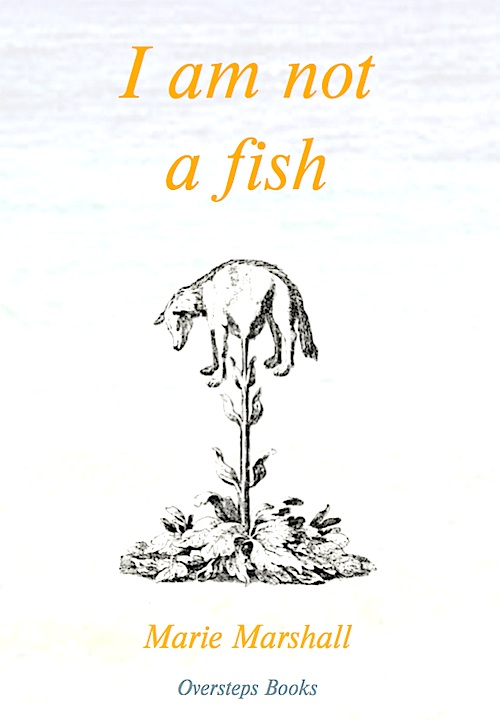

 I have often, in conversation and on line, mentioned Roland Barthes’ famous essay ‘The Death of the Author’. These days it has become fashionable to scoff at Barthes, but for me he will always remain someone who forced home the important lesson that it is impossible to isolate The Great Poet-Goddess and Her Great Work from what came before and what comes after, that this Great Work is a work of a moment’s completion, after which it is totally free of the further influence of the Great Poet-Goddess, and is the property of all of us.
 But my message today is that difficulty belongs to all of us. Lyn Hejinian’s words at the head of this blog post seem, at first sight, not to offer much satisfaction. They are not a key to interpreting the intentions of a ‘difficult’ poet’s work, they seem to leave all that up in the air – it might be this, it might be that, it might be the other. But that is nothing more nor less than openness. It is an invitation to take a piece of ‘difficult’ poetry (or art, or music, or whatever) and run with it. If you don’t ‘get’ all of it, so what? Get what you can, make something out of it, play with the words and with the associations they spark in your own mind.

 I have returned, once again, to the Child Ballads. This is my reworking of the song we know in Scotland as ‘The Twa Magicians’; it concerns a woman whose virginity is tried by a persistent suitor, the magical lengths to which she will go to preserve it, and the magical lengths to which he will go to take it. It exists in many versions, but in most the woman is a high-born lady and the suitor is a blacksmith. With this one I can ‘hear’ a tune not dissimilar to Ralph Stanley’s version of ‘Matty Groves’, but paced up and with a picked banjo accompaniment. I love the phrasing of folk songs, I love the patterning and balance, I love the peculiar syntax and the way that narrative connections often get lost in the transmission from singer to singer, and this is what I try to capture in my adaptations.
 Marie Marshall