Marie Marshall

Author. Poet. Editor.

Tag: writing

‘…but the choicest of our hard wrought poems…’

SPL2

On the glass frontage of the Scottish Poetry Library in Edinburgh are the following lines, translated from Gaelic by poet Derick Thomson:

It is not gold or other treasure
that you will get from me in special;
it is not tribute, or gift of cattle,
but the choicest of our hard-wrought poems.

Amongst the ‘hard-wrought poems’ now deposited there is a signed copy of my new collection, I am not a fish, which I have gifted to the Library. It was delivered there today by my literary agent. On the same trip he also deposited a copy of my novel, Lupa, at the National Library of Scotland. Each is a drop in Scotland’s literary ocean, but it feels like a big deal to me.

NLS3

You, Midge, and the box. (A poetic exercise for Richard Siken)*

Siken

There is a harsh, yellow light coming right in, right past the

drapes.

It is steady, like a searchlight but dimmer.

Hotter. You

came here along a cinder path, you came of your own free will,

and here you are.

Midge is mute in the rectangular room,

she can’t hear you, taking things out of the box, putting

things

into the box. Three nails, a book, and a folded scarf.

You call to her,

Midge look at me,

and she answers but it is like underwater, like at the pool when

you

are underwater and everyone is talking and laughing on

deckchairs. The box is blue, rectangular, with sharp corners.

The lid

is battered and won’t fit,

and the lock scratches your fingers.

Midge comes and licks your fingers and complains that they taste

of gasoline,

and you can smell it. You know this is not

the

right box, but you can’t say.

It is full of clouds. It is full of clouds

and peeling sunshine. Also the cries of children from outside,

and a backfire from an old car.

It is sick and cold here, and aching joints,

and all the time the television flickers. The shadows in the

room,

in the harsh yellow light, are hard, and they move.

They make a man’s shape, the seaside man, the man you know.

The

man lies down beside the box.

He nestles to it and shivers,

because

his back is bare, and Midge says

Look there, at how they criss-cross like tic-tac-toe.

The

man has scars and deep wheals

like the furrows in a ploughed field.

The man

has scars like dogtooth check. The scars are like rivulets of

tears,

running with rainwater, wheel-ruts, the mud sucking at

your feet.

There is a cold, cold mist in the fields, but not here in

the

rectangular

room.

It is still summer.

It is still.

It is summer. Dust is dancing

in the sunlight, though the sunlight never moves. The man

turns his face to you,

and

you know him because he has been on a thousand billboards.

He has laughed at you from magazines,

from the magazines your mother once bought for you.

He

is saying

Quick, come quick. Or go. Come with me or go.

But he isn’t moving. Lying there with one arm

round

the box, while

Midge is taking out the nails, the book, the folded scarf, and

putting them in a neat row.

You take them

and make the order go backwards;

a nail, another nail, another nail, a book, a scarf folded neatly.

She

takes them

and makes the order go backwards.

Backwards and forwards,

a neatly folded scarf, a book, another nail, another nail, a nail.

She

takes the scarf and knots it round her neck,

she stands upon a chair,

a black chair with a red seat and Arabic writing like a prayer.

The

man is laughing and Midge says

Goodbye, and goodbye,

there

is a sound outside like a single backfire from an old car.

You look from the light to the empty box,

from the empty box to the light. From the overturned chair to

the light, and always to the blue,

empty box.

__________

* There are dangers with imitating the style of another poet. Firstly that your product will be a poor imitation, secondly that it will be a parody – these two don’t necessarily go hand-in-hand, but that’s just for starters. A few years ago I was asked to write, as an experiment, a poem in emulation of Richard Siken’s ‘The Dislocated Room’. At the time I hadn’t come across any of his work, but I bought his 2005 collection Crush and read the poem. Siken is one of these poets whose work I don’t know if I actually like, but nonetheless I find it compelling. ‘The Dislocated Room’, like other poems by him, seems to convey a sense of unease; images, phrases, whole scenes seem to repeat, but from a different angle or with a layer added; there is the ‘familiar unfamiliarity’ of a disturbing dream, one which is almost but not quite a nightmare. It starts thus:

It was night for many miles and then the real stars in the purple sky,

like little boats rowed out too far,

begin to disappear.

And there, in the distance, not the promised land,

but a Holiday Inn,

with bougainvillea growing through the chain link by the pool.

The door swung wide: twin beds, twin lamps, twin plastic cups

wrapped up in cellophane

and he says No Henry, let’s not do this.

I’m a fairly good parodist, so in my experiment I had to try to avoid that pitfall, hence I used the word ‘emulate’ above, rather than ‘imitate’. However, I couldn’t possibly get inside Richard Siken’s head. What I felt I could do was get close to the unease, the disturbing images, the implications of violence in the original poem. I needed to get out of the dislocated room and into another place to do it, a place inside my own head with my own unease; and so what I think emerged wasn’t a Siken poem but a Marie Marshall poem with Siken harmonics, undertones, overtones.

I’m posting this for the simple reason that this morning I stumbled across a reference to Richard Siken on Twitter, and it set me thinking.


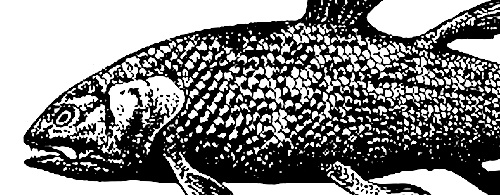
A Coelacanth in denial swims out to you from Oversteps Books…

Coelacanth

My second collection of poetry, I am not a fish, is now officially published by Oversteps Books. You can buy direct from them or order the book from your local bookshop. ISBN 678-1-906856-37-3. There are still a limited number of signed copies left for sale here too.

The poems in this collection have never been published in print or on line anywhere before – it was an entirely new work written for Oversteps. So the only way you will get to read them is by buying the book.

Oversteps Books publishes some of the best in contemporary poetry, covering a wide range of established and new poets. There is a rigorous editorial policy, and the books are produced to the highest standards both in terms of editorial accuracy and the beauty of the finished books. The publishing house was founded in 1992 by the poet and translator, Anne Born (1924 – 2011). The poet and lecturer, Alwyn Marriage, became Managing Editor in 2008.

M

A day on the streets of Freedonia

Betsy Ross

I love America. This is a pretty startling statement for an infrequent visitor (to say the least), and an anti-capitalist at that, to make. The USA is an amazing, diverse, vibrant, colourful country. It gave us the 1957 Chevy Belair, the Fender Stratocaster, Jazz, the Harley Davidson 883, the USAF A2 leather jacket, and so much more – all products of the capitalism that I dislike so much. But I didn’t drag you here today to discuss my contradictory values, or my politics.

I have been reading some interesting pieces recently, following the bombing at the Boston Marathon and the commemorative vigil, the dignified public silence, which followed it. The thrust of these pieces has been to highlight or to question the public perception of and news coverage of violent death. Why – these pieces seem to have said – does a handful of deaths in a ‘terrorist’ incident bring out crowds of respectful mourners, yet the larger number of regular deaths by privately-owned guns warrant no equivalent coverage in the media and no equivalent demonstration of dignified public mourning. Here’s one such recent piece in The New Yorker, entitled ‘What if the Tsarnaevs had been “The Boston Shooters”?’

Now, this isn’t a political blog. I wrote elsewhere about gun ownership and the difference in the perceptions of freedom in countries that have grown up with and without private ownership of guns in their respective cultures. However, it is true that the ‘consumable information’ (a term I prefer to use for ‘news’) offered in the USA does prioritize in this way, and that the public’s perception is swayed by the mention of ‘terrorism’. To introduce the issue of death by guns, to give those deaths equality in the daily ration of ‘consumable information’ and in the public’s perception of what one should mourn would, however, touch a raw nerve in some people to whom the Second Amendment to the Constitution of the United States is a matter of supreme importance in their personal philosophy. Thus people who raise the question of mourning gun deaths must tread on eggshells, no matter how often they might say that the issue is not about gun ownership, much less about gun control. Thus the question is, in effect, not put.

Let’s look at it another way. Let’s take guns out of the picture. You live in a country – let’s call it ‘Freedonia’, not the USA – where everyone is free to own an automobile. Nobody disputes that right, but equally you are free to not own one – you can travel by bus, by bicycle, by horse-and-buggy, and some people do just that. There has just been a dreadful incident at a public event; some people have been killed, others maimed, all shocked, by a bomb blast. A couple of days later people all come out into the public gaze and stand silently to mourn those who died, and to think about and pray for those who are injured or bereaved. Maybe you join the vigil too. But whether you do or not, the thought occurs to you that people die in greater numbers in accidents on the streets and roads, that the news broadcasts and newspapers hardly mention them, that no one comes out and publicly mourns them, and you want to do something about it. Most likely you wouldn’t dream of saying that people ought not to own cars, or that the Government ought to restrict that ownership by drastic legislation; but still you believe that you have found an anomaly, an imbalance, in the perception that you yourself had hitherto, and that the majority of other people still have. You want to make a difference. You want to change that perception.

So you find some like-minded individuals, and you decide to meet in a public place, for five minutes each week, and hold a silent vigil to mourn those affected by road accidents. You give as much public notice as you can about these vigils – you get permission to use the public place, you let the police know (and presumably they tell you what you can and can’t do, vis-à-vis causing an obstruction etc.), you inform local and national media, you blog it, put it on Facebook, tweet it – and you go and do it. Over an over you will, of course, have to keep assuring people that this isn’t about banning cars, restricting their ownership, or anything like that; you yourself might be the proud owner of a vintage Ford Cobra. You might have to endure some noisy protests from the local car club, who don’t understand or don’t believe you. You might feel pressure from the Automotive and Oil industries’ lobbyists. But you keep on doing it, keep up the silent mourning, keep on telling the media what you are doing, keep on telling everyone “It’s not about car ownership…”

Eventually more and more people may join you, the vigils may spread to other cities around Freedonia, and you might change public perception on the matter. You might change the way news agendas are prioritized. You might not. One thing is sure, however, and that is unless you try you’ll never know.

My respect to the people affected by the Boston bombing. My respect also to the people who wish to address the imbalance in public perception.

__________

Follow me on Twitter @MairibheagM

Time for Tea

George and North

I don’t usually write doggerel, but this morning someone (who makes her tea by putting a teabag into a cup of cold water and heating it in the microwave) challenged me to write a poem in five minutes, instructing Americans how to make a decent cup of tea. The verses below took a little longer than five minutes and are fairly creaky, but they’ll do, with a downhill slope, a following wind, and a shove.

“The contrabanders took our stock
Of tea, and dumped it in the dock
At Boston!” spluttered Royal George,
As anger raised his Royal Gorge.

Lord North replied, “It gets much worse
– enough to make a bishop curse.
They never ever warm the pot
With water that is boiling hot,

 Stand for three minutes, pour it out
Quite slowly, to heat up the spout;
Two spoons of English Breakfast ‘tay’
And one heaped likewise of Earl Grey

 Into the pot, then pour more water
Hot as Herodias’s daughter,
Leave it to stand, put out a jug
Of milk, also a china mug

(Likewise pre-heated, as the pot,
With water that is boiling hot;
There is a slight controversy –
Add tea to milk, or milk to tea?

  It really is a case of taste –
Just never let heat go to waste!)
And don’t forget the bowl and tongs
For sugar. This array belongs

 To Britain! It’s the only way
To make a British cup of ‘tay’
The Yankees’ tea’s a bloody joke –
Colonials? Let them drink coke!

King George burst out, “How do they make it?
Look… tell me, Freddie… I can take it!”
Lord North replied to him, “God Save
Your Majesty – the microwave!”

(I’ll get my coat…)

Ebooks Etc

temp

Ebooks Etc is the name of a bookshop with branches in Pretoria and Centurion in South Africa. If you drop in you’ll find Lupa stocked on their shelves. Discerning folk, these Southern Hemisphere types, if you ask me.

M.

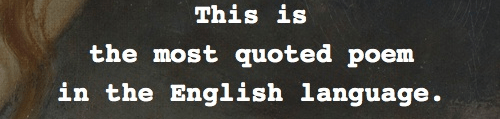
‘The most quoted poem in the English language’


This is the most quoted poem in the English Language 2

The above, which actually is a genuine poem of mine, owes a debt to Don DeLillo, his novel White Noise, and the most photographed barn in America. Credit where credit’s due.

M.

Pre-launch signed copies of ‘I am not a fish’ now available!

Please take this opportunity to have a personal message on your signed copy. Click here.

The sales are being handled by my hard-working literary agent.

Enjoy!

M

Almost time to catch a fish… or not!

© Oversteps Books

© Oversteps Books

Although my brand new collection of poems, I am not a fish, has not yet been officially launched, I have just been handed a copy. I have to say it looks good, well finished, and of course it’s always a pleasure to see one’s own work right there in hard copy. In due course I hope to sell some signed copies by mail order; I expect that these will actually cost a little more than you would pay in a shop or from a distributor, in order to cover packing and postage, but that can’t be helped. Stay tuned here for more news about the official publication date. (I’ll also be looking at the possibility of selling signed copies of my novel Lupa by the same method.)

Thinking of buying a copy of ‘I am not a fish’?

fish

Are you waiting eagerly for the opportunity to buy a copy of I am not a fish, my new poetry book which is due out this month? Why not contact the publisher in advance and let them know? I would be grateful for your support – the book contains poems which have not been published anywhere else.