Marie Marshall

Author. Poet. Editor.

Category: fiction

Hear ‘The Ice-House’ at Pitlochry!

Ice House

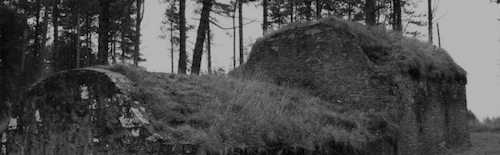
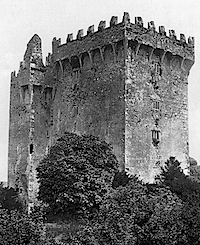
A stretch of the Scottish coastline, though deceptively close to the port of Dundee in one direction, and the ancient city of St Andrews in the other, was a lonely expanse of sand dunes little more than a hundred years ago. Nowadays there is a pinewood and a car park near one end of it, and tracks to walk, but back then it was a solitary, almost inaccessible area. Somewhere, hidden in the dunes and pines, is an old ice-house, once used for storing salmon. A young woman, out for a day’s hike in the summer of 1919, stumbles across it, and awakens an old, dark mystery…

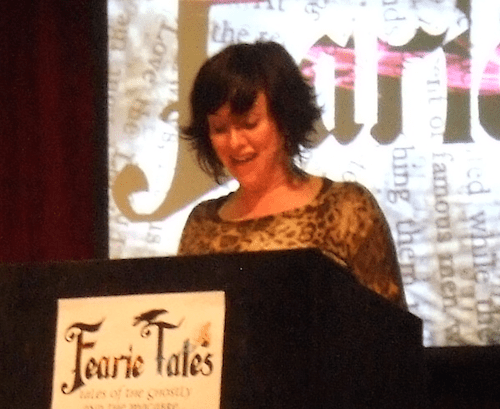
That is the premise for my eerie short story ‘The Ice-House’, and if you come along to the Pitlochry Festival Theatre on Friday 12th February, you will hear the whole tale unfold, as it is read out to the audience there by actor Helen Logan. Yes, once again one of my stories will feature as a winner in the Winter Words Festival‘s competition – ‘Fearie Tales’.

The time, 9.30pm. The venue, the River Room at Pitlochry Festival Theatre. I dare you to be there!


It doesn’t hurt to ask, but don’t build your hopes up.

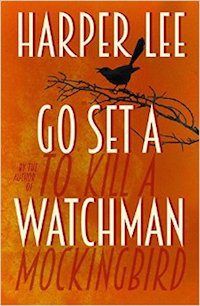
watchOver six months ago several things came to a head seemingly all at once. Firstly the flying of the Confederate flag – or rather its lowering – became an issue all over the southern states of the USA. Secondly a prominent activist was outed as trans-racial. Thirdly, Harper Lee’s publishers released Go Set A Watchman.

The latter was significant to me. Harper Lee had always been a heroine of mine, for writing one of the monuments of American Literature – To Kill a Mockingbird – and then retiring. I wanted to do the Scottish equivalent, but as soon as I published my second novel that was out of the question anyway – that fact always makes me smile.

With the near-coincidence of these three things, it occurred to me to write a short story, set in 2015, in which a young female couple, one of whom is of mixed racial heritage, have a rendezvous in the Alabama town where one of them has her roots. Together they see how the town has coped with the realities of the twenty-first century. The central event in the story is the lowering of the Confederate flag at the town’s courthouse; but also the couple visit, in passing, an elderly lady who can remember her childhood in the town, during the Depression. My story remained unfinished. I had planned it as a tribute to Harper Lee, and it only really made sense if I could call the elderly woman ‘Jean Louise Finch’. This was, as I say, to be a serious story and a tribute, not ‘fanfic’. So I did the polite thing and got in touch with Ms Lee’s publishers to ask permission, leaving the story unfinished.

Well, seven months later, long after I had forgotten about the project, I got my answer. No. Not only could I not call the elderly character ‘Jean Louise Finch’, I could not use any character names out of To Kill A Mockingbird or Go Set A Watchman. That’s fair enough, I guess. Not only that, but I could not call the town ‘Maycomb’. Okay, I can see the logic in that, given the interdict on character names. But apparently I could call the town ‘Monroeville’ if I wanted. Well thanks, I know I could – any writer is free to set a story in a real place – but the point would be lost. In any case, seven months after the event(s), the moment for the story has passed. It remains unfinished.

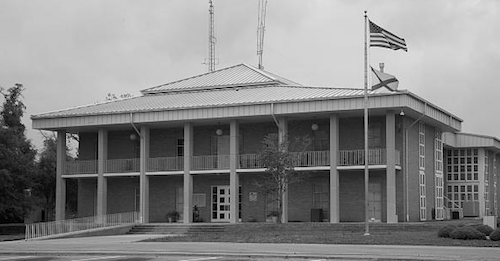
But I thought I would share a passage with you, just for the heck of it. Very little else of the story has been written, and now probably won’t be; so what you have here is a little insight. The accompanying pictures are of the old and new courthouses in Monroeville – and just to be clear, the new courthouse can be seen to be flying the Stars-and-Stripes and the Alabama State Flag, not the Confederate flag, which was another reason why fictionalisation was necessary. By the way, the story was to be called The Standard of the Camp, which is a reference to Numbers 1:52 and Numbers 2:2 in the Bible.

*
monroeville1

Judith parked the car a few blocks away, and we walked hand in hand, joining one of the little streams of people approaching from every direction to swell the small crowd in front of the building. It was indeed a small crowd as a proportion of the population – only a few hundred – but unless a person had a reason to wish to be there for what was, after all, only a minor piece of history when taken with the bigger picture, why make a fuss and stir yourself? To Judith and me, with our own union being also a small part of a bigger picture, there was a reason to come. There was to be no ceremony. Simply, at six o’clock, the Confederate flag was to be lowered from the flagpole outside the courthouse, never to be raised there again. It was to be an occurrence, that’s all.

“Has that flag always flown here?” I asked Judith.

“Not sure,” she said. “The way I heard it, it wasn’t raised anywhere at all until the nineteen-twenties. There’s a picture somewhere of the old courthouse during World War Two, and it had the Stars and Stripes on the flagpole, and another picture taken during the Cold War that shows the same. Someone told me that a group of local politicians pushed through some measure when Obama got elected President. But hell, I’ve hardly ever been down this part of town before, so I wouldn’t know.”

“I guess people didn’t really notice until it became an issue.”

“You got that right!” said someone near me.

I get that. When something is just part of the scenery you don’t notice it. Then one day it’s gone, maybe a tree is cut down or a building demolished or something new built, and the best you can do is wonder what’s wrong with this picture. The Stars and Bars on a biker’s jacket or tacked up in the back of a neighbor’s garage can just be scenery. Until someone decides to become a semiotician, and – bam! Just how important to us all was disposing of this symbol? Apparently it was important to APT and WSFA as they had cameras there, so it was potentially news.

The clock at the old courthouse began to strike the hour. A side door of the newer building opened, two uniformed court bailiffs came out and began to walk diagonally across the lawn towards the flagpole. The buzz in our little crowd died down. I could see that a reporter from one of the TV stations had stationed herself between the cameras and the flagpole and was talking into a microphone. There were no salutes, there was no fuss, one of the bailiffs untied the hoist from its cleat, and began to hand-over-hand it. The flag began to descend, slowly. As it did, a knot of men nearer the front began to chant.

“USA, USA, USA…”

I could see a veteran’s cap, I could see a biker’s bandana, I could see a couple of hand-held Stars and Bars being waved.

“God, they say we Americans have no sense of irony, and they’re right,” said Judith.

“Look at another way, honey,” I said. “The way these guys see it, the ideal of the United States is that the whole is not greater than its parts, there is no over-riding principle that can impose itself on a constituent state, and indeed upon the right of an individual’s expression. In some way that’s what they believe in. In their view of history, that’s what the Confederacy was fighting to establish and the Union was trying to crush.”

“That’s an extraordinary opinion to come from an African-American,” said a voice behind me. I looked over my shoulder at the woman who had spoken. I hadn’t heard any hostility in her voice and I couldn’t see any in her face.

“I guess I’m repeating something I heard from someone here in town,” I said. “Don’t get me wrong. To me that flag is just what they say it is – the symbol of white supremacy – and although I’m not from these parts myself, I’m glad to see it taken down. It’s just that the person who gave me that idea also told me that something like nine out of every ten Confederate soldiers had never seen a black person, let alone owned one. They didn’t decide what the flag meant. Somebody else did.”

“Hmm.”

Judith nudged me, and I turned back. People had their iPhones out, taking pictures of the lowering. Some were taking selfies.

“You want a picture?”

“Nuh-uh. No thanks.” For many reasons I did not.

The flag came to the end of its journey. The guys chanting fell silent. I stood on tiptoes to watch the two court bailiffs detach it from the hoist and fold it without any flourish. One of them tucked it under his arm and they began to walk back towards the courthouse. What would happen to it now? As long as it never flew again, did I actually care? Judith and I turned to go.

monroeville2

*

I recall a similar thing happened when I had an idea for a full-length adventure novel featuring a character created by a fellow-Scot. Her creation was not a pleasant character, he was in fact the arch-rival of her protagonist. But I saw in him the potential lead in a story about a cynical adult wizard. So I wrote to her publishers and asked for permission. And of course the answer came back in the negative. Now, I am all for authors protecting their intellectual copyright, given current social and commercial circumstances. I feel no rancor to either Harper Lee or to JKR because their people said no. Indeed, my cynical adult wizard – Agent Delta of the Chthonic Intelligence Agency© – still exists on my virtual drawing-board, is not named as anyone in any other work of fiction, inhabits a milieu nowhere near any boarding-school, and may come to life in a way that infringes no copyright.

1On the other hand, when I got in touch with Irvine Welsh and asked if I could use his name as the central character in an epic poem – Welshday – in which he journeys through the city of Edinburgh in the company of an inebriate detective and a living statue, in a tribute to James Joyce’s celebration of ‘Bloomsday’, he replied “Why not! Go for it!”. All of which leads me to the point of this post: it doesn’t hurt to ask. Countless authors have based novels and stories on pre-existing characters – the Flashman novels, James Bond novels by Kingsley Amis and William Boyd, and so on. Sometimes a living author will hand on the baton willingly to a successor, and the worst that can happen is that they’ll say no.

As it happens, Welshday was never finished either. I know the concept of unfinished writings seem strange, almost like the idea of failure. But I draw the analogy with a painter’s studio – no one finds it strange to find drawings, sketches, studies, and unfinished works there, so I have no qualms about admitting to countless novels, stories, and poems that never made it (yet!) to completion. In fact Welshday gave rise to some good stand-alone poems, so here’s one of them for you. Our journeying hero and his inebriate companion visit a bar in Leith, where they are accosted by a Russian seafarer who claims to be the only survivor from the sinking of the submarine Kursk. It’s a sestina:


Old Rimbaud said, “Let’s go and take a glass
of whiskey in a jostling pub I know.”
I, like a sodding numpty, dogged his steps,
And tracked him to a clapped-out, frowsy dive,
Where half the clientele were missing ears –
the other half were shouting to be heard!

We’d been there half an hour when I heard
a Russian sailor tap the falling glass;
he grabbed my sleeve, said “This is for your ears
alone, no other bugger has to know.
I heard my skipper calling dive-dive-dive,
as I slid down the conning-tower steps…”

Old Rimbaud, blootered, sunk down on the steps;
the Russian bellowed at me, to be heard.
“The air inside gets hotter when you dive,
the sea is slagged and dark as bottle-glass.
The ghost of every bugger that you know
floats by, and there’s a pounding in your ears!”

His sliding, slootered accent hurt my ears.
I thumbed my belt and slipped some salsa steps;
I said, “Now tell me something I don’t know,
no half-arsed, half-cocked tale already heard,
no shite enigma darkly in a glass,
no bonny buck-and-wing, no duck-and-dive!”

He scowled at me and, miming a crash-dive,
resumed the tale that battered at my ears,
while I, to ease my pain, sucked at my glass.
“Kolesnikov took all the proper steps,
and we went aft – perhaps you might have heard –

but when you’re frigging shark-bait, boy, you know!”
I shut him up, and said, “Here’s what I know –
no fucker made it home from that last dive –
They all asphyxiated, so I heard!”
He laughed, he jeered, I stopped my ringing ears,
and sat down with old Rimbaud on the steps,
to spit at all the demons in my glass.

When ghosts well from a glass you always know,
You’re sitting on the steps of some sad dive,
and though you stop your ears you’ll still have heard!

Three Bubbles of Earth: A 221b Baker Street story

“We could, I suppose, form a detective agency of our own,” said Mrs. Norton to me, under circumstances I’ll come to eventually, I promise you.

And at the time I felt that maybe we could. I certainly regarded myself as somewhat qualified, having absorbed, by what I believe Dr. Watson would classify as ‘osmosis’, a fair amount from my famous tenant. More, in fact, than you would imagine. I have spent several years navigating both his order and his chaos, distinguishing the one from the other, and recognising the tracks and traces of one within the other. I know what is secreted where, and where to find reference to things. I know how he files newspaper clippings, and what his system of annotation means. It is amazing what can be gleaned during simple housekeeping activities. I am not merely the adjunct whom he calls his busy, biblical ‘Martha’, to be yelled for from the top of the stair when he wants a Scottish breakfast or his Dewar flask filled with coffee in the depth of the night. I am not ‘Mrs. Turner’, as he once absently called me. I am Elspeth Hudson – née Turnbull, and Effie to my friends – I am a widow, I am a woman used to standing on my own two feet, I am educated, I am a Scot, and 221b Baker Street, London NW, is my address, not his. He rents rooms here. if he omits ‘care of’ on his calling card, then he does so by his own presumption and without my permission. In fact everything he does in this house, and by sally from it, everything he says from here, is done and said on sufferance. The same applies to Dr. Watson, though he is much more affable and polite. Superficially, that is. If I am to be honest, both of them have a typical bachelor’s disregard for women. They don’t mean to have, it’s simply the way menfolk are bred up, and again to be honest I don’t hold it against them.

221b 5Let me give you a wee example of my qualification, just picked from the air as it may be. Last week there was a chapping at my door, and I answered it to a man asking, as they all do, to see Mr. Sherlock Holmes. I admitted him and conducted him upstairs. As I left him there with my famous tenant, I heard the usual rigmarole.

“I perceive that you a married man in sudden and unexpectedly straitened circumstances, and that you arrived here from Birmingham this morning by the ten-fifteen express.”

“Good Lord, Mr. Holmes! How can you possibly know that?”

“By simple observation and logical deduction. You see…” etcetera, etcetera.

All well and good, of course. Mr. Holmes was entirely correct in his deductions – I did not need to hover at the top of the stair to hear his reasoning – as I had come to much the same conclusion himself. The sudden and straitened circumstances were indicated by his wearing a jacket that was fashionable for men two summers previously, but which had had one button replaced that was not quite a match. I recognised the thrift of the button jar! His being married was obvious by the careful and regular way in which the replacement button had been sewn on, not with the cobbled-together stitching a man on his own would have used, nor with the delicacy and loving touch of a sweetheart, but with the honest practicality of a longer-time companion. There was nothing about him generally to suggest that he was a ‘mother’s boy’, and the touch was definitely companionable I’d say; and if you add to that the fact that he was past conventional courting days by a good five years or more, it was a fair shot that he was married. The deduction about his origin and arrival was as easy as pie; were his voice not enough, he had an early morning edition of a Birmingham newspaper sticking out of his jacket pocket, and there was only one train that could have borne him here at this time. I could have primed Mr. Holmes also, if I had cared to the following. That our visitor possibly had a sweet tooth, by the smell of peppermints on his breath and by the click-clack a couple of them made in the left-hand pooch of his overcoat as I hung it up; or more likely that he had been drinking, if the uneven weight of something, probably a flask, on the right hand side of his coat was anything to go by. That he had walked here via Manchester Square Gardens, by the evidence of an autumnal leaf, attached to one of his dickersons, from a tree that grew in that location, alone of all the neighbouring gardens. That this route to our – I mean my – front door meant that either he had little sense of direction, or more probably that he was distracted by the matter that had brought him here, and had mistaken the the direct route from the railway station. That his distraction might be confirmed by the obvious lack of attention he paid whilst crossing the road, as witnessed to by a distinct whiff of the leavings of a dray-horse on the same dickerson that bore the leaf. That he had either sustained an injury to one leg, or that the right was a little shorter than the left, which I gathered from the rhythm of his footfalls as he climbed the stairs behind me. I could even have hazarded that he was right-handed. How? By the fact that if he reached more often for his flask than he did for a sweetie, then the flask would be in the pooch reachable by his better hand. However, I didn’t add that to a prominent catalogue of his personals, as most people are right-handed, and that fact was not necessarily significant. Worth handing to the clerk of memory for filing, but that is all.

Women, you see, notice such things. it’s not a skill we have to learn. Maybe ‘osmosis’ is just so much bunkum. Or maybe Mr. Holmes learned from me, and not the other way round. Now that would be something notable!

Anyhow, this wasn’t what I wanted to tell you. I wanted to tell you what happened the last time Mary Watson – Mary Morstan as was – came to 221b Baker Street. I was in my pantry dealing with the items just delivered by the grocer’s boy, when I heard a ring at the doorbell. No doubt Dr. Watson, acting as Mr. Holmes’s amanuensis, would have called it an urgent ring. He has a way of transferring things, of personifying the thing acted upon as though it was the person acting upon it – you’ll have seen that, no doubt, in his published accounts of the menfolk’s adventures. It was a ring, I’ll say that much. I was, I admit, surprised to find Mary, Dr. Watson’s wife, standing there.

221b 1“Good morning, Mrs. Hudson,” she said, looking past me. “Is Mr. Holmes here? May I see him?”

“Good morning, Mrs. Watson,” I replied. “No, he’s not here just now.”

“Oh dear. Will he be back soon?”

“I’m afraid I’m not expecting him today. In fact I have no idea when he might return. He’s away on an investigation. You missed him by less than a day, by the way – he left last night. Did your husband not tell you?”

“No,” she said with a sigh, “John’s away too. He’s at a medical conference in Dublin. He never mentioned Mr. Holmes before he left.”

It is as I said. Both our menfolk, tenant and husband, have retained in their characters the best and the worst of bachelorhood, the worst being a slight disregard towards women. Well, I had Mrs. Watson into my own parlour – I did not presume to take her up to Mr. Holmes’s, and in any case mine is comfier, there are no hard angles, there is less clutter, there is no odour of stale tobacco, there is a gently-ticking clock that gives comfort with a soft chime at each hour, and my kettle and cups are nearby. It is an environment where it was easy for us, despite our twenty years’ difference in ages, to drop our titles and become Effie and Mary to each other. To each other, I stress, and not to you, however – for the remainder of this tale I shall write ‘Mrs. Watson’. There we sat over two cups of my strong tea and broached the Dundee cake I had baked the previous day, while she told me why she had come.

Please forgive me if I don’t dress it up in ribbons. Here it is in a nutshell:

She has a friend – no need to name her – who had recently lost her husband. Distraught by her bereavement, she had looked for solace in spiritualism, as so many people do. It was something for which Mrs. Watson herself had no time, and no more do I, and yet it was a trait, an interest, a belief that her good friend had always had, and which she therefore tolerated it out of affection. Mrs. Watson took some encouragement in the fact that her friend’s quest was leading nowhere, and that she might be able to find her own inward strength to come to terms with her bereavement, or at least to lean on a good friend rather than on mountebanks and strangers. However, just when her friend seemed to be on the point of giving up her visits to mediums and clairvoyants, she reported that she had found a new one.

221b 3“When I saw her,” said Mrs. Watson, “there was a gleam in her eye and a flush on her cheek. She was excited, overly so. There was something of the enthusiast in her manner. I became worried once more.”

“What can you tell me about this new medium?” I asked.

“Well, he goes by the name of Kuldip Singh Naga. Apart from his Indian name, bearing, and voice, there is nothing particularly strange about him. Nothing flamboyant, nothing melodramatic. He does not seem to be a showman of any kind.”

“You have met him?”

“Once. On the street. I was on my way round to see my friend, and I came across them. I gathered they had either met by chance, or he had been to her house and was now taking his leave. When I came up, she introduced him as ‘Swami Kuldip Singh’. I proffered my hand, and he seemed a little reluctant to take it at first. But when he did, he bowed slightly, and said he was delighted to make my acquaintance. He was dressed in a simple, dark grey suit that buttoned to his neck, and a turban. He had a servant with him who bowed too.”

“What else can you tell me about him?” I asked.

“Nothing much beyond what my friend told me. His consultations take place in a hired room near Sloane Square. The room is modestly furnished, there are no suggestive decorations or appurtenances, no crystal ball or other fetish. His method is simply to spend a few minutes talking to her – sometimes with his hand laid upon hers – relaying to her messages that he says are from her husband.”

“What is it that makes him convincing where the others are not?”

“Merely the depth and breadth of his knowledge about her late husband,” said Mrs. Watson, and hesitated.

“What is it that you are not telling me?” I asked.

“Well, two things. Firstly that a few weeks before his death, there was a suspicion that their house was broken into… no, nothing was stolen, in fact everything about the house seemed to have been left neat and tidy, neater than usual, especially in her husband’s study. His books and private papers. I suspect that whoever broke in could well have been garnering information about him, the kind of detail that the Swami gave back to her in his consultations.”

“And the second thing?”

“The second thing is this. He is no Indian. He is no Sikh. Oh, you know my background – my father was Indian Army – so I ought to know. His disguise is good, but not good enough. I took a look at him when he shook my hand, and I am certain he is not genuine. His servant, on the other hand, is genuine – a Punjabi Musalman, I’d say.”

“And of course,” I said, “what is really the point here, is this. Let’s say he is a fraud, and let’s say also it was he or his servant who broke into the house and carefully perused all those papers and so on. The question remains as to how they knew that your friend’s husband was about to die? Unless…”

She nodded vigorously. “Unless it was they who killed him!”

“How did he die?”

“A heart attack. But as John tells me, indeed as he knows from his cases with Mr. Holmes, it is easier to fake a cause of death than is popularly supposed; and as regards heart attacks, the foxglove is a common weed… Oh Effie, since that thought occurred to be I have never seen an obituary in the paper without wondering if ‘died peacefully in his sleep’ hides something else.”

“I could go up to Mr. Holmes’s room,” I said, “and look though his clippings in the hope that there might be some relevant obituaries; but I doubt if that will be of any practical use. Look, it seems to me that we already have the facts of the case, and there is no mystery to solve. The man is a fake, a murderer, and a mountebank. He breaks into houses, finds out information about the occupant, murders him in some clandestine way that does not have any apparent connection to the breaking-in, and then extracts money from his widow – yes?”

Mrs. Watson nodded.

Well, the upshot was that with both Mr. Holmes and Dr. Watson away, we decided to do some investigating of our own, and in fact to pay a visit on the Swami. Our premise was to be that, on her friend’s recommendation, Mary was to introduce me as a widowed acquaintance – which was true enough – wishing to hear from her departed husband. Our aim was simply to amass as much information as we could, maybe proof at the very least of his assumed identity. So the same afternoon saw us outside his hired room in Chelsea.

221b 4We knocked, the servant answered the door and stood there making no sign at all.

“We’re here to see Swami Kuldip Singh Naga,” said Mrs. Watson.

He did not let us in, but called over his shoulder, “Prabhu… loka ithe hana.”

“One moment,” came a soft voice from inside the room, and a few seconds later the Swami himself appeared, pulling his grey jacket on. “May I help you, ladies?”

Mrs. Watson reminded him that they had met briefly, once, and told him the story that we had agreed on, but still neither man stood aside to let us in. I had the impression that they were occupied and did not really wish to be disturbed.

“Could my friend Mrs. Hudson not consult you?” she asked.

“I regret not,” said the Swami, “I am not taking on any further clients. Please do excuse me.”

We turned to go, genuinely disappointed.

“Wait!” he said, and stepped outside, pulling the door to after him, looking hard into both our faces, and then suddenly seizing my hand.

“Forgive my presumption,” he said, looking directly at me. “There is nothing I can do for you. Your husband is at rest, and therefore beyond my reach. Only such souls who have not yet penetrated the final veil and have yet to rest are open to me. I’m truly sorry.”

We travelled back to Baker Street by cab. Once or twice I was convinced that we were being followed by another cab, and I wondered if the Swami or his servant was trailing us, but Baker Street itself was full of passing traffic, no cabs stopped nearby or even slowed down. In my parlour, Mrs. Watson and I held counsel. Although I’m no expert on the customs and costume of India, I agreed with her that the Swami must surely be a fake.

“Apart from anything else,” she said, “his servant was far too familiar with him, and spoke to him in rather simplistic Punjabi, as though to one who is not a native-speaker. I wonder who he is really?”

“I think I can find out,” I said, and went upstairs to Mr. Holmes’s lair. I found a sheet of paper and fed it into his Remington, typing the following:

My dear Lestrade.
Could you, with some dispatch, find out the name and any other details of the lessee of rooms on the third floor at 34 ___ Street, SW. Please reply to Baker Street.
SH

Chuckling at my own effrontery and hoping that the inspector would not suspect anything, I put it in an envelope addressed to Scotland Yard, and committed it to the evening collection at the nearest pillar box. Having done so I made up a bed for Mrs. Watson in one of my spare rooms, and prepared us some supper. Inspector Lestrade’s reply came by second post the following day. The body of it ran thus:

The name on the rental agreement for the rooms in SW appeared to be Eduard Sinkiewicz. However, the landlord shows the rent as having been paid up to yesterday and the room now vacant. Forwarding address not known, but effects were removed to a private repository under railway arches in ___ Street, Whitechapel. Is there anything in this for us? Let me know.

The way that Dr. Watson represents the Inspector in his published accounts usually has him lagging several steps behind Mr. Holmes, or arresting the wrong man, or following the irrelevant or misinterpreted evidence. In fact I have always found him to be a very shrewd and intelligent man, and the newspapers regularly print summaries of his cases – ones with which Mr. Holmes has no connection – which show great efficiency. He does allow Mr. Holmes to rattle him sometimes, and has to endure my tenant’s condescension to someone not quite at his level – that lets him down a little. But I have a great deal of regard for him, and this note, I think, shows why!

Mrs. Watson and I held counsel again, as to whether simply to hand everything we knew over to the Inspector, or to keep on with our own investigation. Our conclusion was that we did not have sufficient evidence yet, our certainty about the murder and deception being the extent of what we had. However, Whitechapel had an unsavoury reputation and was not the sort of place two women like us could easily visit. We were at a loss for a while how to move things forward. Then I recalled that Mr. Holmes occasionally used disguises during his investigations…

Well – nutshell time again – as gloaming turned to murk, and evening to night, we found ourselves walking briskly through the neighbourhood in question, dressed in the uniform of the Salvation Army. I know, I know, but it was the best idea I could come up with. We maintained as much of an upright and confident air as we could, and moved about entirely without molestation. I silently congratulated Salvationism for having built up such trust, and hoped that our escapade would not mar things for them in any way.

Nevertheless, once again I had the feeling we were being followed. It was only a feeling, there was no evidence to suggest it was anything more than that, but it unsettled me a little. So by the time we arrived at the railway arches, I have to say I was a wee bit jittery. We identified the private repository by the serial number painted on the door, and in what little light there was saw that it stood unlocked and ajar.

“It may well be that we are too late,” said Mrs. Watson.

“It may well be,” I said, “but there is only one way to find out.”

My grandmother used to say that the only way to overcome the jitters is to square your shoulders, think of Scotland, and step forward. That was advice I tried very hard to follow as I slipped between door and jamb, and into the total darkness of the repository. I have no idea how Mrs. Watson steeled herself, but she was close behind me.

“Did you bring a candle? Some matches?” she asked.

“Not I,” I answered. “What was that noise?”

“I’m not sure, but it sounded like a door shutting and a bolt sliding to.”

“How right you are! The earth hath bubbles as the water has, and these are of them!” said a soft voice, and at that moment a lantern was uncovered, allowing a yellowish light to shine up into the bearded face of the Swami. I looked over my shoulder, past Mrs. Watson’s anxious face, and I could make out that the Swami’s servant stood between us and the door. I emulated my grandmother once again.

“Kuldip Singh Naga,” I said, as confidently as I could. “Or should I say Mr. Eduard Sinkiewicz?”

“Very true, how clever of you,” said the now-exposed Swami. “I must say your having tracked us here so quickly, before we could make our way to the Cuxhaven steamer, fills me with admiration. As does your penetration of my disguise. I have carried this ad hoc identity through India, you realise, once as an agent of the Tsar of Russia, then as a freelance; from there I made my way across the near-East, and Europe, living by my wits. Now, thanks to your meddling, I am obliged to make my way back again…”

“Wits?” cried Mrs. Watson, stepping forward. “You’re a mountebank, a murderer, and a thief!”

“And you are Mrs. Mary Watson, wife of Dr. John Watson, partner in the investigations of Mr. Sherlock Holmes, to whom you…” he turned to me, “are housekeeper, Mrs. Elspeth Hudson. What! – you think I didn’t know who you were? Finding that out was easy. Finding things out is all part of my enterprise, as you well know.”

“How would it be if we allowed you to leave for the steamer?” I asked. I could feel Mrs. Watson begin to object, but she stifled her objection in response to an urgent touch from my hand.”

Allowed me. Hmm…” Sinkiewicz seemed to consider that.

“You could, as a gesture, let us have the sum you took from Mrs. Watson’s friend,” I ventured. He shook his head.

“On balance, I think it would be unwise to leave any loose threads here. I’m sorry,” he said. Then he turned towards his servant and barked an order. “Nasir – jaladi, mara!

The servant pulled a dirk from his belt, but before he could move towards us the repository door gave way with a loud crash, swinging inward and knocking the him off his feet. A figure, coated and muffled burst in. Finding his feet again, the Punjabi made to throw his dirk, but the newcomer was faster, pulling something from a coat pocket – a revolver! – and there was a simultaneous flash and bang. The lantern was covered again, and I felt someone push past me and rush into the night. By the time the lantern was found and uncovered, Sinkiewicz was gone. But the Punjabi servant lay dead on the ground.

Mrs. Watson and I looked at the newcomer, now unwinding a muffler, to reveal a smiling face that was familiar to me.

“Good grief!” I exclaimed, “Mrs. Norton!”

“Good evening Mrs. Hudson,” said our dea ex machina, throwing her revolver down next to the dead Punjabi. “It’s good to see you again. Your companion and I have never met, but I know her to be the wife of Dr. Watson.”

“It seems my night to be recognised,” said Mrs. Watson.

I apologised to her, and introduced the newcomer. “This is Mrs. Irene Norton, better known to the world as Irene Adler, the famous contralto. Mr. Holmes has crossed swords with her in the past, when her career was intriguer, thief, and blackmailer, but he has some grudging admiration for her, regarding her as more sinned against than sinning. I have to say I never shared that view. Nonetheless I can’t remember ever being so glad to see one of Mr. Holmes’s adversaries. How on earth do you come to be here?”

“Oh, I… um… happened to be in the area of Baker Street, having just arrived in town from Cambridge, where I had been visiting some old friends. I happened to see you two in animated mode, and was instantly fascinated. I wanted to find out what had captured your attention – I sensed a possible adventure! – so I followed you. You’re lucky, though, because I was about to give up, but then I saw you two respectable ladies break into a Salvation Army Citadel. That kept me after you.”

“I knew it! I have had the distinct feeling we were being followed since out visit to Chelsea.”

“Now we should leave,” said the adventuress. “I sent an urchin for the police, and they should be on their way.”

“What about your gun?”

“Believe me, it will do more good lying there than not,” she said.

The police were indeed on their way, but they paid no attention to two Salvationists in the street, supporting an apparently drunken woman between them, while she sang about her “werry pretty garding”.

It was back at Baker Street, next morning, where she said “We could, I suppose, form a detective agency of our own. It really is not half as difficult as Dr. Watson’s published accounts – which I read avidly – make out. Far from creating mysteries, most criminals leave tracks that would disgrace an elephant.”

“What would Mr. Norton have to say about this?” I asked, but she ignored that question.

“We could call ourselves Watson, Hudson, and Norton,” said Mrs. Watson. I felt that was a little prosaic.

“That sounds like a firm of Writers-to-the-Signet,” I said.

“The Weird Sisters, then,” said my friend, laughing, reprising the fake Swami’s Shakespearean reference.

“Three Bubbles of Earth,” said Mrs. Norton merrily.

At that moment my doorbell rang, and I went to see who might be calling. It was a boy with a telegram. It was from my tenant.

ARRIVING NOON. COFFEE ESSENTIAL.

Oh these bachelors! I read it aloud to my guests. Mrs. Norton looked at my parlour clock.

“I should be going,” she said. “This idea of investigating things as a trio is an attractive one. Should you ever need me for such an adventure, put an advertisement in the personal column of the times. To ‘I.N.’ – some reference to Macbeth – and I’ll contact you.”

With that, she was muffled and gone. Mrs. Watson departed not long after her, and I was left on my own to prepare for Mr. Holmes’s return.

A day later everything was back to normal. Mr. Holmes was in his armchair reading his paper. Dr. Watson, returned from Dublin, had called to see him (before going home to his wife!). I was clearing away the breakfast dishes, when my famous tenant spoke.

221b 6“Watson, I see that Lestrade has been busy,” he said. It appears that two nights ago an alarm was raised in Whitechapel, and a dead Hindoo… hmm… from his description in the paper I would say rather a Punjabi Musalman… was found shot dead under some railway arches in Whitechapel, the murder weapon lying beside him. The murderer had made his escape. Later what appeared to be another Hindoo… there they go again… was apprehended about to board the steamer for Cuxhaven. He was first arrested on suspicion of having murdered the other fellow, but Inspector Lestrade of Scotland Yard was able to establish that he was none other than Eduard Sinkiewicz, a Pole, a former Russian spy, and a suspect in the murder of six gentlemen and the swindling of their widows, in the guise of a spiritual medium. Most of the ill-arrived gains were recovered from Whitechapel. Hmm… no residue of that case for us. But ah! What’s this?”

He sprang to his feet.

“The theft has been reported of an original manuscript of Edmund Spenser’s The Faerie Queene, from Pembroke College, Cambridge. Police in that University city fear that a ransom will be demanded for this national treasure. Watson! There is no time to lose. When is the next train to Cambridge?”

“But… but…” said Dr. Watson, no doubt wondering how to explain his absence to his wife.

“Cambridge,” I said to myself as I went down the stair. “Cambridge. Oh dear.”

I thought perhaps I had better put an advertisement in the Times without delay. One of the three bubbles had some explaining to do…

__________
This might not be the last you hear of the three lady detectives.

M.

Gang time.

gg

Today’s task is reading through the screen-writer’s work so far. Slowly but surely, he has been turning my short story Axe into a screenplay – we’re looking at small or large screen! I have expanded the plot beyond that of the short story, giving a back-story to a couple of the characters, suggesting an overall resolution, and the writer has been working on that, giving it precedence over the main narrative. Some marvellous work has been done so far, the script is actional and attention-grabbing, there’s so much movement to it, and I think the finished product will be great. Watch this space.

M

If Jane Austen Got Feedback From Some Guy In A Writing Workshop

image: Dan Meth

image: Dan Meth

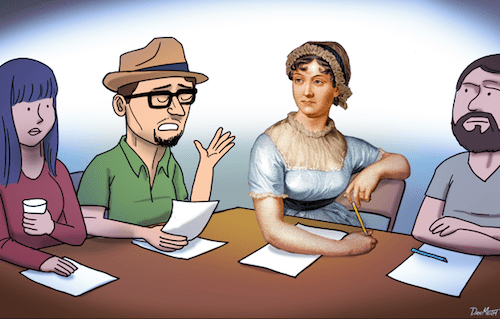
BuzzFeed contributor Shannon Reed came up with this wonderful piece, in which a bloke in a Writers’ Workshop commented on ‘Pride and Prejudice’. Any of you who are writers and are part of such a gathering will recognise his type instantly, sitting there in his hat, glasses, and beard, reading out his epistolarily-framed critique. I gave in to a whim and penned Jane Austen’s reply. So below you will find Shannon Reed’s original, and my rapid response in the persona of Jane Austen. Enjoy!

Dear Jane,

I don’t usually read chick lit, but I didn’t hate reading this draft of your novel, which you’re calling Pride and Prejudice. I really liked the part where Elizabeth and her aunt and uncle went on a road trip, which reminded me of Chaucer’s Canterbury Tales (also about a road trip — check it out!). Anyway, good job. I do have a couple of notes to share, in the spirit of constructive criticism.

So, a big question I have is “Why?” Why does Elizabeth do the things she does? Why does Mr. Darcy do the things he does? Why does Mrs. Bennet do the things she does? Have you read Hamlet? I feel like you could really learn something from how Shakespeare (the author) has Hamlet tell readers why he’s doing the things he does.

Another problem I noticed: Mr. Wickham (great name, by the way, evoking both a strong but flexible plant, and an earthly, bestial pig) is in the army, but you don’t make use of that. What if Mr. Wickham, instead of just being sort of a scoundrel (Again: why?), is a scoundrel because he’s suffering from his experiences in the war? (Which war, btw?) That way he could tell Elizabeth about it, and we would be able to see that she’s not just an independent young woman, but also a really good listener. He could tell some jokes, too, to liven up the mood, and show that Elizabeth has a good sense of humor. This could be the middle section of the book, like five or six chapters in there.

Also, why five sisters? How about just two? Combine Jane and Kitty. Or, better, make one of the sisters a brother (named “Jim,” maybe?), and then he could be the narrator who mentions his sisters from time to time! Like Hamlet!

While I’m on the sisters, is it just me, or does everyone treat Kitty really badly? Personally, I want to say “Huzzah!” to Kitty, and it’s annoying that everyone else — literally everyone else — wants to hold her back. Even you, I think— and, sorry, don’t mean to hit too close to home here, but… I’m just saying that I would totally court Kitty. She’s got a great sense of humor. But anyway, if you change her to Jim, problem solved!

A few other concerns: Mrs. Bennet is annoying, and you don’t have any people of color. Also, there aren’t a lot of men in this book. Only about the same number as there are women. I was thinking that what you could do is have Mrs. Bennet be dying, but give her a black best friend. Like Othello? (Have you read it? It’s also by Shakespeare, fwiw.) The Othello character could be her butler, maybe? There you go: three problems solved. You’re welcome!

I don’t know if you noticed this, but there’s a lot about hair ribbons here. Did you mean to do that? Maybe you could develop them into a kind of motif throughout, the way Shakespeare uses a skull in Hamlet? Maybe, when Mrs. Bennet is dying, she could ask to hold a hair ribbon? And Othello the butler could bring it to her, and tell her a story, or, better yet, get Wickham in there to tell her about the war. Oh! Perfect: just have Wickham, Jim and Othello talk about the war, while Mrs. Bennet lies unconscious in the background, holding a ribbon.

What do you think about Jim, Othello, and Wickham: Brothers in Arms as a title instead of Pride and Prejudice?

Anyway, while this isn’t something I would pick up on my own to read, I still enjoyed it more than I thought I would. Thanks for letting me take a look, and let me know if you need any more help with it.

Keep writing!

Tim

*

3630,Jane Austen,by Cassandra AustenMy dear Mr. Timothy, may I begin by saying I am obliged to you, sincerely, for the time and trouble you have taken over your critique. Also, sir, your kind offer of assistance with a re-draft is greatly appreciated, by one so recently arrived from Hampshire and yet to be fully sure of her place in society here (though surrounded by so much simple generosity of spirit). It is a truth universally acknowledged that a single lady in possession of a manuscript must be in want of a good beta reader, so I shall respond extempore to some of your salient points.

Your reputation, amongst our little circle of mutual acquaintances, for admirable frankness, is indisputable. I well recall your helpful comment to Mr. James, regarding one of his short stories – set in Norfolk, I believe. You challenged him thus: “What’s so scary about bedsheets, I mean, really?” Also your words to our Irish friend Mr. Joyce, when you opined that his novel fell “… somewhere between gonzo and mofo, and maybe too much of one and not enough of the other…” and also that you felt that his story arc lacked something by omitting the episode where the hero blinds the one-eyed giant.

By the way, I do notice that neither gentleman is here today, and that our feedback group, though quorate, is a little thin. I declare I have no idea why.

I do take to heart, Mr. Timothy, your suggestion regarding the Bennet siblings. I could, I suppose, recast my novel in a slightly more tragic mould, and have two of the sisters carried off by typhus. However, to my mind that would put at hazard the point of my essai, which is, after all, a douce satire on the station of women on the periphery of genteel English society – rather in the same vein as our colleague Ms. French’s work is of our station in American society. Yes? No? I believe this is something you may have missed, and although I am relieved that you did not hate my novel, I wonder if I could urge you to read it again. Persuasion is my forte, after all. It is not a work solely intended to be read by women, and although, again, I must thank you for the suggestion that I insert ‘Jim’ into the Bennet household, I have to say that such an amendment would mar the isolation of Mr. Bennet – an essential of the plot.

Ah – Shakespeare! Yes, modesty would normally forbid this, Mr. Timothy, but a friend of mine, who must remain nameless, actually likened the quality of my authorship to that of Shakespeare’s. I see the surprise in your expression, and I myself smile at the comparison, but suffice it to say that I am familiar with the writings of the bard. In fact I had already considered a sub-plot in which Mr. Darcy is the Colonel of Mr. Wickham’s regiment, and the latter being enraged by his commanding officer’s advancement of… of… of Mr. Bingley, provokes Mr. Darcy to a murderous jealousy by somehow placing one of Elizabeth Bennet’s hair-ribbons in Mr. Bingley’s possession. Much confusion, eventually resolved of course, but in fact I abandoned this as being a little too contrived. Oh, be assured however, Mr. Timothy, that I fully intend to continue my literary efforts.

I notice Ms. French is also absent today…

Well, would someone ring for tea?

Claire Pellucida – a Fable

castleOnce there was a town. In the middle of the town stood a castle, and in the middle of the castle stood a high tower, and at the highest point of the tower was the chamber of a princess. Her name was Claire Pellucida, and the people of the town loved her, because she was pretty, and her eyes shone. They found her wise, because they would come to her and ask her what she could see from the window of her chamber, and she would tell them the most wonderful things. And the town itself was called Pellucida, in honour of its wise and pretty princess.

One day the people of the town assembled in the courtyard of the castle, and called up to the princess. “Princess Claire Pellucida, tell us what you can see to the north.”

The princess looked to the north, and said, “Far away I see mountains, with summits and pinnacles as sharp as needles. There are trees growing there, that are of solid silver, and on them hang fruits and berries that are pearls and hard diamonds. There is a river of clear crystal, like ice, that flows with such slowness. And in amongst the silver trees I see the glint of the eyes of ermines and foxes; and above the trees, on snowy wings, fly white birds like eagles, with silver beaks.”

The townspeople were amazed, and very happy that they had such a wise princess, who could see so far and tell them such wonderful things. But visitors from the north laughed at them.

“You Pellucidians are fools,” they said. “There are no such mountains to the north of here, no such trees, nor birds, nor animals, nor a crystal river!”

But the people of the town believed their princess, and one day, when Claire Pellucida had grown into a beautiful young woman, they assembled in the courtyard of the castle and called up to the princess. “Princess Claire Pellucida, tell us what you can see to the east.”

The princess looked to the east, and said, “Far away I see a forest, standing stark against the rising sun. The trees are an army of gigantic soldiers in a livery of black and dark green, and they roar in the wind, brandishing their long spears angrily, because they cannot march upon us.”

The townspeople were amazed, and very happy that they had such a wise princess, who could see so far and tell them such wonderful things. But visitors from the east laughed at them.

“You Pellucidians are fools,” they said. “There is no such forest of roaring giants to the east of here.”

But the people of the town believed their princess, and one day, when Claire Pellucida had grown into a handsome matron, they assembled in the courtyard of the castle and called up to the princess, “Princess Claire Pellucida, tell us what you can see to the south.

The princess looked to the south, and said, “Far away I see a land where the sands ripple as the sea does, and the mountains are like children’s bricks, stacked chequered – white limestone, red sandstone, pink granite. And the trees wave in the breeze, like many-fingered hands, and amongst them step lithe girls and boys in linen robes, gathering the amber fruits that hang on them.”

The townspeople were amazed, and very happy that they had such a wise princess, who could see so far and tell them such wonderful things. But visitors from the south laughed at them.

“You Pellucidians are fools,” they said. “There are no such mountains like children’s bricks to the south of here. Nor are there such waving trees with amber fruit.”

But the people of the town believed their princess, and one day, when Claire Pellucida had grown into a stately old woman, they assembled in the courtyard of the castle and called up to the princess. “Princess Claire Pellucida, tell us what you can see to the west.”

The princess looked to the west, and said, “Far away I see a peaceful sea of liquid silver, where the sun shines like copper. There is an island on that silver sea, and a great city on that island, with tall towers of yellow-veined marble, on which the copper sunlight glints, and shines, and dances. And upon that silver sea sail great golden dhows.”

The townspeople were amazed, and very happy that they had such a wise princess, who could see so far and tell them such wonderful things. But visitors from the west laughed at them.

“You Pellucidians are fools,” they said. “There is no such silver sea to the west of here. Nor is there such and island city, nor golden dhows.”

But the people of the town still believed their princess, as they had always done.

The night after she had looked to the west, and told the people of the town what she had seen there, Princess Claire Pellucida was wakened by a great glow outside the window of her chamber. She rose from her bed, and looked out of her window, to the west. There was the silver sea, the copper sunset, the island with its city of yellow-veined marble; and more marvellously, a silver river was running from the silver sea right to her castle. And on that silver river was a great, golden dhow. And on that great, golden dhow stood tall mariners and fine ladies, all dressed in saffron cloaks sewn with golden-thread. There were circlets on their heads of interwoven white gold and yellow gold, and torques of copper round their necks and wrists, and rings of gold upon their fingers. And they saluted and bowed, and called out to the princess.

“Princess Claire Pellucida, come down and sail with us to the island in the silver sea; for the island city with its towers of yellow-veined marble, has need of a queen to rule it.”

So Princess Claire Pellucida came down from her chamber in the highest point of the tower, in the centre of the castle; and she sailed away with the tall mariners and fine ladies, to the sunset, to the silver sea, to the island city with its towers of yellow-veined marble. And there she ruled as their Queen for ever.

But that is not the end of things.

The next morning, the people of the town of Pellucida gathered in the courtyard of the castle, and called up to their princess. But she did not answer. One brave townsman entered the castle, and climbed the tower, and from the window of the chamber at its highest point, he called sadly for five of his friends to join him.

In the chamber, the six men stood, and looked down at the bed, on which lay Princess Claire Pellucida. She lay smiling and peaceful, as though she slept, and in her face the six men could see the fleeting prettiness that had been there when she was a girl, the beauty that had been there when she was a grown woman, the loving gentleness that had been there when she was a matron, and still, still the stately splendour of their dear princess in old age lingered also. But they knew that she was not sleeping. She had left them, and was dead.

But even that is not the end of things.

The six men carried her, with great sadness and reverence, down to the townspeople, and they all processed solemnly out of the town, and laid the body of the princess – as was their custom – a mile away, in the great, open wilderness that surrounded the town for mile upon mile, for the wild beasts and the birds to devour.

But even that is not the end of things.

The townspeople continued to tell stories to their children, of all the wonderful things that the princess had seen from her chamber in the castle tower, and of all the things she had told them. The children believe the stories, and worshipped the tower where the princess had lived. They told the same stories to their own children. These children did not believe them, but still they told the same stories to the next generation. The children of that next generation believed nothing at all, except what travellers from the north, from the east, from the south, and from the west told them.

And who knows if that is the end of things!

golden 2

__________

I’m thinking of putting together a collection of my short stories – most of which you have not seen here on the web site, and presenting them for publication. What do you think? If you would like to read through the short stories that I have published so far on this web site, please click here.

M

In case you’re wondering…

It must seem to my regular readers that nothing much happens in my literary life. I have no whistle-stop tours of signings and readings, no local radio appearances and so on to report. However, I’m far from inactive, and the notion that nothing happens couldn’t be further from the truth. So what is happening?

writing-clipart-1Well, firstly I am writing a new novel, or rather one that I had had some notes for a while ago but had shelved while I finished From My Cold, Undead Hand and the sequel KWIREBOY vs VAMPIRE. It would be difficult to say at this stage what it is ‘about’, because I am trying to walk a tightrope between experimenting with form and style and producing something that is readable. For a while now I have been taking part in discussions, notably with Millie Ho and her blog-followers, about… well… how to write. Millie has some brilliant ideas, and if I take issue with many of them it is merely because they stimulate thought. One topic in particular has been that of working towards an ending, and my concern is that literature has been stuck in a pattern that has lasted for centuries, if not at least a couple of millennia, going back to the concept of ‘catharsis’ in classical Greek drama. What this has meant for fiction is that it has largely resisted major innovation, and that it is alone as an art form in doing so. I have written on this subject before. Fiction, pretending to give us a narrative progression from a beginning to an end, more often than not is driven by that predetermined end in a way that life is not – ‘Destiny does not send us heralds,’ said Oscar Wilde in The Portrait of Dorian Gray, and neither should the writer of fiction be obliged to function as some kind of prescient, wiser than the rest of us. As readers we ought to be able to cope with fiction that hands us a slice of life to look at, and the knowledge that life continues after that slice is finished.

In our discussions we have been looking at the problem of how to give a novel ‘closure’ – giving the readers the sense of its completeness – without necessarily having a structural ‘resolution’ driven by the dictated need for catharsis.

For my current novel project (working title The Deptford Bear) therefore, I have a probable direction of narrative travel rather than a definite ending in view. I can see where the narrative may possibly lead, but I am open to the journey of exploration taking a turn and leading instead to somewhere unexpected. For this reason, and because it’s the way I actually enjoy writing, I haven’t been plodding, chapter-by-chapter, from the beginning. I have been writing ‘episodes’ in an almost random order, which I will sew together later. I have been writing from inside the head of the protagonist, hopping from happening to colourful happening in her life. An added challenge is that the whole of her story is being told to a third party – a Scotland Yard detective – and there is probably a lot she is holding back, even from the reader. The story has a strong element of ‘detective mystery’, though whether the mystery will be cleared up when the novel closes is another matter. It has elements of ‘steampunk’, being set in a Victorian London where nineteenth-century history is telescoped or concertinaed in on itself, ‘Montgolfier’ balloons traverse the city from mooring-tower to mooring-tower, and messages are passed between police stations by a vast, steam-driven network of ‘Lampson’ tubes. But how much of this is real, and how much is in the imagination of the protagonist is hard to say. She is, apparently, an amnesiac, and has a strange way of relating to the world, and of expressing herself, learned since she lost her memory as a child; she is a clairvoyant who admits to being a mountebank but who might be genuinely psychic; and she may be something much, much darker than that. Her London is peopled not only with thieves and murderers, toffs and paupers, but with hawkers and buskers, with carnival people and mummers, perhaps with monsters and changelings, and is haunted by one sinister, silent figure – the ‘Deptford Bear’ himself, a creature of deep ritual significance. Or is it she who is haunted rather than the city?

Regular readers of the blog section of this web site will know that I have other novel ideas on my shelf, for which I have written sketches. It’ll be The Deptford Bear I’ll be working on for the foreseeable future, and the others will remain on the shelf. I’m up to about 15,000 words so far.

Secondly, work continues on turning my short story Axe into a film or TV script. I have provided some extra narrative material, and a Scottish screenwriter is currently working on it. I have seen his summary of how he would like to tackle the dramatisation, and the first draft of the opening, and it is developing in quite an exciting way. To go back to the matter of how to end a piece of fiction, those of you who have read the short story will notice that it did not ‘resolve’ in any conventional way; the extra narrative material I have given, along with the creative input of the screenwriter himself, perhaps a little more of a conventional resolution. Nevertheless, this is an exciting project and something totally new for me.

Thirdly, other stuff. You will no doubt remember that my short story Voices was amongst the winners at the Winter Words festival a few months ago. Well, as often happens, that win gave me a boost, and I have already written two further macabre short stories, and sketched out a third, which will fit well as entries for next year’s competition, and the year after that… and the year after that. Also I’m preparing some new poetry for a forthcoming anthology.

So, although my blog section here isn’t full of a mad social whirl, inactive I am not. I’ll keep you all posted.

In the dead of night, somewhere in the Highlands…

As I said in my last post, I have been amongst the winning entries in the ‘Fearie Tales’ Competition six times now, in eight years. They don’t rank the eight winners, but it’s a safe bet if you have been scheduled to round off a Saturday evening’s storytelling you can be pretty proud of yourself. I had that spot on Saturday 14th February, and pro actor Helen Logan read out, or rather performed, my story ‘Voices’.

The story concerns an Australian scientist – a woman with one foot in rationalism and the other foot in the ‘Dream Time’ of an old Aboriginal mentor – who camps at the summit of a remote Scottish mountain, intent on investigating ‘random voice phenomena’. What happens next defies explanation. Is it supernatural? Is it psychological? Whichever, the consequences are dire. It is all set out in the spoken commentary to her video diary.

Helen Logan, for whom I had specifically written the story having seen her deliver my previous story, threw herself into the role of the Queenslander, pitching the disintegration of the narrator’s mind at quite a high level of histrionics. It worked; at times it was comic, and at other times it was terrifying.

(c) Bookseeker Agency

(c) Bookseeker Agency

Despite this being my sixth win, it was only my second visit, thanks to the kindness of my ‘fan base’. I lurked at the back of a full room. ‘Fearie Tales’ is popular with festival-goers, and it was good to hear my work being applauded.

I now have quite a portfolio of short stories. A handful of them have been blogged, six of them have now been read aloud publicly, but many of them are simply set by in case they are needed. If collected together, they would make a decent-sized book. I shall have to think what to do with them. Maybe I should consult my agent (a good idea anyway) and discuss options.

__________

By the way, the folk at Indies Unlimited asked me to expand a comment I made on an article about self-publishing into an article in its own right. They asked me to set up an ‘author page’ at Amazon, which is one of the features they like anyone to have, if they are due to be featured on their site. So I have done just that. Just check out amazon.com/author/marie_marshall. The four books of mine which are available at Amazon (not counting the books I have had a hand in editing, or in which work of mine is featured) are listed there.

‘From My Cold, Undead Hand’ sold out at Waterstones

jpegI just heard that all copies of From My Cold, Undead Hand have gone from the shelves of the local branch of Waterstones. Don’t worry though, vampire-fiction fans – you can still order a copy at the counter. Just ask an assistant and they’ll get it for you.

‘Crocodilism’ – a dem⦁n’s definition

crocodilism, n.


  1. The political principle whereby a state claims or occupies smaller states, territories, or disputed regions; extended to any corporation, body, or individual who appropriates possessions by virtue of their proximity rather than by any recognised right.


  1. The practice of girls walking in a long column of twos whilst holding hands; extended to the progress of any slow-moving procession of objects close together.


  1. The practice of weeping or making any pretence of woe for the purpose of entrapment; extended to the general philosophy that such pretence and the gaining of an advantage by it is acceptable.


  1. The worship of Sobek.


  1. The deliberate eating of something considered by others to be unnatural or unacceptable.

    “Thes forsothe among polutid thinges shulen be holde, of hem that ben meued in erthe; a wesil, and a mouse, and a cokedril, eche after his kynde.” Leviticus 11:29 Wycliffe version (1395)


  1. The practice of a philosophy where captious or sophistical argument is used; extended to any deliberate use of trick questions.

    “A woman sitting by the side of Nilus, a Crocodile snatched away her child, promising to restore him, if she would answer truly to what he asked; which was, Whether he meant to restore him or not. She answered, Not to restore him, and challeng’d his promise, as having said the truth. He replyed, that if he should let her have him, she had not told true.” Thomas Stanley, The History of Philosophy vol. II, viii, 57 (1656)


  1. The affectation of flattery, clemency, or any other favourable behaviour by a person holding any power or influence over others.


  1. The habit of removing irritations from a person from whom one wishes to gain favour.


  1. The hoarding and bringing into use of things past their time of practical usefulness.


  1. The condition of being all mouth and no ears.

[I recently rediscovered this introduction to a poetry project. I thought it might be worth popping here. M.]