The Winter 2016 Showcase at ‘the zen space’…
… is now on line! This time round, haijin and poets from all over the globe have been taking pot-shots at crows, and the result is murderous. Visit here, and join in the caw-rus…


… is now on line! This time round, haijin and poets from all over the globe have been taking pot-shots at crows, and the result is murderous. Visit here, and join in the caw-rus…
Apart from feeling guilty, you mean? No, seriously, that is an issue.
 When I think about it, my output over the past few years has been quite something. I have to remind myself that, since about 2005, apart from having finished four novels (three of which have been published and the other is with my publisher awaiting publication), having had at least two-hundred-and-fifty poems published in collections, anthologies, magazines, and e-zines, having written enough short stories to fill over two volumes, I have taken part for five years in a poem-a-day project. So why stop? Why stop that poem-a-day, and why halt progress on my latest novel after 20,000 words? Well, let me be clear about this – I needed a break, and believe me I’m feeling the benefit. Output had taken over from quality, and I was exhausted and frustrated.
So where does the guilt come from? I don’t know. Maybe from the little imp on my shoulder who keeps whispering to me, “You’re an ex-writer, that’s what you are! Now you’ve stopped, you’ll never start again.”
Maybe, in fact, it has to do with the continuing output of fellow-writers I respect. There they go, merrily taking part in NaNoWriMo and suchlike, galloping though the creation of a novel in a single month, filling their blogs with poetry, writing columns of advice for colleague-authors, posting their goals and how they have achieved them… I could go on line now and find, with ease, confident articles on the discipline and routine of writing, and below each I would find an almost endless roll of comments thanking the writer for his or her sage advice. And I would know that, try as I might, I couldn’t stick to anything like such a routine. I might manage it for a week… ten days…
And yet, there’s all my output. I must have had some impetus and discipline somewhere. You would think so. A colleague said my writing was ‘visceral’, meeting that it sprang from emotion, from feelings rather than thoughts. When I consider that such movements in art and writing as modernism, expressionism, and imagism have influenced me, I guess she could be right. Certainly when I set out to write something, with certain exceptions, I do not start out with the goal of reaching a goal. By that I mean that my work is seldom driven by the end, I do not start my novels, for example, with the resolution of the narrative already in my mind*. I describe such a practice a ‘male’ writing, by which I mean it is driven along by the desire to reach a single climax, to use a sexual analogy. It’s the authorial equivalent of ‘getting your end away’. And it is something that is so ingrained in our culture, that it is hard to counter, hard to offer any other way of doing things. As we say in Scotland, ‘it’s aye been’, or at least its ingrainedness gives that impression. Writers like Virginia Woolf showed us that it simply didn’t have to be so, it didn’t have to be the unwritten rule that we all revered like Holy Writ. Yet it lurches along still, like some kind of zombie. There, that’s today’s thought – ‘Zombie male writing’.
To me, there was so much left undone in modernism, as though they picked up the ball, ran with it, passed it to the next author, who just stood there and let it drop. I know, I know, my mixed metaphors are murder today…
Where was I? Oh yes – what have I been doing if not writing. Well, same as ever. Holding down a job, editing, playing my part in family routine, coping with physical and psychological conditions (my own and others’), reading, in fact all the things I was doing while I was writing. Y’know, I wonder where I found the time to write so much! So will I let all these mundane necessities fill the available time, will I become used to them, so used to them that I will one day forget to write, forget that I ever wrote? Well, let’s face it, one day we will all close our eyes on daylight and not simply forget what we were but lose the forgetting too. Life is about letting go. So it is, of course, possible that I will never write again, ever.
Possible, but improbable.
Despite the imp on my shoulder, I’m not an ex-writer. Hell, what am I doing right now if not writing? I haven’t stepped away from my work entirely. I jot stuff down, the odd word, the odd phrase, the odd idea. I go through my unpublished corpus to see if there is anything worth submitting to a poetry magazine**. Ideas on how to progress my novel – the one I’m half way through, the one I always wanted to write – keep circulating in my head. And anyway, competing with the guilt-imp is the wee wight on my other shoulder, telling me that if I don’t go back to writing someday soon, I’ll end up in that charming little beauty spot located, I’m told, near Harrisburg PA.

Gonnae no dae that! Gonnae no!
__________
*Many writers claim not to do this, but frankly it’s what most of ‘em do!
**I haven’t submitted anything since about 2013, at which time I devoted all my energy to writing a collection specially for a publisher. The result was my prize-nominated I am not a fish.
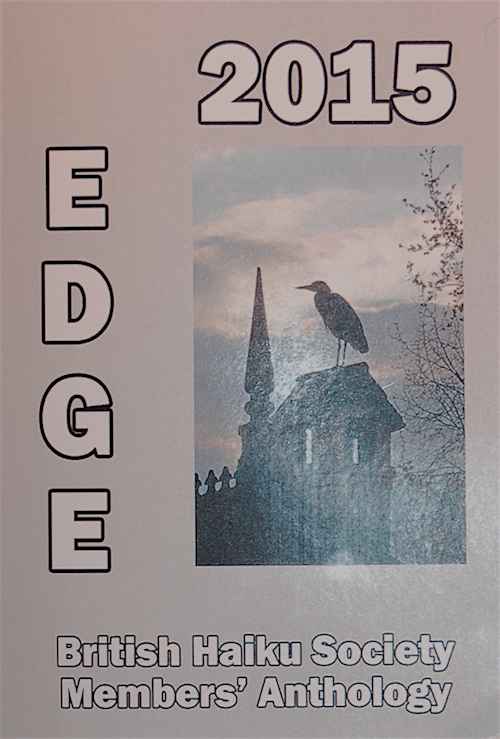
I have a haiku in Edge, this year’s anthology…
 Writers who write down to their readers.
Writers who write for an ‘in’ readership.
Writers who are afraid to experiment in case they alienate readers.
I believe that literature belongs to everyone, is for everyone, and that everyone has a right to its radiance. No one should be afraid of picking up a ‘difficult’ book – difficult books do no belong to any elite. No one should be afraid of picking up a book from an ‘easy’ or throwaway genre – there can be a lot of joy in the simple and ephemeral, and that joy is everyone’s right too.
I detest shoddy workmanship, no matter whether in a difficult or easy book.
 Everyone these days has to have an ‘author brand’. Or so it seems.
In particular, when an on-line presence – a web site, a blog, a Twitter account, a Facebook page, an author’s page at Amazon – seems to be essential, it is no longer enough to be a good writer. I believe I have that covered anyway, and if I hadn’t, there are a thousand-and-one sites out there offering advice on how to structure a novel, how to allocate time, the necessity of beta-readers, the advisability of professional editors, and on, and on. Now, however, if you want to sell your writing, you need to have something on line that instantly identifies you.
It’s not easy for someone like myself. I freely confess I am a very private person, a virtual recluse. I have always put forward my writing as the milieu and medium in which I express my strength, and have left the rest as a matter of mystique. Often, when asked for a bio, I borrow and adapt from the telegram sent by the artist Balthus when asked for a summary of his biographic details
NO BIOGRAPHICAL DETAILS. BEGIN: MARIE MARSHALL IS A WRITER OF WHOM NOTHING IS KNOWN. NOW LET US READ THE WORDS. REGARDS. M.
which is the way I like it.
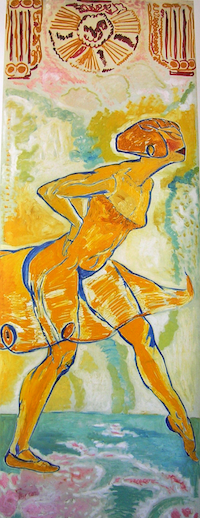
 An ‘author brand’ is so much more than a logo, or a slogan, or a web site layout; but all these contribute to it and, apparently, they tend to make an author as well-known as the famous ‘golden arches’, a true ‘persona’. Do I have one? I don’t know. I have the mystique, I have a web site that I try to keep ‘clean’ of clutter (I love a minimalist approach), I have that description of myself that someone gave me – ‘The Queen of Wow!’ – I have a lot of yellow. Whether this amounts to a brand, well, only you can tell me if my ‘touch’ is instantly recognisable.
You see, the recluse is truly who I am. The person who relies on the strength of her writing and her facility with language – that’s me! I’m a person, not a persona. La Danseuse Jaune and ‘The Queen of Wow!’ are only signs I hang on my door. What if all I had was a brand? No writing, no me, just a brand?
All front and no substance…
What’s that? Oh yes, thank you for asking, the new novel is coming along slowly but surely.
The problem with keeping web site content turning over is that, for a writer like myself, there are long periods where nothing much appears to be happening. That’s not the case, of course, but on the other hand, much of what is actually happening is ongoing stuff, or issues regarding which I’m waiting for someone else’s action.
 I could say, I suppose, “I’m still writing my next novel,” but how many times can I repeat that before ‘no news is good news’ becomes simply ‘no news is no news’? As it happens, I am still writing that novel. What’s it about? Well, I’m playing my cards close to my chest on that one, for many reasons, not least of all that it is a dynamic project that has changed course several times already. That’s largely because the leading character has taken over – the novel is not only in her unique voice, but governed by the way her unique mind works – and she is defying the concept of an end-driven story. I can say that it is the novel, or if not the novel then one of the novels, I have always wanted to write. Also that it is set in Victorian London, or is set there as far as can be gauged, given that the leading character’s psychology has telescoped the entire Victorian era into her short life. There will be murders and detection, but also obfuscation and doubt. English folklore characters from the countryside will encroach onto the bustle of the metropolis, there will be both psychic fakery and psychic peril, and a strange, silent figure will stalk through the narrative.
What I actually need to do at this stage is to allocate more time to writing this novel, the main obstacles being sleeping, cooking, eating, washing, and cleaning. Plus ça change. Something needs to give, so if you happen to see me in town wearing yesterday’s blouse…
Other projects currently maturing include:
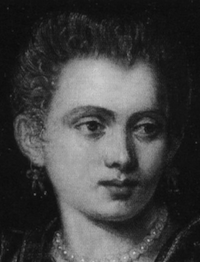 Assembling a chapbook-length selection of my poems inspired by the 16th century Venetian courtesan Veronica Franco, to present to a Scottish publishing house during their twice-yearly ‘window’.
 Meanwhile KWIREBOY vs VAMPIRE, the sequel to my novel From My Cold, Undead Hand, is now with P’kaboo, and is awaiting publication in due course.
So you see, there is a lot going on, just none of it exactly seismic. I have decided, however, to suspend my daily blog of poetry fragments, in order to give myself more breathing space. I know a daily snippet of poetry seems like no big deal, but I actually spend the bulk of my scheduled on-line time dealing with it. I shall continue to write fragments, when I feel the ol’ urge in me, and I might occasionally post one or two, but for now I think standing down from the daily obligation would be a good thing for me. I was one of several poets originally taking part in the daily project, and I think I’m one of the few who is still doing it five years later, so perhaps I deserve a rest. Please feel free, however, to go over there, look through the archives, and leave me some comments if something catches your eye.
I shall, I promise, keep you posted if anything interesting happens.
 Visit Poetry Life & Times to read ‘Veronica’s Rosary’, a new poem by myself.
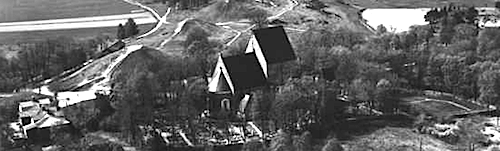
Uppsala, broad-axed, bearded, Nordic kings
take thrones of state, mead and ale flow
from foamed hartshorns, suns sear a midnight sky,
or so it goes in my idle dreams.
Behind the harbour wall at Norrtalje, bobbing in ripples,
the finn-sold, fin-sailed, flying-fish galleys nod,
talk in the undertones of the halyards’ slap on masts,
of the Baltic swells they tacked and snake-hulled
a year ago as they rounded Åland lodestone-bound
for Riga, the amber city, and for the broad rivers of Rus
where their berserkers leapt ashore to found kingdoms
to the glory of Uppsala.
Here in Uppsala every fourth man is mailed,
every fourth woman is green-gowned,
gold-kirtled with runes, every corner rings
with the sound of lur, of stråkharpa, of fele, and of psaltery,
wheat-shirted children run the blond street
singing the Trettondagsmarchen, begging for bezants.
Here sits their solemn All-Thing, to decide the right
to barley and to wives, to monopolies in akkavit,
to axe and holm, to dour theology, to clinker-hulls,
to the wearing of fox-fur and elk-hide, to the franchise
of the Saami of Laponia, to red-gold, to weaving,
to patterns in knitted wool, to the bourns of charity,
to the meanings of stage-plays, to the enmity of peoples,
to the grey of suits and ties, to the served time of doctors.

And in the bleak, birched, lake-banded hinterland
dour detectives rake for bones, wooden houses
sting the air with pine-resin, the fishbone arrowheads
that hunters use are traded in the market-villages
for barter-goods to change for Uppsala silver –
the beaten silver of the holy plates hidden
in the reliquaries of sitka-spired churches.
Across the sea marshes and inlets comes the mist,
the breath of the great Dragon of the Baltic,
cold monster that tells of ice, migrating bears,
and the clangour of strange, brazen bells.
She reminds the burghers of Uppsala
that the balance of their simmer-dim is
the death-in-life of winter night, the sightless days
chased by old, lancing stars and northern lights.
The stride of beard-brave champions on pitching boards
or flagged thoroughfare, the ringing fall of boots,
the wending of men who measure time in leagues travelled,
all these come to Uppsala in the end; all the salt-fish
come here by net, by lure, or of their own seeking,
all the following, hungry glutton-seals and seagulls,
all the scuttling crabs too; every adventuring clan
of Lett, of Rus, of Tatar, and of Gael gravitate to kneel
by Queen Uppsala, each chieftain swearing by his pagan-ness
to be her man-at-weapons, each chieftain’s daughter
to be her maid-at-linen, each thrall to be hers
to use as she will. Each oarsman dedicates his blisters,
and the trip-trap of horses from the longship’s slender gangway,
to the quays and godowns on the Fyris-side,
over cobbles, to the smooth mountain-stone
of the chateau-courtyard, sounds for the Queen.

Ah, Uppsala, a Queen to whom bow lesser
and bend the knee – Osthammar, Hallstavik, Nacka,
Vaasa, Turku, Mariehamn, humble embassies –
your scepter and your bow, your altars to the Æsir
and to the Lutheran God, your awesome Majesty,
how happy must your burghers be in their guilds
and free assemblies, their crafts and churches,
their marching bands, their fire-watches,
their coteries and snug brains-trusts!
I am not a Finn, says Mr Coelacanth to himself.
Otherwise I would hale a dragon-boat through
the fogbanks of Dogger and trace the fractal fjords
to my heart’s content. And he settles back, shutters his eyes,
and wanders the dreaming, cobbled, castled, long-halled,
long, hauled, old-strawed, old-strewn alleys of Uppsala,
his sense of geography untainted by the truth.
He is unaware of the halo-flight of bismuth beetles
japanning around his head – so many spies
looking for a landing-place.
__________
From I am not a fish
© 2013 Marie Marshall

Mr Collins is my name
Mr Collins is my name,
I’m a man of modest fame,
Just a member of the clergy – in the Anglican Liturgy –
And I’m really not to blame,
For enrichment’s not my aim,
And if Longbourn I inherit – ‘twill be Providence, not merit –
I’ll bow to it, all the same!
Lady Catherine de Bourgh,
Lady Catherine de Bourgh,
How I always will defer –
Lady Catherine de Bourgh!
Oh my patroness is great
In her wealth and her estate,
And I’m grateful for her giving me a satisfactory living –
Though I feel the need, of late,
Of a helpmeet and a mate,
But you cannot say I cozen the fair daughters of my cousin –
I would be a base ingrate!
Lady Catherine de Bourgh,
Lady Catherine de Bourgh,
Ah, I owe it all to her –
Lady Catherine de Bourgh!
Sweet Elizabeth (or Jane*)
Can a clergyman attain
Such a pinnacle in marriage. Oh, a man of humble carriage
Might a celibate remain,
And renounce all thought of gain.
But such piety I’m shedding to pursue a modest wedding
(Better marry than abstain!)
Lady Catherine de Bourgh,
Lady Catherine de Bourgh,
I, with admiration, purr –
Lady Catherine de Bourgh!
Now sweet Charlotte has my heart
(She’s the daughter of a ‘Bart’)**
And she thinks it is no larceny to wed a humble parson,
We will ride in my dogcart
From our nuptials, and start
Our conjugal bliss together – richer, poorer, blind to weather –
As the good Lord doth impart…
Lady Catherine de Bourgh,
Lady Catherine de Bourgh,
I, a moon around thee, whirr –
Lady Catherine de Bourgh!
(*Yes, I know. I claim artistic license at that point. **And that one.)
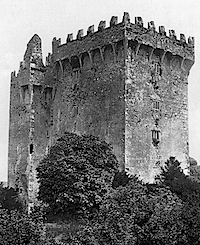 Once there was a town. In the middle of the town stood a castle, and in the middle of the castle stood a high tower, and at the highest point of the tower was the chamber of a princess. Her name was Claire Pellucida, and the people of the town loved her, because she was pretty, and her eyes shone. They found her wise, because they would come to her and ask her what she could see from the window of her chamber, and she would tell them the most wonderful things. And the town itself was called Pellucida, in honour of its wise and pretty princess.
One day the people of the town assembled in the courtyard of the castle, and called up to the princess. “Princess Claire Pellucida, tell us what you can see to the north.”
The princess looked to the north, and said, “Far away I see mountains, with summits and pinnacles as sharp as needles. There are trees growing there, that are of solid silver, and on them hang fruits and berries that are pearls and hard diamonds. There is a river of clear crystal, like ice, that flows with such slowness. And in amongst the silver trees I see the glint of the eyes of ermines and foxes; and above the trees, on snowy wings, fly white birds like eagles, with silver beaks.”
The townspeople were amazed, and very happy that they had such a wise princess, who could see so far and tell them such wonderful things. But visitors from the north laughed at them.
“You Pellucidians are fools,” they said. “There are no such mountains to the north of here, no such trees, nor birds, nor animals, nor a crystal river!”
But the people of the town believed their princess, and one day, when Claire Pellucida had grown into a beautiful young woman, they assembled in the courtyard of the castle and called up to the princess. “Princess Claire Pellucida, tell us what you can see to the east.”
The princess looked to the east, and said, “Far away I see a forest, standing stark against the rising sun. The trees are an army of gigantic soldiers in a livery of black and dark green, and they roar in the wind, brandishing their long spears angrily, because they cannot march upon us.”
The townspeople were amazed, and very happy that they had such a wise princess, who could see so far and tell them such wonderful things. But visitors from the east laughed at them.
“You Pellucidians are fools,” they said. “There is no such forest of roaring giants to the east of here.”
But the people of the town believed their princess, and one day, when Claire Pellucida had grown into a handsome matron, they assembled in the courtyard of the castle and called up to the princess, “Princess Claire Pellucida, tell us what you can see to the south.
The princess looked to the south, and said, “Far away I see a land where the sands ripple as the sea does, and the mountains are like children’s bricks, stacked chequered – white limestone, red sandstone, pink granite. And the trees wave in the breeze, like many-fingered hands, and amongst them step lithe girls and boys in linen robes, gathering the amber fruits that hang on them.”
The townspeople were amazed, and very happy that they had such a wise princess, who could see so far and tell them such wonderful things. But visitors from the south laughed at them.
“You Pellucidians are fools,” they said. “There are no such mountains like children’s bricks to the south of here. Nor are there such waving trees with amber fruit.”
But the people of the town believed their princess, and one day, when Claire Pellucida had grown into a stately old woman, they assembled in the courtyard of the castle and called up to the princess. “Princess Claire Pellucida, tell us what you can see to the west.”
The princess looked to the west, and said, “Far away I see a peaceful sea of liquid silver, where the sun shines like copper. There is an island on that silver sea, and a great city on that island, with tall towers of yellow-veined marble, on which the copper sunlight glints, and shines, and dances. And upon that silver sea sail great golden dhows.”
The townspeople were amazed, and very happy that they had such a wise princess, who could see so far and tell them such wonderful things. But visitors from the west laughed at them.
“You Pellucidians are fools,” they said. “There is no such silver sea to the west of here. Nor is there such and island city, nor golden dhows.”
But the people of the town still believed their princess, as they had always done.
The night after she had looked to the west, and told the people of the town what she had seen there, Princess Claire Pellucida was wakened by a great glow outside the window of her chamber. She rose from her bed, and looked out of her window, to the west. There was the silver sea, the copper sunset, the island with its city of yellow-veined marble; and more marvellously, a silver river was running from the silver sea right to her castle. And on that silver river was a great, golden dhow. And on that great, golden dhow stood tall mariners and fine ladies, all dressed in saffron cloaks sewn with golden-thread. There were circlets on their heads of interwoven white gold and yellow gold, and torques of copper round their necks and wrists, and rings of gold upon their fingers. And they saluted and bowed, and called out to the princess.
“Princess Claire Pellucida, come down and sail with us to the island in the silver sea; for the island city with its towers of yellow-veined marble, has need of a queen to rule it.”
So Princess Claire Pellucida came down from her chamber in the highest point of the tower, in the centre of the castle; and she sailed away with the tall mariners and fine ladies, to the sunset, to the silver sea, to the island city with its towers of yellow-veined marble. And there she ruled as their Queen for ever.
But that is not the end of things.
The next morning, the people of the town of Pellucida gathered in the courtyard of the castle, and called up to their princess. But she did not answer. One brave townsman entered the castle, and climbed the tower, and from the window of the chamber at its highest point, he called sadly for five of his friends to join him.
In the chamber, the six men stood, and looked down at the bed, on which lay Princess Claire Pellucida. She lay smiling and peaceful, as though she slept, and in her face the six men could see the fleeting prettiness that had been there when she was a girl, the beauty that had been there when she was a grown woman, the loving gentleness that had been there when she was a matron, and still, still the stately splendour of their dear princess in old age lingered also. But they knew that she was not sleeping. She had left them, and was dead.
But even that is not the end of things.
The six men carried her, with great sadness and reverence, down to the townspeople, and they all processed solemnly out of the town, and laid the body of the princess – as was their custom – a mile away, in the great, open wilderness that surrounded the town for mile upon mile, for the wild beasts and the birds to devour.
But even that is not the end of things.
The townspeople continued to tell stories to their children, of all the wonderful things that the princess had seen from her chamber in the castle tower, and of all the things she had told them. The children believe the stories, and worshipped the tower where the princess had lived. They told the same stories to their own children. These children did not believe them, but still they told the same stories to the next generation. The children of that next generation believed nothing at all, except what travellers from the north, from the east, from the south, and from the west told them.
And who knows if that is the end of things!

__________
I’m thinking of putting together a collection of my short stories – most of which you have not seen here on the web site, and presenting them for publication. What do you think? If you would like to read through the short stories that I have published so far on this web site, please click here.
M
 Marie Marshall